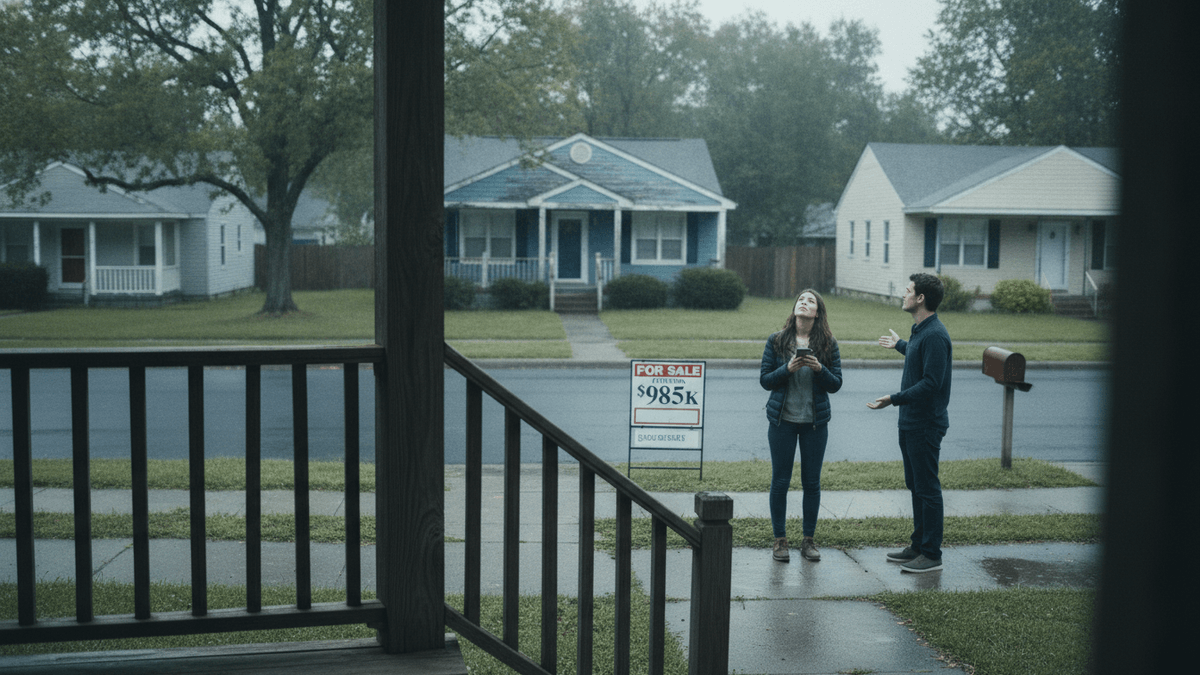
Two prospective buyers looking at a "For Sale" sign in a suburban neighborhood on an overcast day.
The dream of homeownership may become significantly more expensive for future generations, as the national median home price is projected to reach $1 million by 2050. This forecast comes from Lawrence Yun, chief economist at the National Association of Realtors (NAR), speaking at a recent conference in Washington, D.C. Notably, this projection aligns with the traditional retirement age for the millennial generation.
Yun highlighted the dramatic shift in housing costs, noting that the national median home price was just $90,000 in 1990. To illustrate the long-term trend, he pointed out that even historically high-cost markets like San Francisco had a median home price of $250,000 in the same year. This trajectory underscores a widening wealth gap between homeowners who build equity and those who remain in the rental market.
“Homeowners will continue to build wealth, while renters are simply spinning their wheels,” Yun stated.
Current data shows the US median sales price for existing homes stood near $430,000 in May, an increase of over 2% from the previous month, according to Realtor.com. Meanwhile, the average U.S. rent is approximately $2,006 per month, a slight increase from the prior month, as reported by Zillow.
Looking ahead, Yun expressed optimism about the broader economy, stating he does not foresee a U.S. recession in 2026. He anticipates mortgage rates will remain stable, averaging around 6.5% throughout 2026. Existing-home sales are expected to rise by 4% this year, indicating a modest recovery after a 30-year low in 2025, attributed to elevated interest rates impacting market activity. Nationwide job gains are projected to reach 400,000 for the year.
Adding to the discussion, Jessica Lautz, NAR’s deputy chief economist and vice president of research, described the current market as “wonky,” with significant variations in inventory performance even between adjacent properties. “You’ll list a home on the market, and sometimes it’ll sit for months. And sometimes it’s going to have multiple offers, and they can be next door to each other,” Lautz explained.
Despite widespread affordability challenges, Lautz identified three key buyer segments that continue to be active: baby boomers selling their first homes, younger buyers who entered the market during the COVID-19 pandemic, and lifestyle renters seeking more space, such as larger backyards or additional living areas.
About the Author