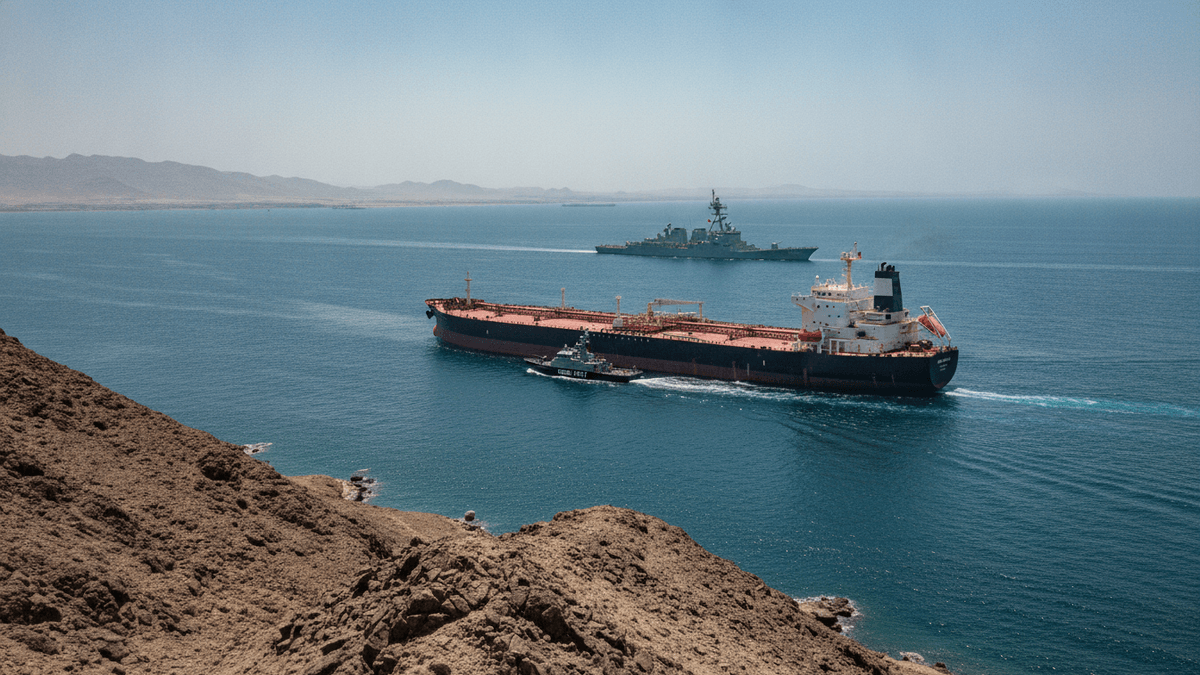
Oil tanker transiting the Strait of Hormuz under escort
Oil prices experienced fluctuations on Wednesday as investors closely monitor the progress of a potential deal between the United States and Iran. The market’s cautious optimism stems from expectations that the agreement, anticipated to be finalized on Friday, could lead to the reopening of the crucial Strait of Hormuz to commercial traffic.
The specific terms of the preliminary agreement have not yet been disclosed by either nation. However, traders are keenly observing whether the negotiations will indeed result in the full reopening of the Strait of Hormuz, a vital chokepoint for global oil transport, as suggested by President Donald Trump.
Brent Crude, the international benchmark for oil, saw its price climb by over one percent, briefly crossing the $80 per barrel mark before settling around $79. West Texas Intermediate (WTI) Crude, the U.S. benchmark, also experienced a similar increase, nearing $77 per barrel, though it later receded to approximately $76.60.
Prior to recent U.S. strikes against Iran on February 28, an estimated 20 percent of global crude oil shipments transited through the Strait of Hormuz. During the height of the conflict in late April, Brent Crude reached a wartime high of around $120 per barrel. Since the announcement of a framework deal, which reportedly includes a 60-day ceasefire, oil prices have declined, though they have not yet stabilized to pre-war levels typically seen between $65 and $75 per barrel.
Speaking at the G7 Summit in France, President Trump expressed confidence in the ongoing negotiations, pointing to rising stock markets as an indicator of positive momentum. “We have a very hot stock market, and we have a very starting to be a very low oil price,” Trump stated, suggesting that oil prices could fall below pre-war levels. He also projected that the Strait of Hormuz would be fully reopened within two days under the terms of the agreement.
Details surrounding the agreement remain somewhat unclear, with President Trump disputing certain aspects of a leaked memorandum of understanding. He specifically clarified that the U.S. will not be contributing to a $300 billion fund designated for the development of Iran’s economy, stating, “No, we’re not investing. We’re not putting up $0.10.”
About the Author