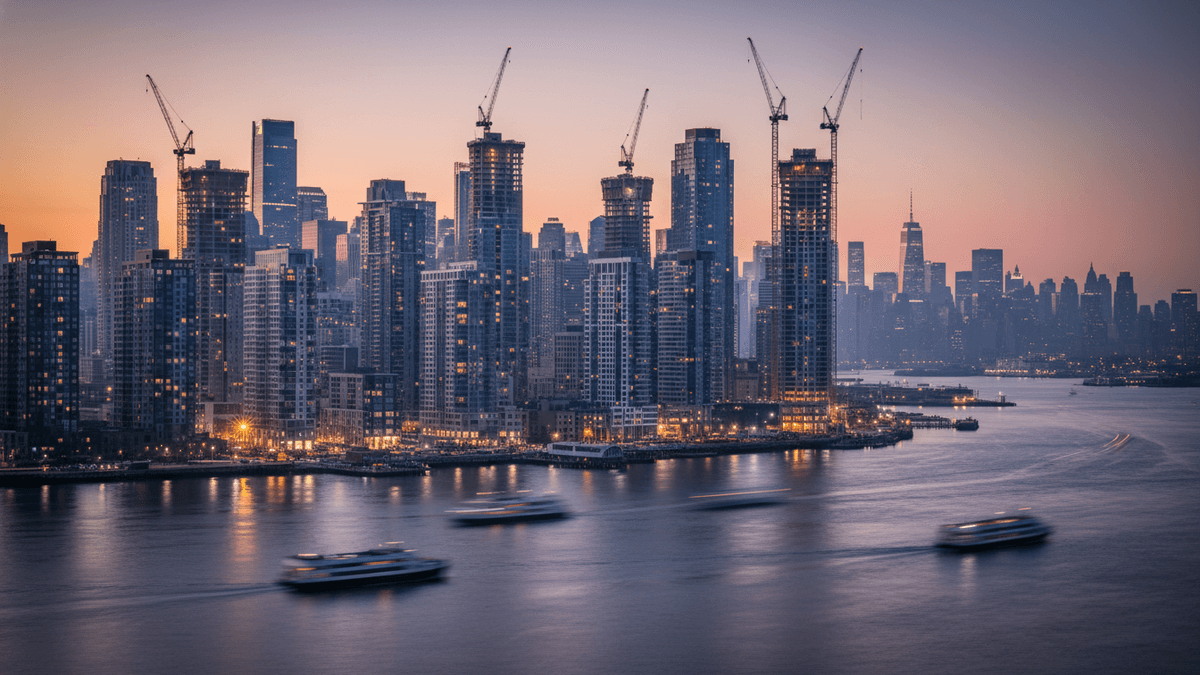
Jersey City skyline at dusk with active construction and ferry boat trails on the Hudson River.
The tale of two cities—or rather, two sides of the Hudson—reveals a critical insight into America’s housing affordability crisis. Manhattan’s rental market is soaring to new heights, while neighboring Jersey City sees rents leveling off, offering a potential blueprint for easing housing pressures.
In Manhattan, strict zoning laws and limited vacancy rates have stifled new development, pushing the median one-bedroom rent to an all-time high of $4,680 in May 2026, according to Zumper National Rent Report. Meanwhile, Jersey City’s post-pandemic construction boom has forced landlords to compete, driving rents down 2.1% year-over-year to a median of $2,860.
Jersey City’s one-bedroom rents peaked at $3,430 in mid-2024 before a surge in housing supply corrected the market, bringing costs down to $2,650 by August 2025. This surge gave renters negotiating power as thousands of new units hit the market simultaneously.
“Manhattan has largely sat out of the city’s rental construction boom, with developers favoring condos over rental buildings, and inventory has fallen for one of the longest stretches on record,” the Zumper report noted. The report also highlighted that nearly 90% of New York City renters stayed in the same unit year-over-year, far above the national average, making moving a major financial decision due to record-high asking rents.
Nationwide, renters are beginning to feel the pressure again, with the national median one-bedroom rent increasing 0.7% month-over-month to $1,519 in May, and two-bedroom rents rising 0.4% to $1,903. However, Zumper CEO Shawn Mullahy points out that these averages mask two distinct housing markets: supply-constrained coastal cities where pricing power has returned, and the Sun Belt, where operators are still working through an inventory wave.
The contrasting dynamics between Manhattan and Jersey City underscore the impact of local housing supply on rental prices. As New York City and San Francisco see two-bedroom units tied for the nation’s most expensive at $5,500, the Hudson River divide offers a lesson in how strategic development can alleviate rental burdens.
About the Author