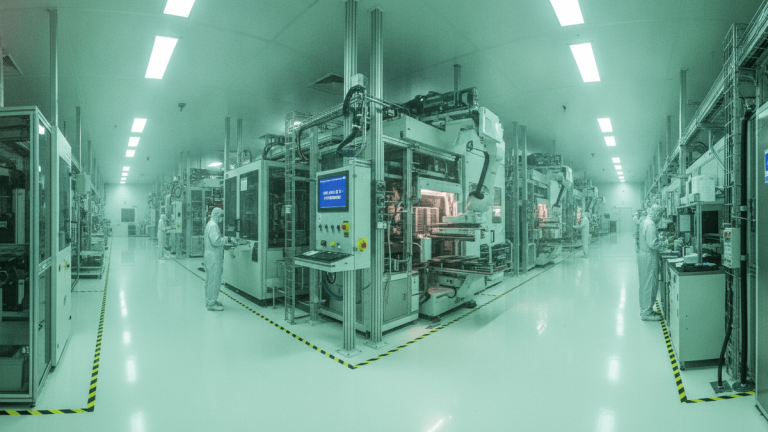
Young engineer Max Peil reviews job applications, factory visible outside office window
Germany’s revered automotive industry is in crisis, and its impact is hitting young engineers hard. Once a symbol of engineering prowess and economic stability, the sector now faces a perfect storm of stagnant economic growth and fierce competition, leaving highly qualified graduates struggling to find work.
The downturn is stark. Annual vehicle production in Germany has plummeted from approximately six million units to between 4 and 4.2 million. This decline is exacerbated by aggressive competition from Chinese electric vehicle manufacturers like BYD and Xpeng, alongside broader economic stagnation. The human cost is evident in individuals like software engineer Max Peil, trained in computer vision, who has submitted around 50 job applications with just one interview. Data from the Federal Employment Agency reveals an 8 percent reduction in total employment within the German automotive sector over the five years leading up to 2025, with exports to China also significantly dropping.
This isn’t just a cyclical dip; it signals a structural shift. Germany’s traditional automotive giants, slow to adapt to electrification and software-defined vehicles, are losing ground to nimble, often state-backed, Chinese competitors. The “golden age” of German car manufacturing, characterized by engineering excellence in combustion engines, is giving way to an era where software and battery technology dominate. This shift challenges Germany’s industrial identity and its economic engine.
The consequences for Germany’s talent pipeline are severe. The unemployment rate for qualified engineers has risen by nearly 50 percent since 2022. Aspiring engineers are now advised to pursue the field out of genuine passion for technology rather than the promise of guaranteed job security or lucrative financial incentives. For Germany, the crisis necessitates a rapid pivot towards new technologies and a re-evaluation of its industrial strategy to remain competitive in the global automotive landscape. The future of its engineering talent, and indeed its economy, depends on it.
About the Author