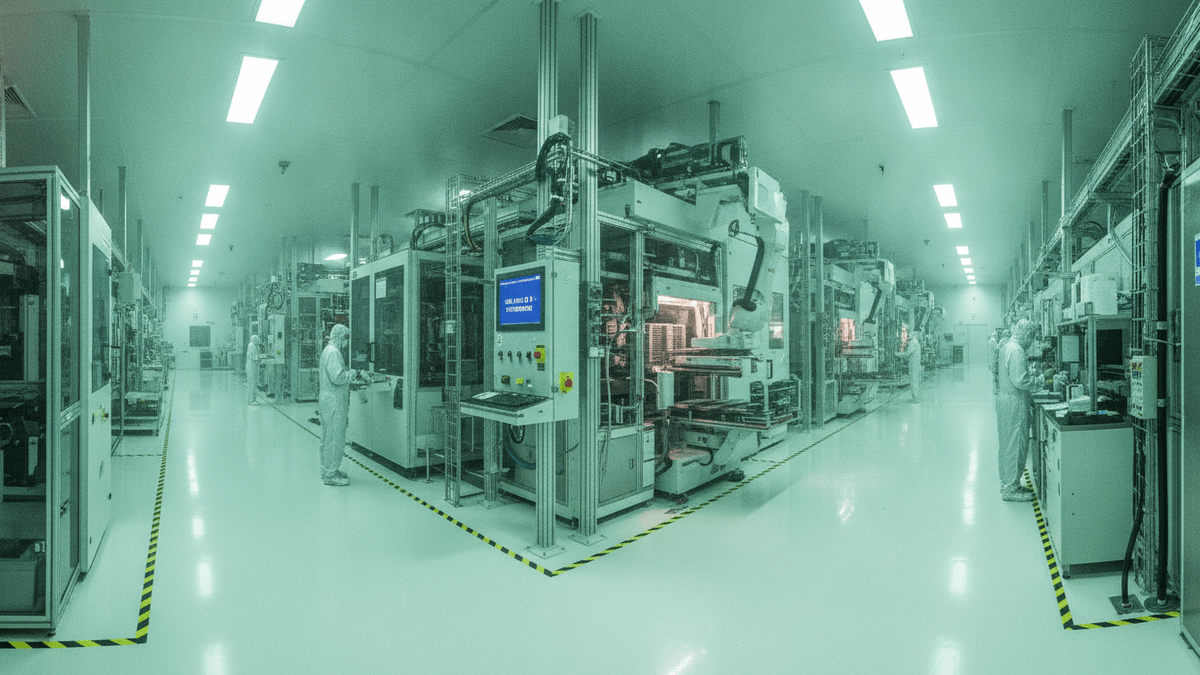
Cleanroom workers monitor automated machinery producing semiconductor components in Singapore.
Singapore is strategically enhancing its semiconductor sector to meet the escalating global demand for AI hardware. At the forefront of this initiative is the VSMC facility, which specializes in the production of advanced silicon interposers and power chips, thereby solidifying Singapore’s position as a crucial hub in the global chip supply chain.
Amidst intense competition among Asian nations for semiconductor investments, Singapore has emerged as a favored location for advanced manufacturing. This is attributed to its political stability, robust infrastructure, and skilled workforce, which attract companies looking to diversify their supply chains beyond established centers like Taiwan and South Korea. The VSMC fab in Singapore is particularly focused on high-value products, including silicon interposers and power management ICs, which are indispensable for AI servers and data centers.
Silicon interposers are critical components in advanced packaging technologies, acting as connectors for high-performance chips in AI accelerators. The increasing complexity and computational demands of AI models necessitate efficient power management and high-bandwidth connectivity, areas where VSMC’s expertise in fabricating these interposers is vital. Additionally, the demand for power chips, another key product from VSMC, is growing as data centers and AI hardware strive for greater energy efficiency, addressing global concerns about the electricity consumption of AI data centers.
The Singaporean government, through the Economic Development Board (EDB), has implemented various incentives such as grants, tax breaks, and workforce development programs to attract high-value manufacturing. These efforts aim to establish Singapore not just as a regional hub for assembly and testing, but also as a center for R&D and advanced chip packaging. While TSMC opted against a large-scale fab in Singapore, the presence of companies like VSMC underscores confidence in Singapore’s long-term prospects, especially as the global AI race intensifies and supply chain resilience becomes paramount.
Singapore’s specialization in these niche areas allows it to carve out a significant role in the semiconductor value chain, even without hosting leading-edge wafer fabrication. This strategy also positions Singapore to benefit from the global trend of supply chain diversification, as major economies like the US and China invest heavily in domestic semiconductor capacity.
Looking ahead, Singapore’s ongoing challenge will be to continuously upgrade its semiconductor capabilities and deepen local expertise in chip design and packaging. Sustained investment in talent, infrastructure, and R&D will be crucial for maintaining competitiveness as AI hardware requirements evolve. With facilities like VSMC’s leading the way, Singapore is poised to play an increasingly strategic role in global technology supply chains, fostering innovation and supporting the rapid expansion of AI-driven industries.
About the Author