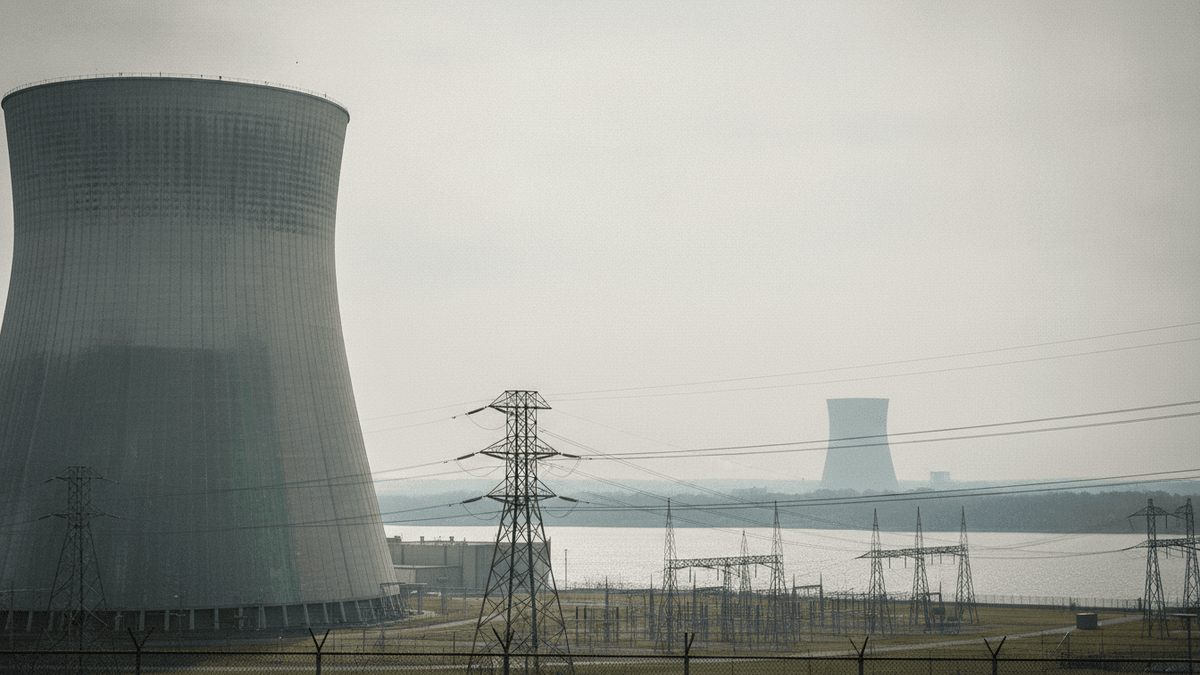
Cooling towers and transmission lines at North Anna Nuclear Generating Station
The Nuclear Regulatory Commission (NRC) has delivered a significant signal for the future of nuclear power in the United States, concluding that extending the operating licenses of Virginia’s North Anna nuclear power plant for an additional 20 years represents the option with the lowest environmental impact. This decision, which would see the plant’s lifespan increase from 60 to 80 years, comes after a comprehensive assessment of 16 alternatives, offering key insights for energy investors and operators.
The NRC’s detailed evaluation dismissed most single-source renewable options, such as solar and wind, primarily due to the extensive land requirements and regulatory hurdles posed by the Virginia Clean Energy Act (VCEA). Instead, the commission focused deeply on two primary alternatives: replacing the existing plant with five Small Modular Reactors (SMRs) or implementing a mixed portfolio of carbon-free generation combined with demand-side management strategies.
Analysis revealed that both the SMR and mixed-capacity options presented greater adverse environmental impacts. The SMR alternative, while technologically advanced, still entails significant construction and operational footprints. The mixed-capacity option, heavily reliant on new solar farms, would necessitate considerable land use, while offshore wind components would introduce aquatic and terrestrial disturbances. In contrast, the license extension for the operational North Anna plant was found to minimize these impacts, leveraging existing infrastructure and a proven energy generation model.
This ruling underscores a critical challenge in the energy transition: balancing the imperative for new, clean energy sources with the practicalities of land use, environmental footprint, and regulatory frameworks. For businesses in the energy sector, the NRC’s preference for extending the life of existing nuclear assets over certain new build alternatives provides a strategic perspective. It highlights the value of long-term asset management and the complexities inherent in deploying large-scale renewable projects, especially when competing with the established efficiency of current nuclear facilities. This decision could influence future regulatory approaches and investment strategies across the power generation landscape, emphasizing the continued role of nuclear power in a diversified energy portfolio.
About the Author