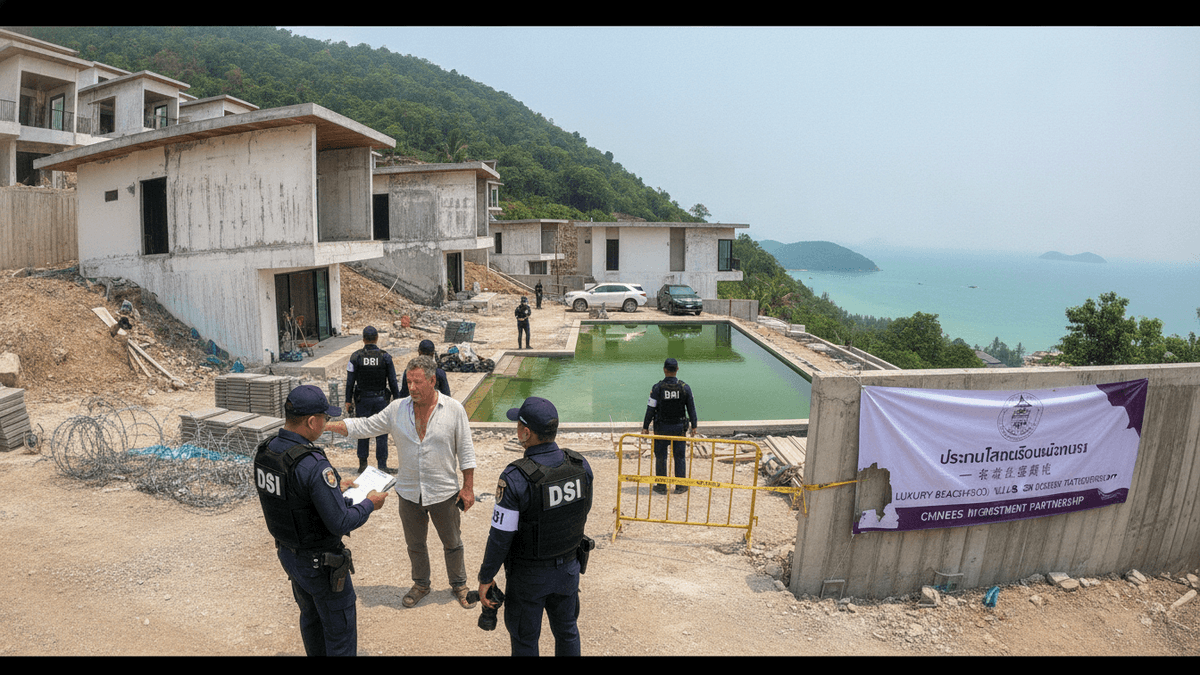
DSI officers examine a luxury villa development during a raid on Koh Samui.
Foreign investors in Thailand’s booming property and tourism sectors are facing heightened scrutiny as the Department of Special Investigation (DSI) expands its crackdown on suspected nominee networks. This isn’t just a local enforcement action; it’s a clear signal that the rules of engagement for international capital are tightening, particularly concerning compliance with the Foreign Business Act.
The DSI, in collaboration with other state agencies, recently raided five locations across the popular islands of Koh Samui and Koh Phangan in Surat Thani. The targets? Businesses suspected of using Thai nationals as nominee shareholders to circumvent the Foreign Business Act, which restricts foreign ownership in certain sectors. One notable discovery was a law office on Koh Samui serving as the registered address for over 100 companies, collectively holding assets valued at approximately 795 million baht. Another raid targeted a luxury villa development in Bo Phut, Koh Samui, promoted with Chinese investment, linked to 15 land plots worth a staggering 1.57 billion baht. The investigation isn’t limited to one nationality; companies tied to Israeli nationals operating hotels and wellness centers are also under the microscope.
This expanding probe highlights a systemic issue that has long allowed foreign capital to flow into restricted sectors via opaque structures. For startup founders, investors, and operators eyeing or already active in Thailand, this DSI action introduces significant strategic implications. Firstly, the risk profile for non-compliant structures has sharply increased. The DSI’s focus on registered addresses and substantial asset valuations indicates a sophisticated approach to uncovering these networks. Secondly, the raids, particularly on a law office, suggest that even professional service providers facilitating these arrangements are now within the investigative scope, potentially exposing a broader ecosystem of complicity.
Justice Minister Pol Lt Gen Rutthapon Naowarat has confirmed the DSI will broaden its investigations, signaling that these initial raids are just the beginning. For foreign businesses, this means an urgent need to review and ensure full compliance with Thai ownership laws. Relying on nominee structures, even those previously considered low-risk, is now a perilous strategy. The fallout could include asset seizures, hefty fines, and reputational damage. Moving forward, transparent and legally sound investment structures will be paramount for sustainable operations in Thailand’s dynamic market.
About the Author