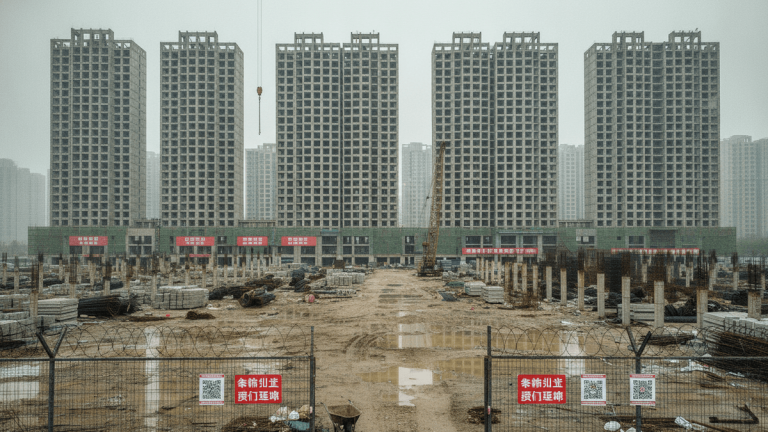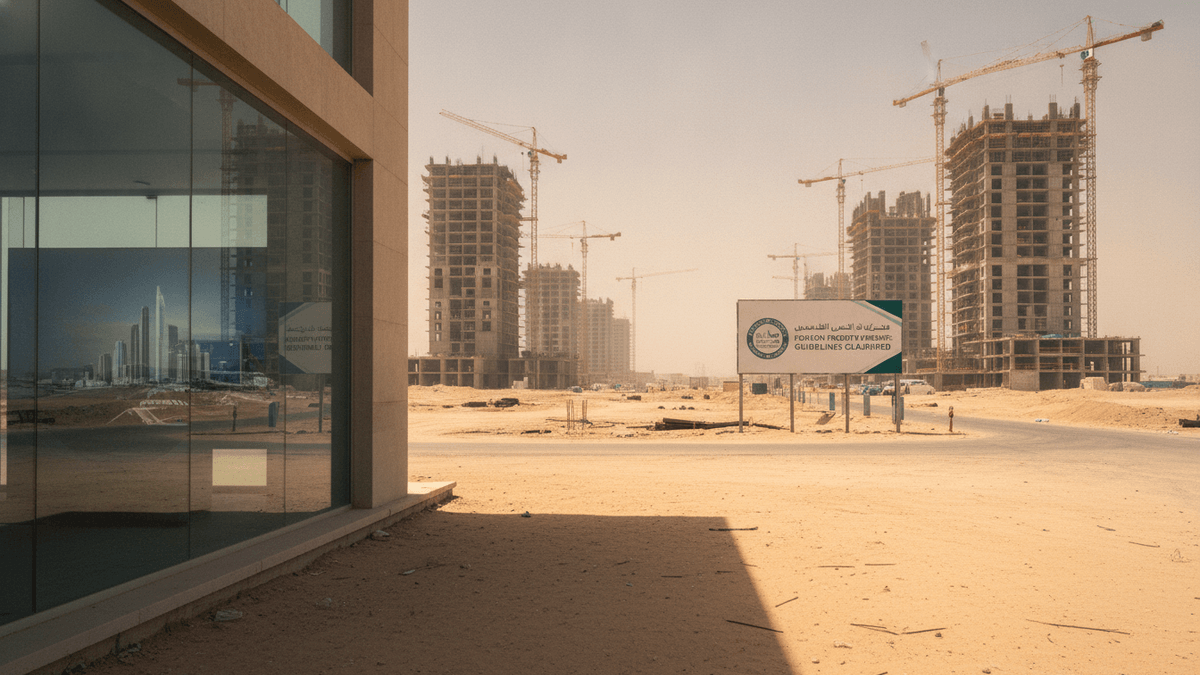
Desert construction site, half-finished towers, official sign, building facade.
Six months after Saudi Arabia’s Real Estate General Authority (REGA) clarified its foreign property ownership rules, the anticipated surge in international buyer demand has yet to materialize, raising questions about the immediate impact of these reforms.
The updated regulations, published by REGA, specify that non-Saudis can purchase properties only within designated zones, particularly mega-project developments. This move came after initial criticism regarding a lack of clarity following the law’s enactment in January 2026. The intent was to provide a clear framework for foreign investment in the kingdom’s ambitious real estate market.
Despite the newfound clarity, the expected influx of international buyers has not come to fruition. This outcome is significant as Saudi Arabia aims to expand its residential and commercial property market to a staggering $84 billion annually by 2030. Developers, who had been patiently awaiting these precise ownership rules before moving forward with projects, are now observing the market closely.
Some market observers suggest it’s premature to declare the reforms a failure in terms of stimulating demand. They argue that six months is a relatively short period for such significant policy changes to fully translate into tangible market shifts, especially for large-scale international investments. The true test of these regulations, and their ability to attract the desired foreign capital, may still be on the horizon.
About the Author