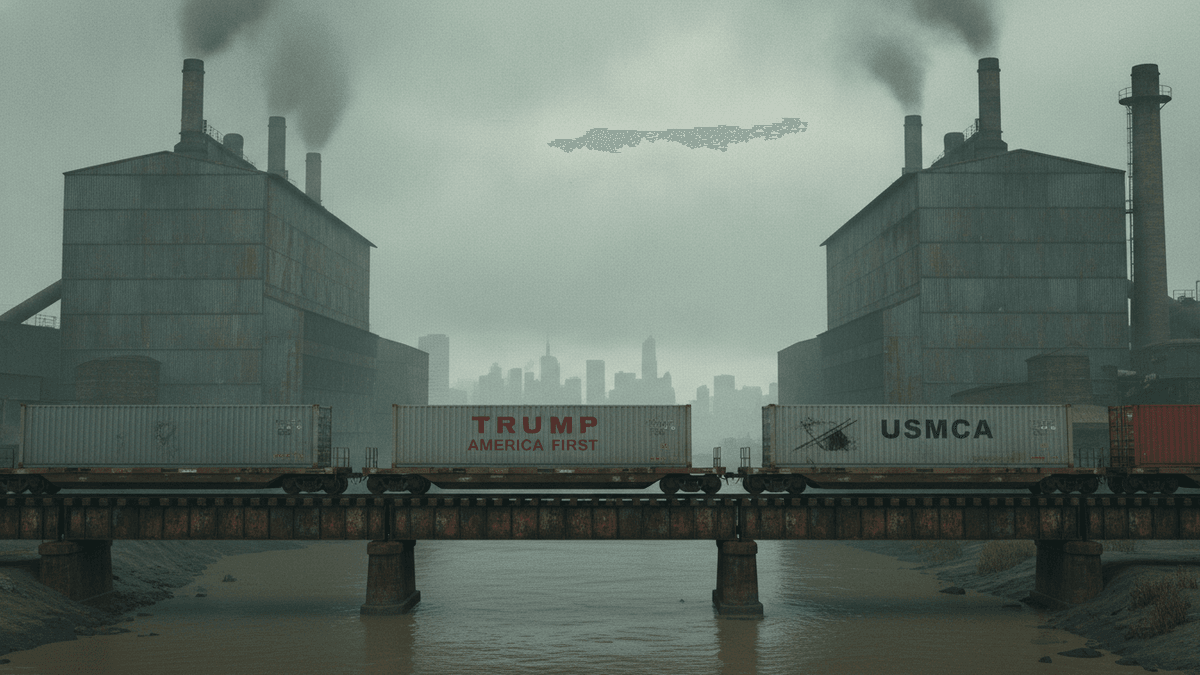
Freight train with "TRUMP AMERICA FIRST" and "USMCA" containers on a bridge.
The Trump administration has announced it will not renew the U.S.-Mexico-Canada Agreement (USMCA), opting instead to pursue individual trade deals with Canada and Mexico. This decision comes as the USMCA reaches its sixth anniversary, a point at which the agreement’s renewal could have been considered.
While the USMCA will remain in effect for the next 10 years during these new negotiations, a senior administration official stated that the current agreement inadequately addressed trade deficits and failed to expand market access opportunities. Specific concerns cited include Canada’s dairy restrictions and Mexico’s actions regarding U.S. corn imports.
The administration indicated that the U.S. might pursue separate bilateral agreements, or “protocols,” with Mexico and Canada. The success of these potential deals hinges on their ability to reduce trade deficits with these countries. President Trump, described as “skeptical” of modifying the existing trilateral pact, still acknowledges the mutual interest in continued negotiations.
Upcoming discussions with Mexico, scheduled for July 20, are expected to focus on labor obligations, environmental and water quality standards, and intellectual property rights. The U.S. has already engaged Mexico on strengthening rules of origin, enhancing economic security alignment, and resolving bilateral issues, with Mexico reportedly being constructive and making proposals on deficit reduction.
Canada, however, is viewed as being in a different position, particularly after imposing retaliatory tariffs on U.S. goods following U.S. tariffs on Canadian products. The official noted that Canada, along with China, was one of the few countries to retaliate against the U.S. and has yet to address numerous non-tariff barriers and trade challenges.
The decision not to renew the USMCA and instead enter a 10-year review phase does not necessarily mean negotiations will take that long. The administration emphasized that President Trump reserves the right to withdraw from the agreement even before the 10-year period concludes, should Canada or Mexico not meet the U.S. requirements.
About the Author