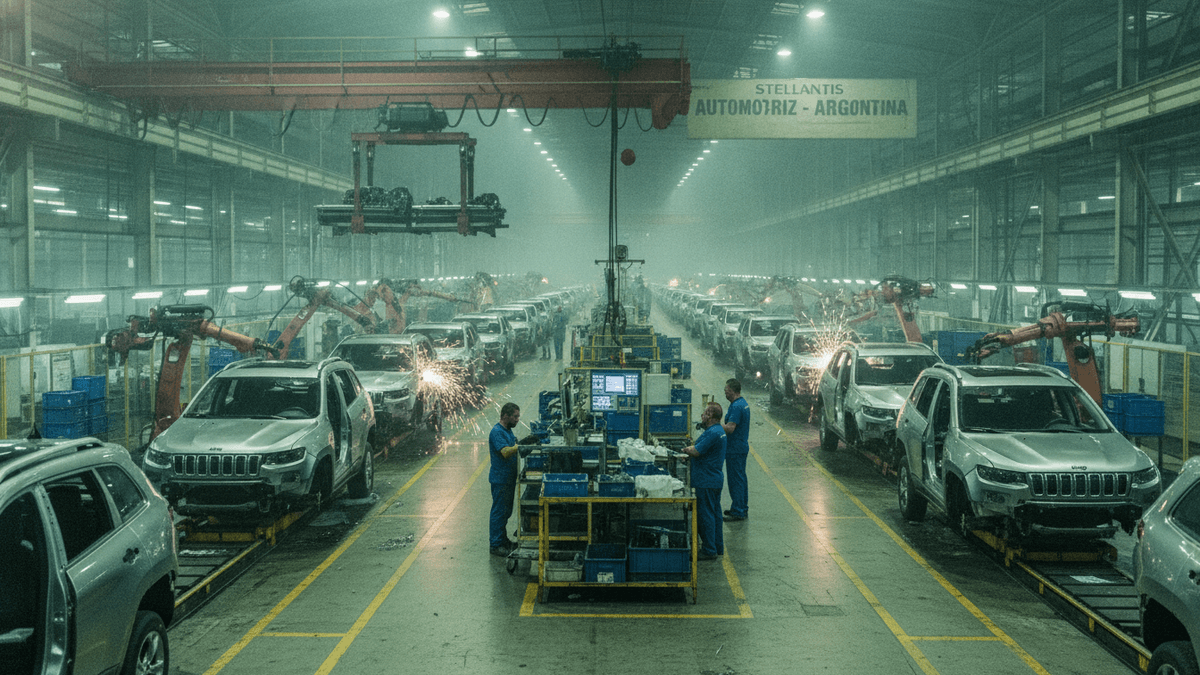
Midday view of the Stellantis assembly line in Argentina, production in progress.
Stellantis’ latest earnings signal a strategic shift for the automotive giant, with its second-quarter delivery surge highlighting critical regional plays and emerging market challenges. The multinational automotive group, encompassing 14 brands including Jeep and Fiat, announced a significant 10 percent rise in global vehicle deliveries for Q2 2026, compared to the same period last year. The company delivered a total of 1.6 million vehicles between March and June across its various sales channels, painting a clear picture of where the automotive market is thriving and where it’s facing headwinds.
The primary drivers of this growth were strong performances in North America and Enlarged Europe. North America experienced a substantial 38 percent year-on-year increase in deliveries, largely due to the introduction of new product offerings and powertrain options, with notable demand for models like the Jeep Cherokee. This robust performance validates CEO Antonio Filosa’s earlier strategic focus on the region.
In Europe, Stellantis saw a more modest but still significant 5 percent increase, or 39,000 units, driven mainly by electric vehicle (EV) deliveries. This success was shared evenly with its Chinese partner, Leapmotor, signaling the importance of strategic alliances in the accelerating EV transition. The group also benefited from the recent launches of four models built on the Smart Car platform—the Citroen C3, C3 Aircross, Opel/Vauxhall Frontera, and Fiat Grande Panda—which collectively saw a 51 percent rise in sales year-on-year, indicating successful portfolio expansion.
However, the global picture wasn’t uniformly positive. Deliveries declined by 3 percent (4,000 units) in the Middle East and Africa, primarily due to regional conflict, underscoring the geopolitical risks for global businesses. South America also saw a 7,000-unit drop, where a sharp decline in Argentina overshadowed growth in Brazil, highlighting the volatility of specific national economies.
These results align with Stellantis’ ambitious 60 billion euro five-year investment plan, which explicitly prioritizes North America while strategically reducing capacity in Europe. For startup founders, investors, and operators in the automotive tech or related sectors, this isn’t just about quarterly sales figures; it’s about resource allocation and long-term market positioning in a rapidly evolving industry, signaling clear regional priorities and the continued, albeit uneven, global march towards electrification.
About the Author