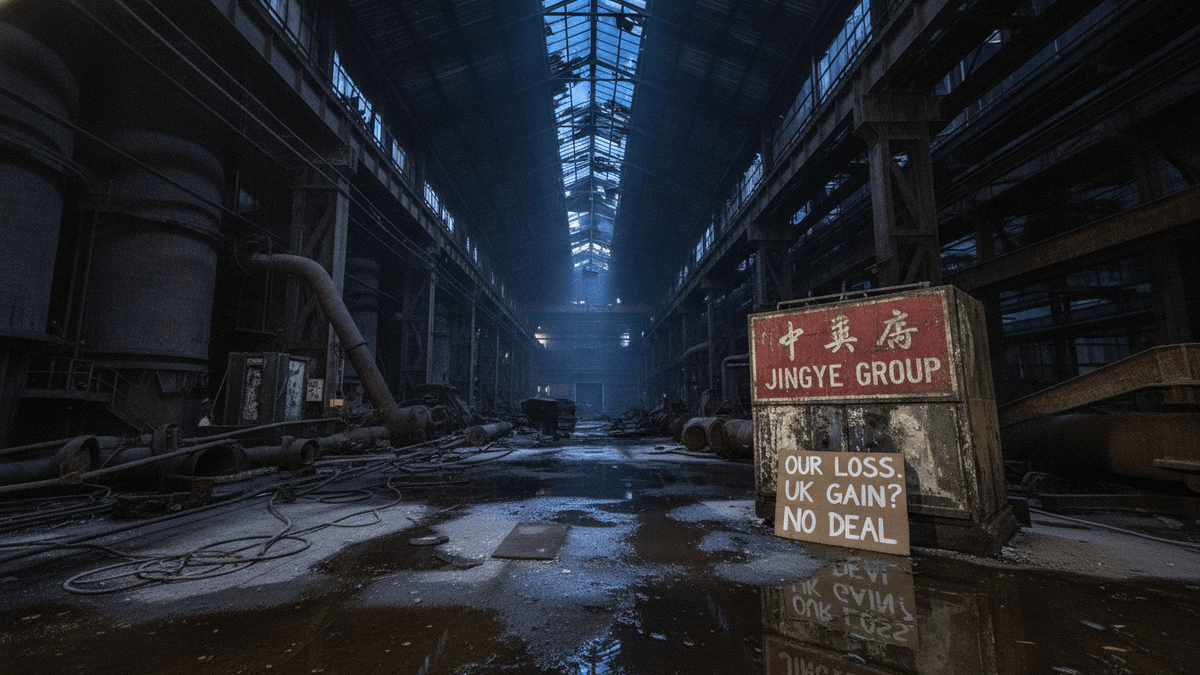
Interior of a derelict industrial building with "JINGYE GROUP" sign
The nationalization of British Steel by the UK government last week has ignited a contentious dispute, with China’s Jingye Group, the former owner, now demanding substantial compensation. This move escalates concerns over government intervention in strategic industries and its implications for international investors.
Jingye Group, which had owned British Steel, alleges the UK offered almost no compensation for the takeover. The nationalization occurred after the Chinese firm indicated it was considering closing the blast furnaces at its Scunthorpe plant in northern England, prompting the UK government to assume operational control.
In a public statement via WeChat, Jingye Group asserted that the nationalization not only “tarnished the credibility of the British government” but also “spooked international investors” and caused “significant losses” to its operations and, by extension, British taxpayers. The company urged the UK government to cease “trampling on international investment rules,” framing the incident as a breach of market principles.
To press its claims, Jingye Group has initiated negotiation procedures under relevant bilateral investment agreements. The firm explicitly reserves all rights, including the option to pursue international arbitration, signaling a potentially drawn-out legal battle. Furthermore, Jingye indicated it intends to represent British taxpayers in seeking to hold both the UK government and British Steel’s management legally liable, though specifics on this unusual approach remain unclear.
The UK government, for its part, confirmed last week that an independent evaluation would be conducted to determine whether any compensation would be paid to Jingye Group. Meanwhile, the Chinese Foreign Ministry has weighed in, supporting Jingye’s stance by urging the UK to “respect market principles and the spirit of contract” and to find mutually acceptable solutions. This diplomatic backing underscores the broader geopolitical dimension of the dispute, highlighting Beijing’s interest in protecting its enterprises’ overseas investments through legal channels.
This situation presents a critical test for the UK’s reputation as a stable environment for foreign direct investment, especially as governments globally grapple with the balance between industrial policy and investor rights. Startup founders and investors should watch closely as this dispute unfolds, as it could set precedents for how national interests intersect with international business agreements.
About the Author