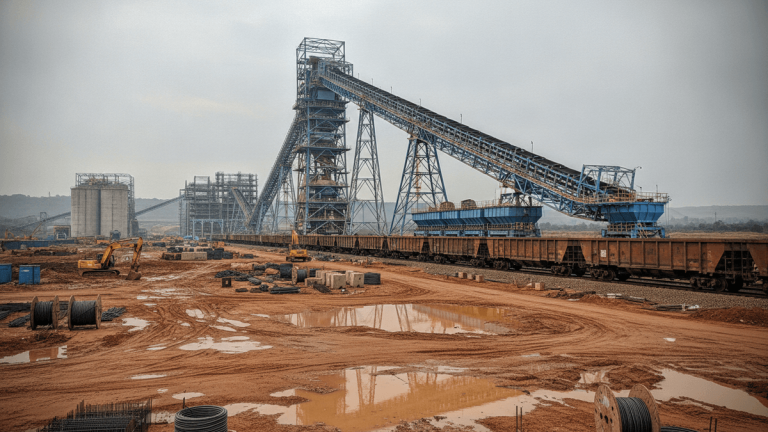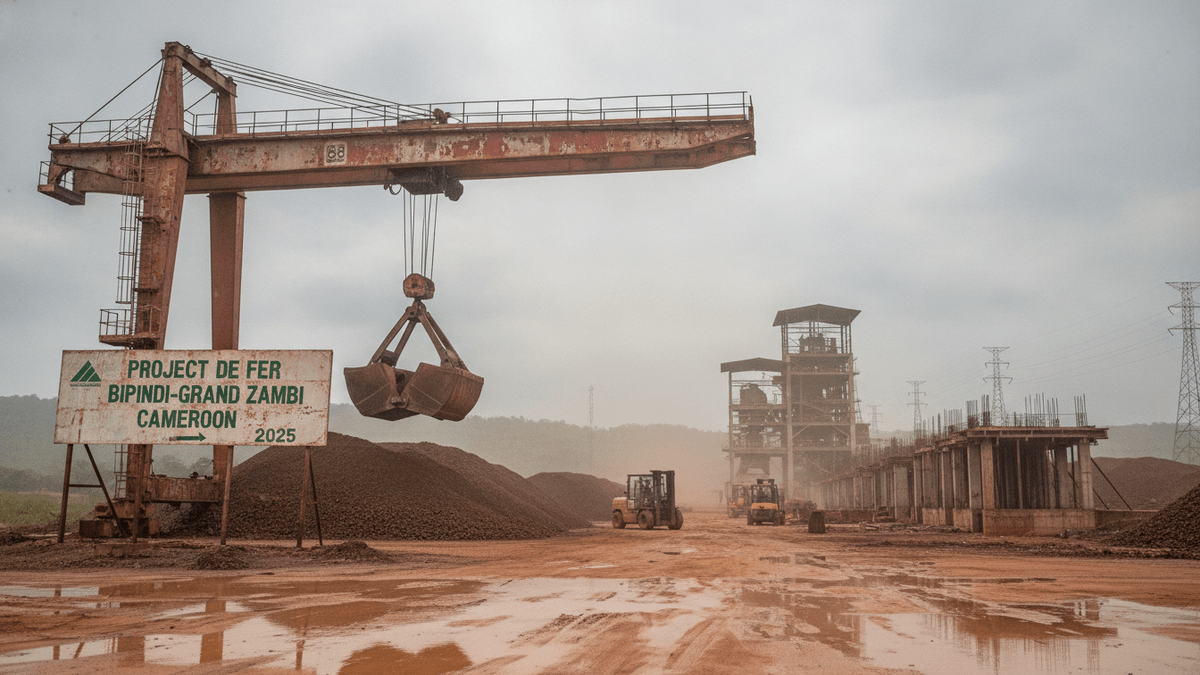
Iron ore project site in Cameroon under overcast sky, large crane and earthmovers.
A significant disagreement has emerged between the International Monetary Fund (IMF) and the Bank of Central African States (BEAC) regarding BEAC’s special refinancing window, a facility designed to support productive investments within the Central African Economic and Monetary Community (CEMAC). The IMF has recommended the gradual phasing out of this facility, citing concerns that it could negatively impact foreign exchange reserves, particularly when investment projects necessitate the import of equipment.
BEAC Governor Yvon Sana Bangui has strongly defended the refinancing window, arguing it is a crucial mechanism for fostering productive investment and industrialization in a region where businesses often struggle to access long-term financing. Bangui questioned the IMF’s stance, asking if BEAC is unique globally in offering such a tool and asserting that temporary pressure on foreign exchange reserves should not justify its permanent elimination.
As a compromise, BEAC has temporarily suspended the facility’s operations. A working group has been established to conduct a thorough assessment of its effectiveness and to benchmark it against similar instruments used by central banks worldwide. BEAC views this refinancing window as a strategic instrument essential for diversifying financing sources and offering an alternative to costly international borrowing, especially given the high financing costs CEMAC borrowers face due to external risk assessments.
Cameroon has been the primary beneficiary of this refinancing window, with substantial loans approved in 2025 for projects such as the Bipindi-Grand Zambi iron ore project and Camtel’s investment program. The broader discussion involves BEAC’s commitment to economic development, including its renewed cooperation with the Development Bank of Central African States (BDEAC). The central challenge remains balancing the imperative to protect foreign exchange reserves, critical for monetary stability, with the pressing need to finance industrialization and provide long-term credit in the region. The suspension of the refinancing window represents a temporary détente as BEAC conducts its evaluation, while the IMF maintains its advocacy for measures that strengthen foreign exchange reserves.
About the Author