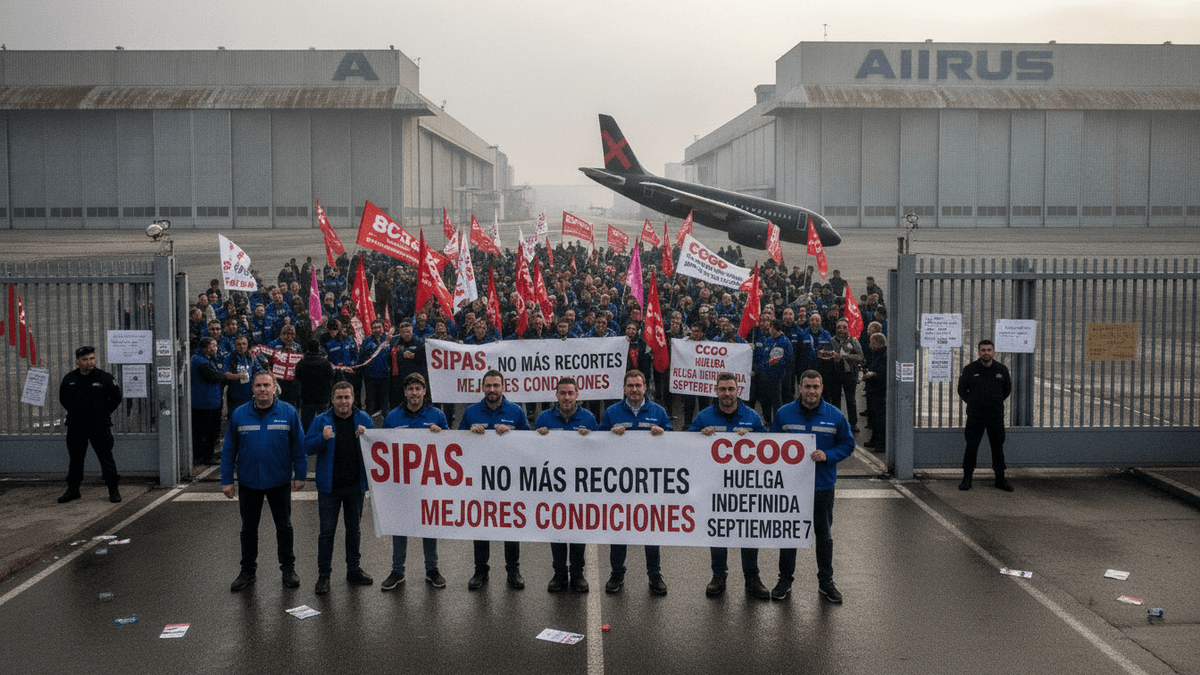
Airbus workers on strike with banners outside factory gates in Spain
The European aerospace giant Airbus is facing significant operational headwinds as employees in Spain have initiated a widespread strike, threatening to severely impact delivery schedules. This industrial action, which began on July 1 and is set to continue until the end of the month, underscores growing labor tensions within critical manufacturing sectors across Europe.
Led by the Independent Union of Aviation Professionals (SIPA), workers across most of Airbus’s eight Spanish sites are protesting what they describe as deteriorating working conditions. Key grievances include sub-inflation pay raises, the implementation of stricter attendance monitoring, and increased on-site requirements for office staff. This follows similar protests in France last month concerning remote work policies, indicating a broader trend of employee dissatisfaction with post-pandemic work arrangements and compensation.
While SIPA’s strike is currently active, the situation could escalate dramatically. CCOO, Airbus’s largest union in Spain, has not yet joined but has issued a potent threat: an indefinite strike from September 7 if their demands are not met. Given Airbus employs over 14,000 people in Spain, a full-scale, indefinite strike involving CCOO would undoubtedly cripple production and delivery capabilities, creating significant ripple effects across the global aviation supply chain.
For startup founders, investors, and operators in the manufacturing and logistics sectors, this situation highlights the critical importance of robust labor relations and adaptable supply chain strategies. The potential disruption to Airbus’s output, a major player in commercial aircraft manufacturing, could lead to delays for airlines, impact component suppliers, and potentially shift market dynamics. Companies relying on complex international supply chains must assess their vulnerabilities to localized labor disputes and consider diversified sourcing or buffer stock strategies. The ongoing negotiations will be a key indicator of how major corporations navigate employee demands in an inflationary environment, setting precedents for labor relations in the coming months.
About the Author