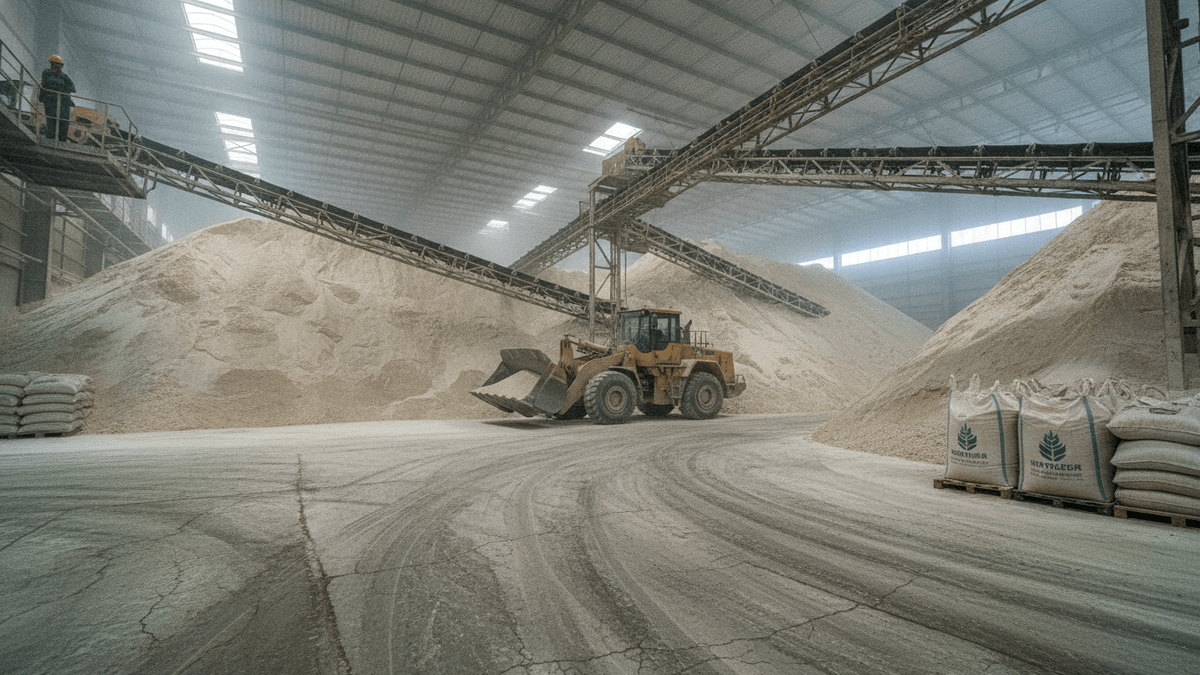
Midday view of large-scale fertilizer storage facility with front-end loader.
India’s government has announced a substantial increase in the nation’s cumulative fertiliser stock, reaching an impressive 196.08 lakh tonnes. This figure marks a significant rise compared to the 168.67 lakh tonnes recorded during the same period last year, a development largely attributed to an accelerated indigenous manufacturing ramp-up. Adding to this positive outlook, four critical fertiliser cargoes have successfully navigated through the strategic Strait of Hormuz, securing essential supplies.
The notable 16.25% increase in fertiliser reserves underscores India’s strategic push towards self-reliance in agricultural inputs. This robust stock position is a direct reflection of heightened domestic production capabilities, which have been instrumental in bolstering national supply chains and reducing external dependencies over the past year. Such a proactive approach mitigates potential vulnerabilities in global supply dynamics.
The safe transit of four fertiliser cargoes through the Strait of Hormuz is a crucial operational success. This maritime chokepoint is vital for global trade, and the unhindered passage ensures the timely arrival of essential nutrients for India’s agricultural sector, reinforcing the stability of its import logistics. Such clearances are critical for maintaining continuous supply lines.
Maintaining elevated fertiliser stocks is paramount for India’s agricultural productivity and food security, particularly as planting seasons approach. The government’s consistent monitoring and strategic management of these resources aim to prevent shortages, stabilize market prices, and ensure farmers have reliable access to necessary inputs. This data-driven approach supports agricultural resilience.
With indigenous manufacturing continuing its upward trajectory and key international shipments secured, India’s fertiliser sector demonstrates strong operational health. The current stock levels position the nation favorably to meet its agricultural demands, providing a solid foundation for upcoming crop cycles and reinforcing overall economic stability.
About the Author