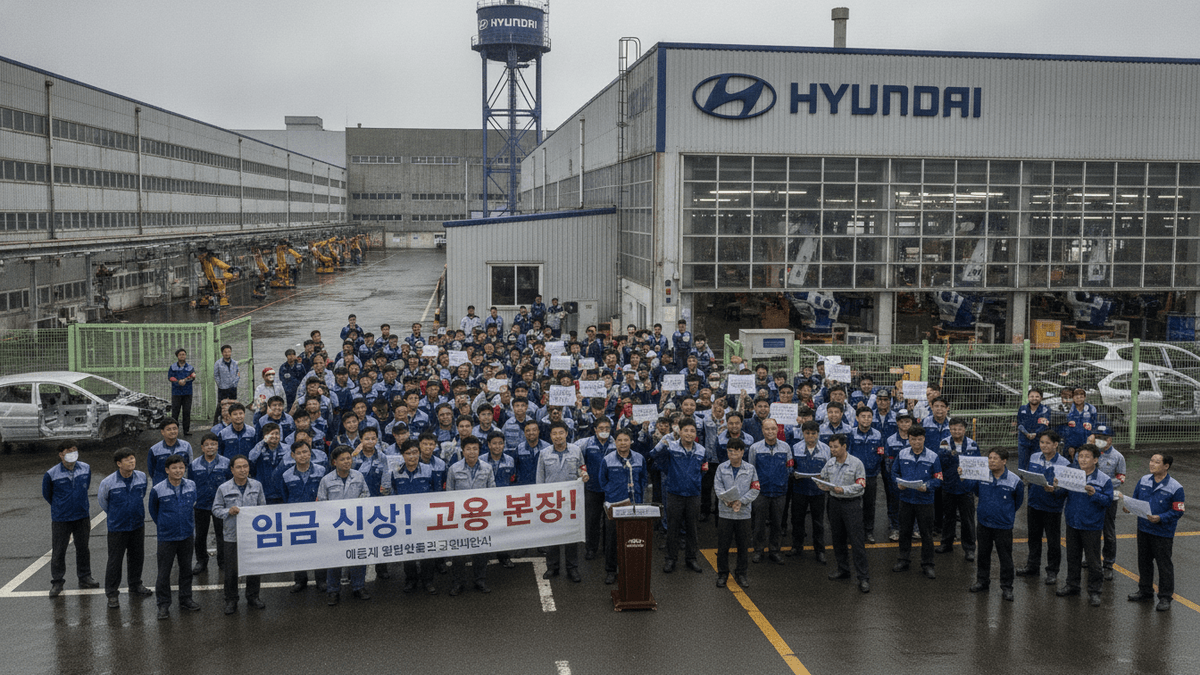
Hyundai Motor workers strike over wages and AI job security.
The automotive industry, already navigating seismic shifts from electrification to autonomous driving, now faces another profound challenge: worker anxiety over AI and robotics. This tension boiled over at Hyundai Motor in South Korea this week, as its labor union initiated a three-day partial strike, signaling a deepening conflict over wages and future job security.
Beginning Monday, July 13, 2026, Hyundai workers are downing tools for four hours daily, demanding a significant pay raise, higher bonuses, and an extension of the retirement age. These actions follow the collapse of the fifth round of wage negotiations on July 8. The union rejected management’s offer of an 89,000 won monthly base salary increase, a performance bonus, and company shares. Instead, they are pushing for a 149,600 won increase, a larger performance bonus, an 800 percent bonus, and the reinstatement of dismissed workers. At the heart of the dispute are profound concerns that advancements in artificial intelligence and robotics threaten to automate jobs, making job security a critical bargaining point for the union.
This strike is more than just a typical wage dispute; it’s a microcosm of the broader industrial transformation confronting global manufacturers. For startup founders building AI or robotics solutions, this incident underscores the critical need to consider the human element and potential societal impacts of their innovations. The automotive sector, a bellwether for industrial change, reveals how rapid technological shifts can exacerbate labor-management tensions, particularly when economic benefits are perceived as unevenly distributed. Hyundai, aiming for an earnings turnaround with new model launches, now faces an estimated 200 billion won ($132 million) in losses from this initial walkout, a stark reminder of the financial stakes involved.
Executive vice president Choi Yeong-il expressed regret, highlighting the disruption to the company’s strategic goals. The union, for its part, plans to assess further industrial action once the current strike concludes on Wednesday. This ongoing standoff could set a precedent for future labor negotiations in industries heavily impacted by automation, forcing companies to proactively address job displacement fears and integrate workers into the value creation of new technologies, rather than merely reacting to industrial unrest. The resolution, or lack thereof, at Hyundai will offer crucial insights for businesses worldwide grappling with the dual pressures of innovation and workforce management.
About the Author