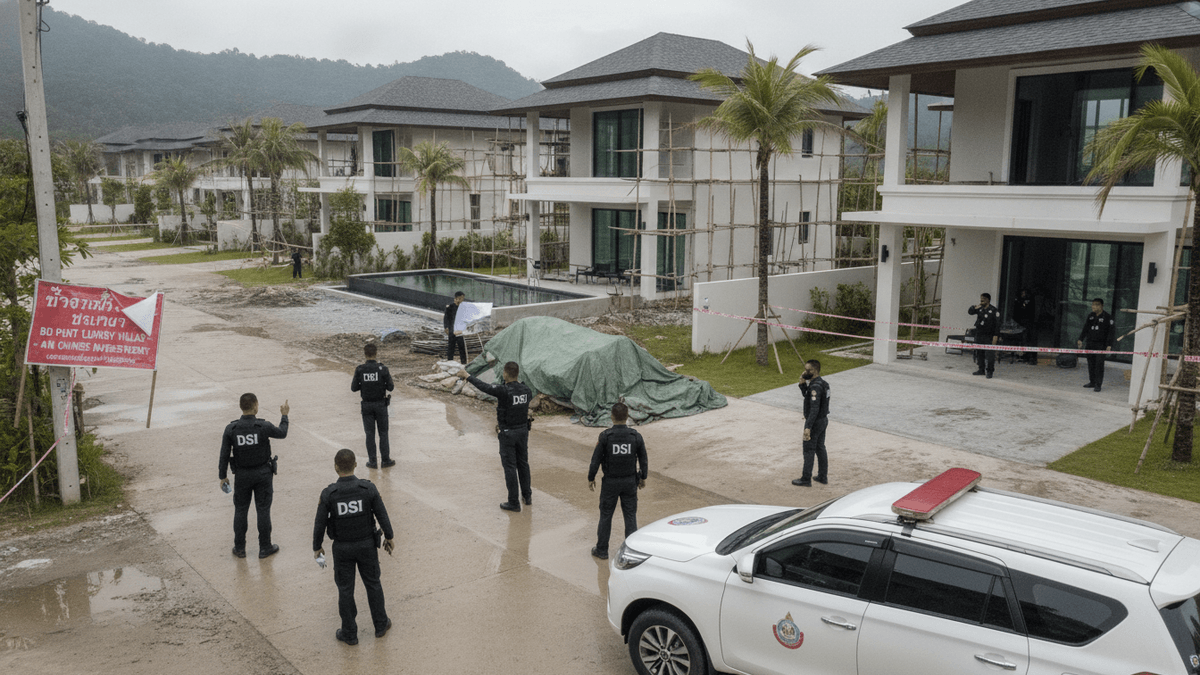
DSI officers investigate a luxury villa development in Bo Phut, Koh Samui
A recent crackdown by Thailand’s Department of Special Investigation (DSI) on alleged nominee networks in Koh Samui and Koh Phangan serves as a stark warning for foreign investors operating in Southeast Asia. These raids, targeting illicit foreign ownership in property and tourism, underscore a growing regulatory push for transparency and compliance that startup founders and investors cannot afford to ignore.
On Friday, DSI officials, alongside other state agencies, swept across five locations, uncovering sophisticated schemes designed to circumvent Thailand’s Foreign Business Act. The core issue: Thai nationals being used as nominee shareholders to conceal foreign control over restricted businesses. This isn’t a new phenomenon, but the scale and official response signal a significant shift.
Among the raided sites was a luxury villa development in Bo Phut, Koh Samui, linked to 15 land plots valued at a staggering 1.57 billion baht. This project, reportedly backed by Chinese investors actively involved in management, was tied to at least five related companies handling everything from development to sales. Another key target was a law office on Koh Samui, found to be associated with over 150 companies, more than 100 of which shared the same registered address and held assets worth approximately 795 million baht. Further investigations revealed businesses connected to Israeli nationals operating hotels, wellness centers, and rental properties.
For foreign operators and investors, these developments carry critical strategic implications. While nominee structures have historically been a common, albeit risky, workaround for foreign ownership restrictions in many emerging markets, Thailand’s intensified enforcement demonstrates a clear commitment to dismantling them. The exposure of such networks can lead to severe penalties, including asset forfeiture, operational shutdowns, and legal prosecution for both foreign beneficiaries and their Thai nominees.
This isn’t merely about individual cases; it reflects a broader tightening of the regulatory environment. Governments are increasingly sophisticated in identifying these opaque structures, driven by desires for fair competition, tax compliance, and national security. For businesses built on legitimate, transparent foundations, this crackdown levels the playing field, but for those relying on grey areas, the risk profile has dramatically escalated.
What should founders and investors take away? The imperative for rigorous due diligence and fully compliant legal structures has never been clearer. Relying on nominee arrangements is a ticking bomb. Instead, explore legitimate avenues for foreign investment, such as obtaining specific foreign business licenses, utilizing treaty protections, or structuring joint ventures with clear ownership and governance. Proactive legal counsel and a deep understanding of local regulations are no longer optional; they are essential for sustainable growth in markets like Thailand.
The DSI’s actions send an unequivocal message: the era of easily concealed foreign ownership in Thailand is drawing to a close. Strategic investors must adapt, prioritizing transparency and legal adherence to navigate this evolving landscape successfully and protect their assets.
About the Author