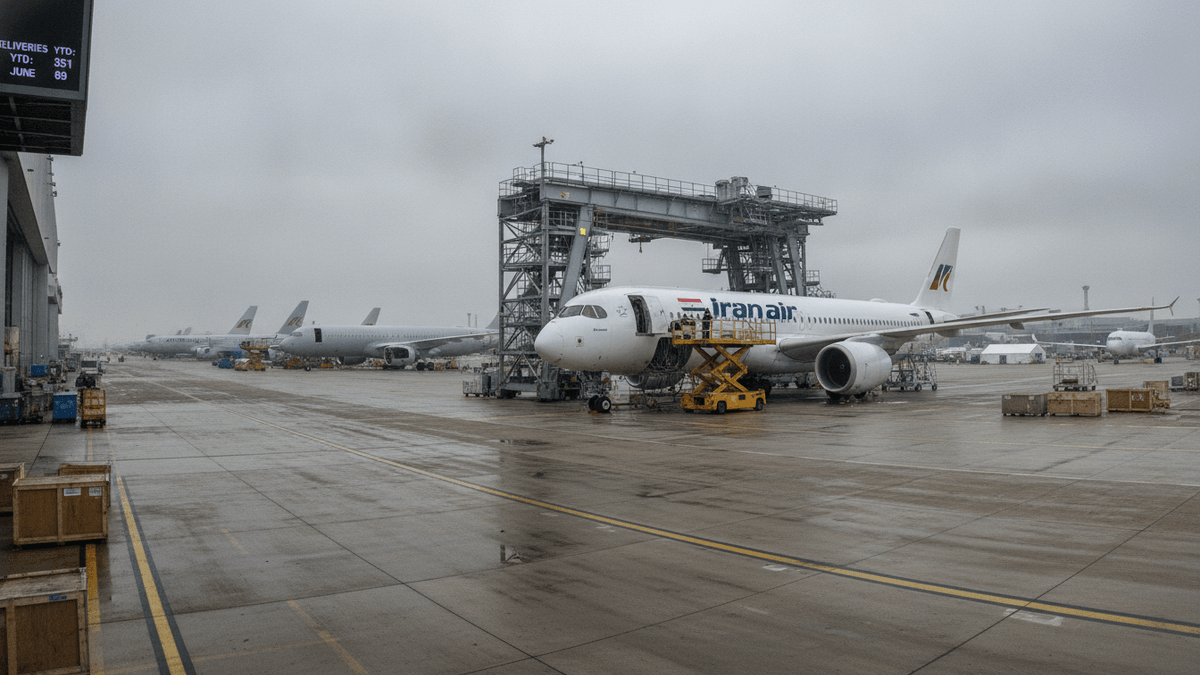
Iran Air Airbus A320 undergoing maintenance at an industrial airport apron
European aerospace giant Airbus delivered 351 airplanes in the first half of 2026, marking a robust 15 percent increase compared to the same period last year. This performance, which included 89 jet handovers in June, positions the planemaker broadly on track to meet its ambitious full-year target of 870 deliveries, with some industry analysts even eyeing an informal goal of 900.
Despite this significant uptick, Airbus continues to navigate a complex operational landscape. While engine availability has improved, the company grappled with persistent supply chain hurdles and notable delays for jets destined for the critical Chinese market, impacting its first-quarter performance.
Beyond manufacturing challenges, broader geopolitical currents are shaping the industry’s outlook. Airbus reported 887 aircraft sales from January to June, netting 822 after cancellations. However, the company has revised its industry-wide forecast for passenger aircraft demand down by 1 percent. This adjustment is directly attributed to the ongoing Iran war and escalating global trade tensions, underscoring how external factors can quickly recalibrate market expectations for even the largest players.
For startup founders and investors in adjacent sectors, Airbus’s trajectory offers a nuanced lesson. Strong delivery numbers signal underlying demand and operational resilience, but persistent supply chain vulnerabilities and geopolitical instability remain potent forces that can shift market dynamics and long-term forecasts. The ability to pivot and adapt to these macro pressures will be crucial for the aerospace sector and its expansive ecosystem.
About the Author