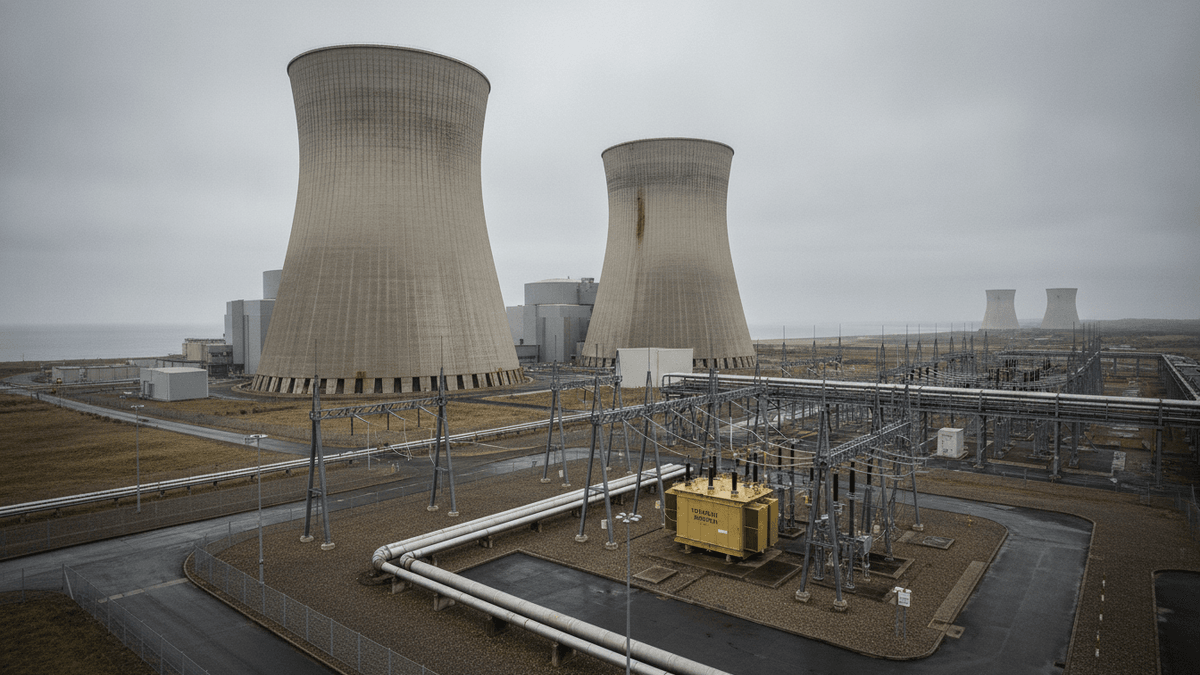
Sizewell B nuclear power plant under overcast skies with transmission infrastructure.
This week, the energy sector saw a mix of strategic extensions, green investments, infrastructure hurdles, and major divestments, painting a clear picture of the complex transitions underway. For founders and investors, these movements highlight both significant opportunities and critical challenges in securing future energy supplies and powering the AI revolution.
The UK’s energy security received a boost as the Sizewell B nuclear plant, operated by EDF, secured a 20-year life extension until 2055. This agreement with the UK Government not only safeguards 900 jobs in Suffolk but also ensures a continued supply of clean, reliable power, underpinning the UK’s commitment to a stable energy grid amidst its net-zero ambitions.
Across the Channel, France’s geothermal ambitions gained momentum with RGreen Invest’s US$59.7 million commitment to Arverne, a leading provider in the sector. This substantial investment is poised to accelerate France’s geothermal and lithium initiatives, contributing significantly to Europe’s broader push for energy independence and sustainable practices.
However, the digital infrastructure supporting the future also hit a snag. The planned 1GW AI data centre near Glasgow, Scotland, a joint venture between CoreWeave and DataVita, faces potential delays to its 2030 target. An investigation by The Guardian highlighted critical supply chain issues, particularly a shortage of essential electrical equipment, which threaten the necessary grid infrastructure rollout.
Meanwhile, energy giants are recalibrating their portfolios. Shell announced the sale of its South African fuel retail business, encompassing 580 service stations, to the Abu Dhabi National Oil Company (ADNOC) Distribution for US$1 billion. This move, spearheaded by CEO Wael Sawan, reflects Shell’s strategic pivot away from lower-margin downstream assets towards higher-return upstream projects, reshaping its global footprint.
Addressing the burgeoning demands of AI, Gerhard Salge, CTO at Hitachi Energy, offered insights into how data centres can evolve into more stable grid citizens. He emphasized that custom hardware ecosystems and collaborations, such as with NVIDIA, are crucial for managing the highly variable load patterns characteristic of AI facilities, preventing power spikes that could destabilize power networks.
These five stories collectively underscore several strategic imperatives. The Sizewell B extension and the Arverne investment highlight the dual-track approach to energy security: maintaining existing baseload capacity while rapidly scaling new, clean technologies. Shell’s divestment signals a broader trend among integrated energy companies to optimize portfolios for higher returns, often shedding traditional retail assets. Most critically, the delays in Scotland and Hitachi Energy’s solutions point to the looming grid infrastructure challenge posed by the exponential growth of AI. The demand for stable, high-capacity power is outstripping current supply chain capabilities, creating a bottleneck for digital transformation.
For startup founders, this landscape presents clear opportunities in grid modernization, energy storage, sustainable infrastructure development, and supply chain innovation. Investors should look beyond traditional energy plays towards companies solving the complex interplay between energy generation, distribution, and consumption, especially as AI’s power hunger intensifies. Operators must prioritize resilience and strategic partnerships to navigate these transitions, recognizing that energy is not just a utility but a foundational pillar for future growth and technological advancement.
About the Author