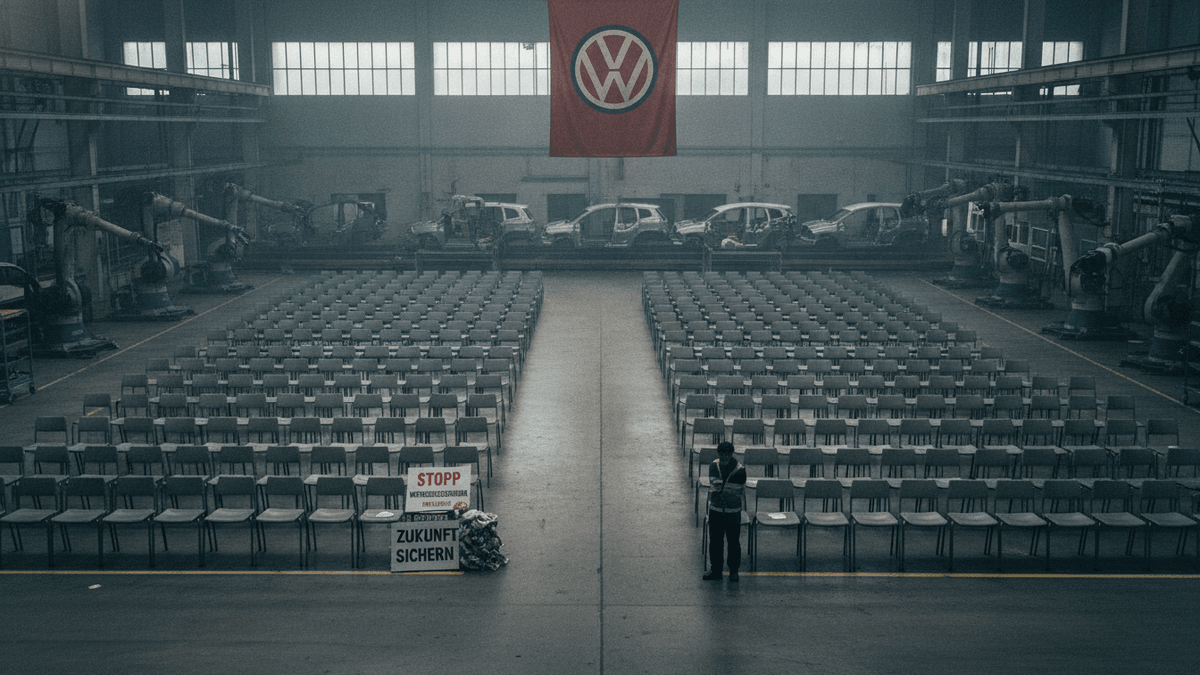
Empty Volkswagen factory floor prepared for a stakeholder meeting on restructuring.
Volkswagen, a titan of the automotive industry, is at a crossroads. Stakeholders are convening for a critical meeting to consider a drastic proposal: slashing tens of thousands of jobs and closing factories across Germany. This isn’t just about cost-cutting; it’s a fight for survival against escalating expenses, underutilized capacity, and relentless competition from China, exacerbated by US import tariffs.
CEO Oliver Blume faces the immense challenge of convincing powerful labor factions, represented by IG Metall, and the influential Porsche and Piech owner families to accept profound restructuring. The proposed plan, which could see up to 100,000 jobs cut—double previous estimates—and the closure of four German plants (Hanover, Emden, Zwickau, and Audi’s Neckarsulm site), marks a significant departure from a late 2024 agreement that protected German production facilities.
The urgency stems from sobering economic realities. German car plants are projected to operate at a mere 81% capacity in 2026, dropping further to 73% by the end of the decade. This underutilization, coupled with high production costs in Germany, makes the company vulnerable in a rapidly evolving global market.
This move by Volkswagen highlights a broader trend impacting legacy automakers globally. The shift towards electric vehicles, coupled with aggressive pricing and innovation from Chinese manufacturers like BYD, is forcing traditional giants to re-evaluate their entire operational footprint. For Volkswagen, a company deeply intertwined with German industrial identity, these proposed cuts represent a painful but potentially necessary pivot.
The tension between management’s drive for efficiency and labor’s commitment to job security is palpable. IG Metall’s nationwide protests underscore the political and social sensitivity of these decisions. While cost rationalization is crucial for long-term competitiveness, the human cost and the potential impact on Germany’s industrial base are significant considerations that Blume must navigate.
The outcome of these stakeholder discussions will set the trajectory for Volkswagen for years to come. Success in securing buy-in for radical restructuring could allow the company to streamline operations, invest more heavily in future technologies, and compete more effectively. Failure, however, could lead to prolonged internal strife, delayed modernization, and a further erosion of market share. This meeting is not just about Volkswagen’s future; it’s a bellwether for how established automotive players can adapt, or fail to adapt, to a new global manufacturing landscape.
About the Author