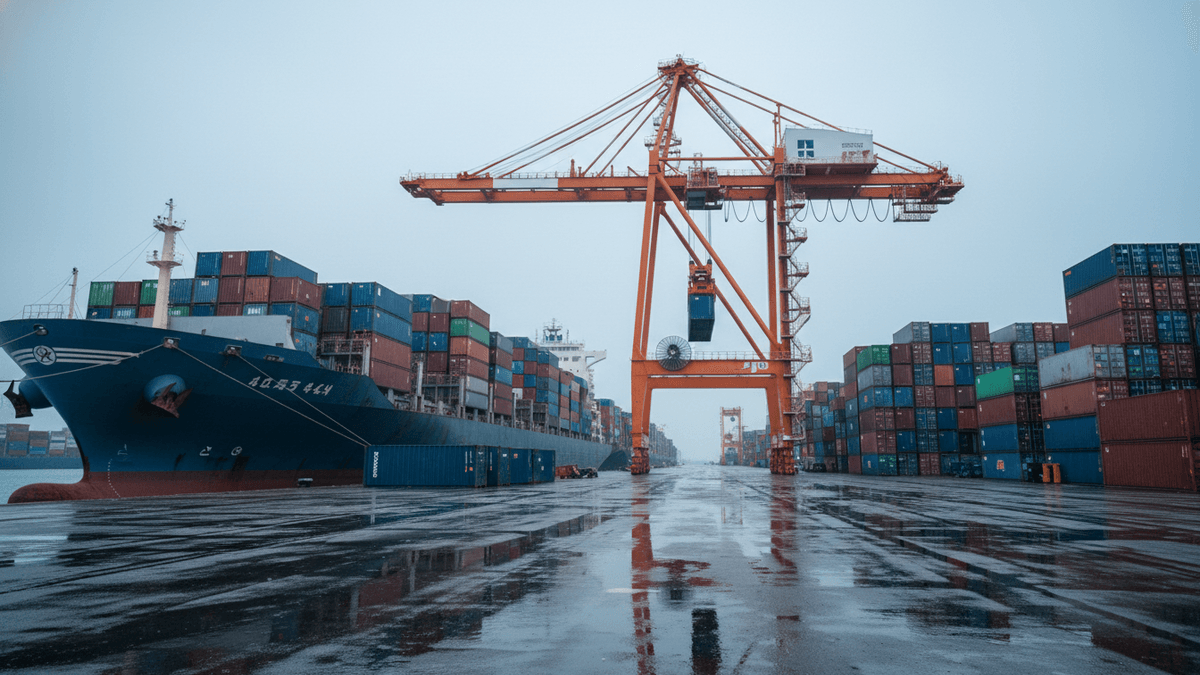
Busan container terminal, large ship being unloaded, overcast afternoon
South Korea, a major maritime hub, presents both opportunities and challenges for foreign shipping companies. A recent article, ‘Staying afloat: Foreign shipping in Korea’ by Choon Won Lee and Dahee Kim of Jipyong, published on May 28, 2026, delves into the intricacies of South Korea’s maritime legal and regulatory landscape. The article serves as a practical guide for foreign operators aiming to navigate this complex environment.
The authors highlight South Korea’s advanced port infrastructure, competitive shipbuilding industry, and substantial international trade volumes. However, they caution that while international conventions play a role, foreign operators must be well-versed in South Korea’s specific domestic legislation, regulatory practices, and judicial interpretations.
At the core of South Korea’s maritime regulatory framework is the Commercial Act, governing critical aspects such as the carriage of goods, marine casualties, collision liability, and liability limitations. This is supplemented by specialized legislation like the Framework Act on Maritime Safety and the Marine Environment Management Act. Regulatory oversight is primarily the responsibility of the Ministry of Oceans and Fisheries and port authorities, which enforce compliance rigorously, particularly in areas like environmental protection, operational safety, and digital compliance.
The article stresses key considerations for foreign shippers, including cabotage restrictions, licensing requirements, port entry procedures, and reporting obligations. A thorough understanding of local commercial practices is crucial for efficient port operations, as unfamiliarity can lead to costly delays.
Contractual risk allocation is also a vital aspect, requiring careful attention to choice of law clauses, jurisdiction agreements, indemnity provisions, and dispute resolution clauses. South Korean courts are active in handling maritime claims and casualty litigation, often asserting jurisdiction. Liability assessments combine statutory provisions, contractual terms, and judicial precedents, with strict adherence to deadlines and evidentiary standards. Prompt evidence preservation and a well-coordinated claims strategy are therefore essential for foreign interests involved in incidents in or near South Korean waters. Marine casualties, especially those involving pollution, personal injury, or significant cargo damage, attract stringent regulatory scrutiny and swift investigations.
South Korean courts are noted for their sophistication in handling maritime disputes involving foreign parties, characterized by predictable procedures and transparent adjudication. Provisional remedies, such as vessel arrest, are readily available and strategically employed. Arbitration is also a key component of international shipping disputes, with domestic courts generally recognizing and enforcing foreign arbitration agreements and awards. Effective enforcement of judgments and awards requires careful adherence to procedural requirements. Furthermore, the interaction between insolvency and restructuring procedures and maritime claims can be complex, requiring early assessment of attachment rights, vessel ownership, and competing creditor claims.
Environmental regulation presents a significant compliance challenge. Increasing scrutiny is placed on marine pollution, emissions compliance, and safety-related incidents, often leading to civil liability and administrative sanctions. The growing interaction with international carbon emissions frameworks adds to the operational and legal complexity, as South Korea intensifies its focus on greenhouse gas reduction, fuel standards, and sustainable shipping practices. Effective crisis management and transparent communication are crucial for managing the reputational and legal consequences of environmental incidents.
The article concludes by recommending that foreign operators adopt a practical and commercially informed legal strategy for the South Korean maritime market. This includes meticulous contractual risk allocation, early regulatory assessment, robust incident response planning, and close collaboration with experienced local maritime counsel and agencies. The authors emphasize that risk management should be an ongoing operational process, with investments in preventive compliance systems, internal reporting procedures, and regular legal reviews contributing to operational resilience and sustainable, competitive maritime operations in South Korea.
About the Author