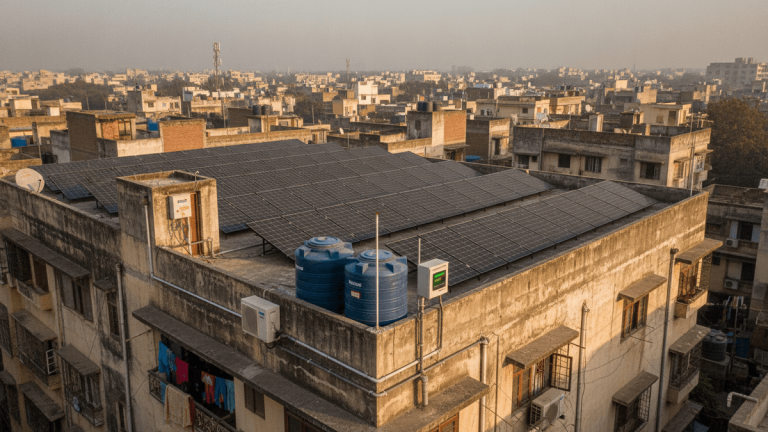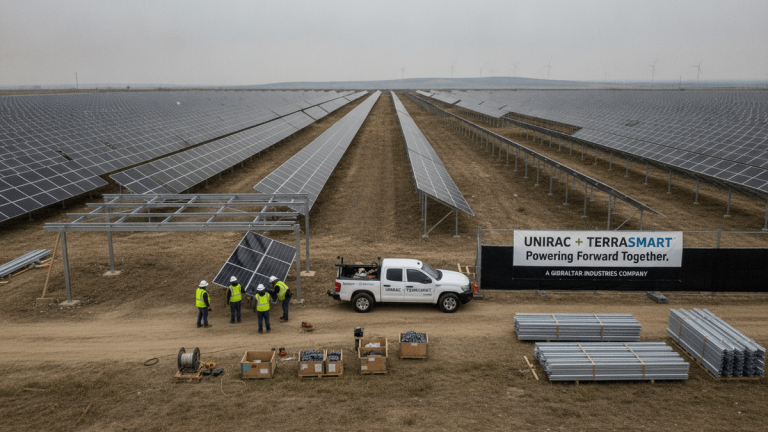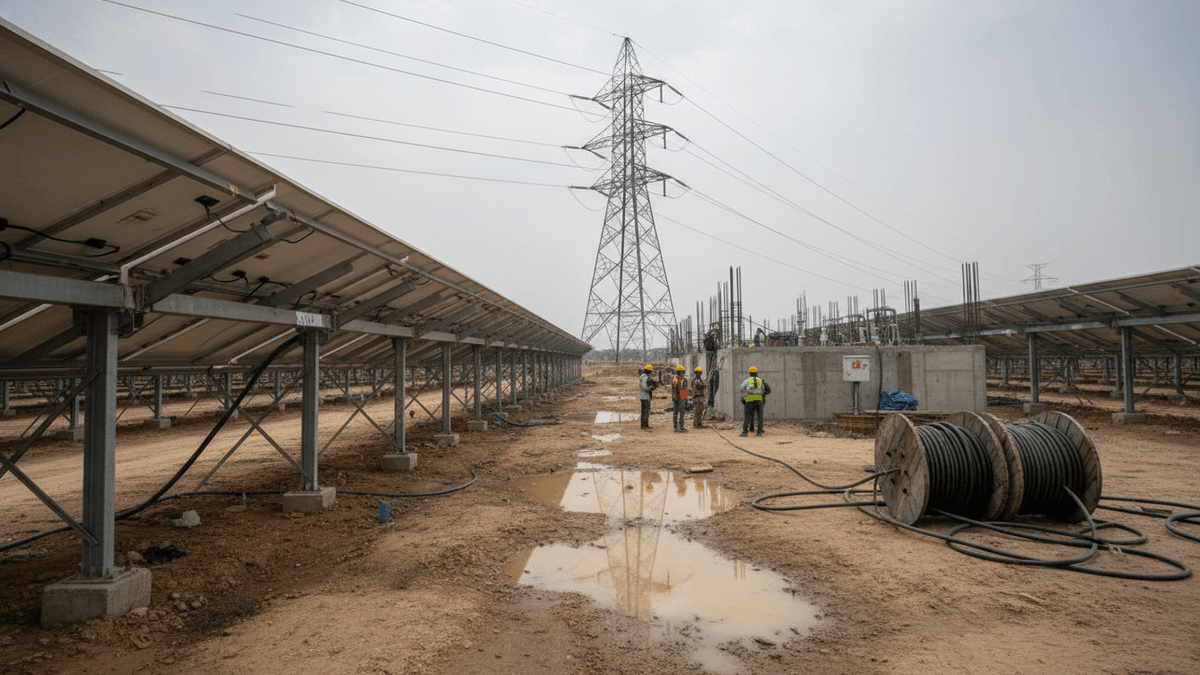
Indian solar farm construction with high-voltage pylon and crew.
India’s renewable energy landscape is set for a shake-up as the Central Electricity Regulatory Commission (CERC) introduces stricter deviation settlement norms. These new rules target upcoming renewable energy projects and provide regulatory clarity for energy storage systems (ESS) and pumped hydro projects. The move indicates a firm stance on enforcing grid discipline amid India’s growing renewable energy capacity.
Under the proposed Deviation Settlement Mechanism (DSM) Regulations, 2024, wind-solar and other renewable energy projects will see a progressive tightening of deviation treatment. Projects bid out on or after January 1, 2027, or commissioned on or after January 1, 2029, will face the same deviation charges as conventional generators. This shift aims to push renewable energy developers to enhance their forecasting accuracy and scheduling discipline, crucial for integrating intermittent renewable energy into the grid.
Experts suggest that these amendments could boost the economic viability of battery energy storage systems (BESS) and pumped storage projects (PSPs). CERC has also outlined provisions for standalone ESS projects, compensating infirm power injected into the grid at standard deviation charges, capped at Rs 2 per kWh. For pumped hydro storage plants, deviation charges will be calculated based on the energy charge rate specified in the CERC Tariff Regulations.
Further changes include transitioning Area Clearing Price (ACP) references from time-block based to daily weighted average ACP calculations for Integrated Day Ahead Market segments across power exchanges. The regulator also plans to align DSM payment timelines with the National Deviation and Ancillary Services Pool Account mechanism, replacing the current 10-day settlement framework. The draft regulations are expected to take effect on July 1, 2026, with stakeholders invited to submit comments by June 26.
About the Author