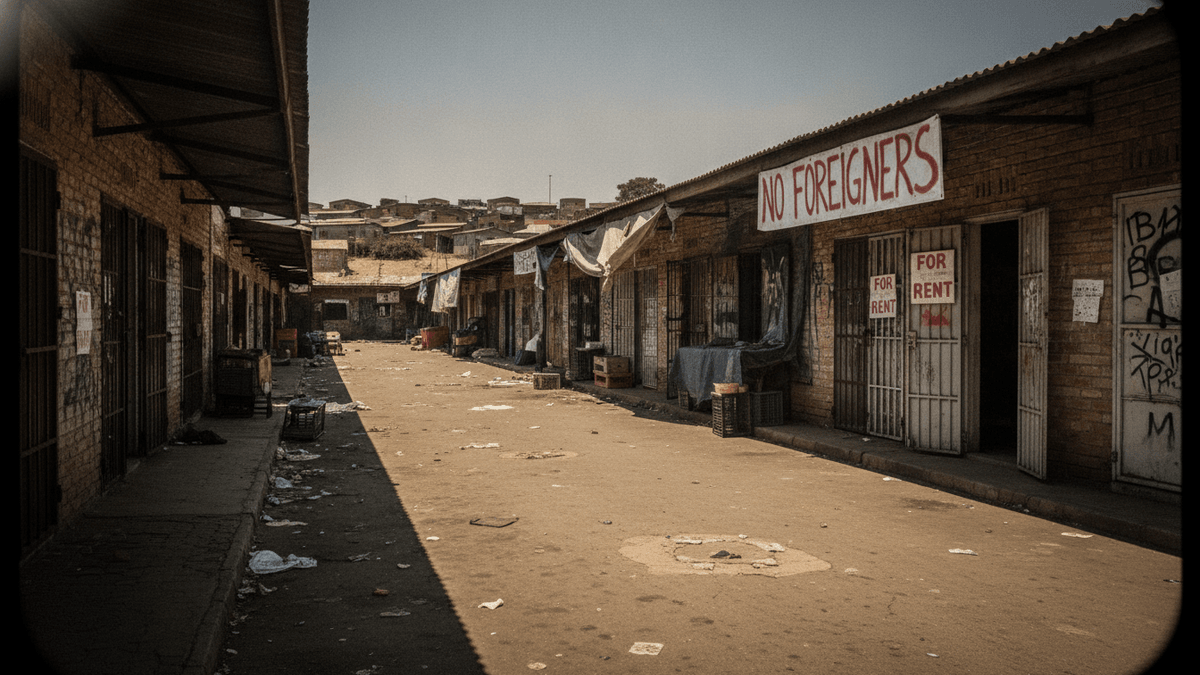
Deserted market street with "NO FOREIGNERS" banner in Johannesburg township
South African businesses and landlords are increasingly vocal about the severe economic fallout from the ongoing expulsion of foreign nationals. This escalating situation, fueled by vigilante groups, is not just a humanitarian concern but a direct threat to local enterprises and the country’s economic stability.
Reports from Pindula News on July 11, 2026, detail how intimidation and threats by these groups have led to tens of thousands of foreign workers fleeing the country. The ripple effect is already visible: a ginger farmer has halted operations due to threats, a landlord in Ivory Park has seen her rental income plummet after losing most of her foreign tenants, and a consultant in Johannesburg North reports a sharp decline in business as migrant clients depart. Even documented foreign nationals are being targeted, fostering a climate of fear that disrupts normal commercial activity.
This exodus represents a significant blow to South Africa’s informal and formal economies, which often rely on migrant labor and consumer spending. Businesses lose skilled and unskilled workers, landlords face vacancies, and service providers see their client base erode. Strategically, this creates immense uncertainty for both local and potential foreign investors. A predictable and stable operating environment is paramount for business growth; the current situation, marked by extra-legal enforcement, undermines these foundational principles. It raises critical questions about labor supply, consumer demand, and the government’s capacity to protect all residents and ensure the rule of law.
The continued departure of foreign nationals could lead to labor shortages in key sectors, reduced consumer spending, and a further contraction of the real estate market. For startup founders and investors, this highlights the risks associated with political instability and the lack of robust state protection for economic actors. Businesses may need to re-evaluate their operational models, supply chains, and labor strategies. The South African government faces mounting pressure to address the actions of vigilante groups and restore confidence, not just for foreign nationals, but for the entire business community that depends on a stable, inclusive economy.
About the Author