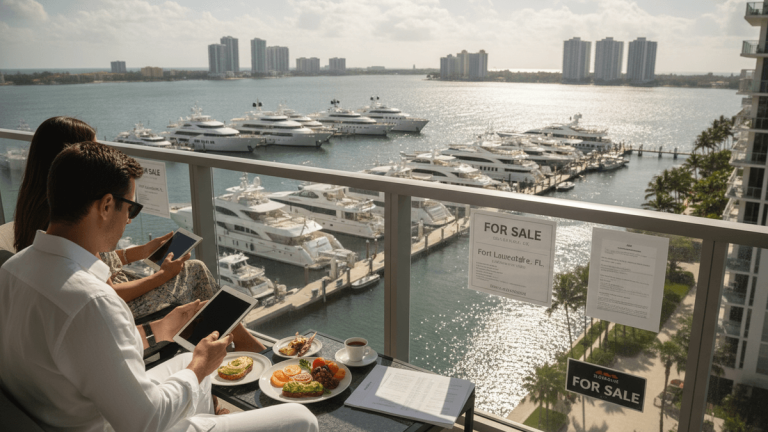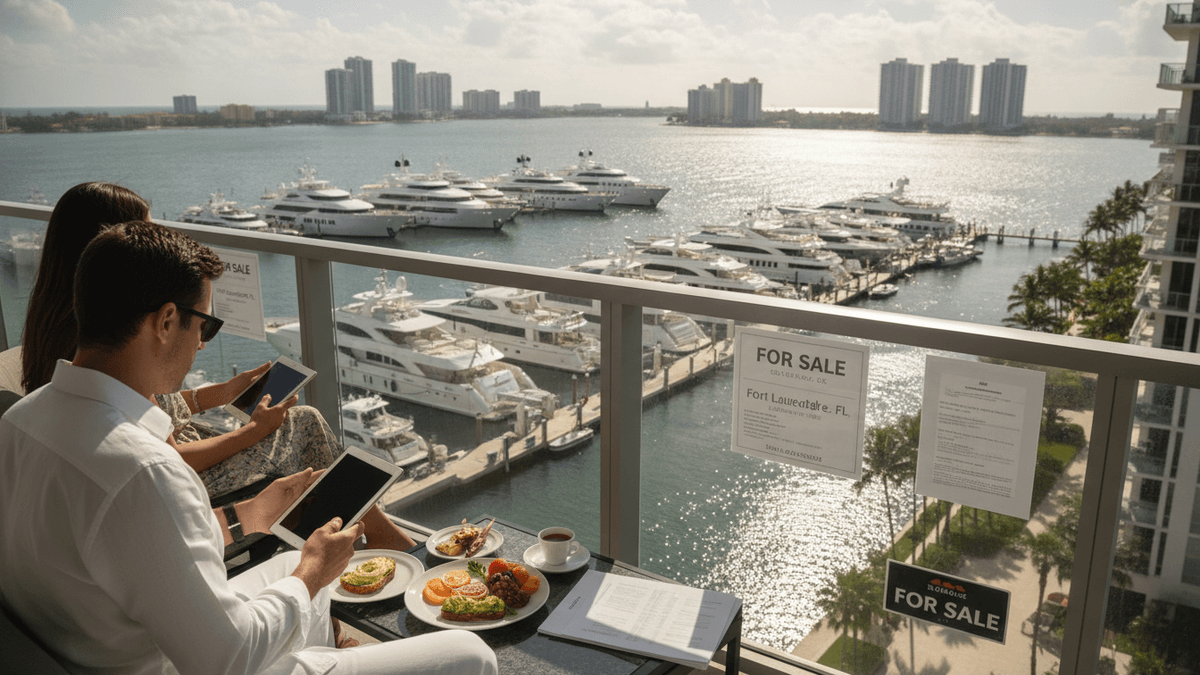
Tech investors review real estate listings on a Fort Lauderdale balcony overlooking a marina.
A new wave of wealth from Silicon Valley is anticipated to flow into South Florida, driven by upcoming IPOs from major tech companies like OpenAI, SpaceX, and Anthropic. Experts predict this could ignite a rapid “Tech Exodus 2.0,” with newly minted tech millionaires shifting their focus to Florida real estate within months rather than years.
“The California area codes have already started showing up,” stated Jenni Morejon, CEO and President of the Fort Lauderdale Downtown Development Authority. “It’s just that the conversations are evolving.” This sentiment is echoed by Joe DaGrosa, founder and chair of DaGrosa Capital Partners, who noted a “tipping effect” similar to what was observed in New York, suggesting a similar migration from California is likely.
Real estate magnate Miki Naftali contrasted the appeal of Miami with Silicon Valley, asking, “How can you even compare between living in Miami and Silicon Valley?” This highlights a growing trend where lifestyle and location are becoming significant factors for tech professionals.
The surge in SpaceX stock following its recent IPO serves as a precursor to the anticipated liquidity events for OpenAI and Anthropic, both reportedly expected to list in late 2026. These IPOs will transform employee stock options into substantial cash, potentially leading to significant financial windfalls for executives and employees.
“There is going to be this transitional event with the IPO where executives are finally gonna see probably the biggest cash day most of them have ever seen in their lives,” DaGrosa explained. “And many of them are not making millions, they’re making tens of millions overnight. And I think that’s going to have them thinking long and hard about South Florida and Miami in particular.” He anticipates this financial shock will accelerate relocation plans, with moves occurring in months rather than years.
Fort Lauderdale is positioned to benefit from this influx, offering a potentially more appealing environment than California. Morejon described Fort Lauderdale’s culture as “low-key” and noted its private neighborhoods, suggesting a refreshing change for those seeking discretion alongside wealth.
“Having newcomers here with wealth is really a calibration. Fort Lauderdale has always attracted wealth that’s active, it’s global, it is highly productive. It’s just not performative,” Morejon added. She believes this generation of tech leaders, while accustomed to speed and public visibility, may also value discretion as an asset.
The economic impact on areas like Fort Lauderdale is substantial. Morejon pointed out that tech jobs have grown 20% since 2021, with a corresponding increase in wealth within the downtown population. The downtown economy supports over $43 billion annually, with a significant portion from high-value industries like tech and finance, indicating a robust operating environment for new businesses.
While the focus is on California, Naftali acknowledged that the migration might not be exclusive to that state and that leaders of these IPOs are often based in New York. He also noted that SpaceX is not located in Silicon Valley, emphasizing that the core driver is talent acquisition, an area where Florida may still need to develop its infrastructure.
The influx of public market wealth is expected to create a new class of consumers and residents, potentially shifting the cultural landscape of local communities. DaGrosa highlighted that even middle management in these companies can achieve significant wealth creation, leading to a boom in the housing market periphery as these teams relocate.
Ultimately, the influx of capital and talent is seen as an opportunity for Floridians, potentially leading to better job prospects and economic growth. As Morejon put it, for companies building at scale, Florida offers access, talent, and a quality of life that sustains performance, even accommodating practical needs like docking yachts.
About the Author