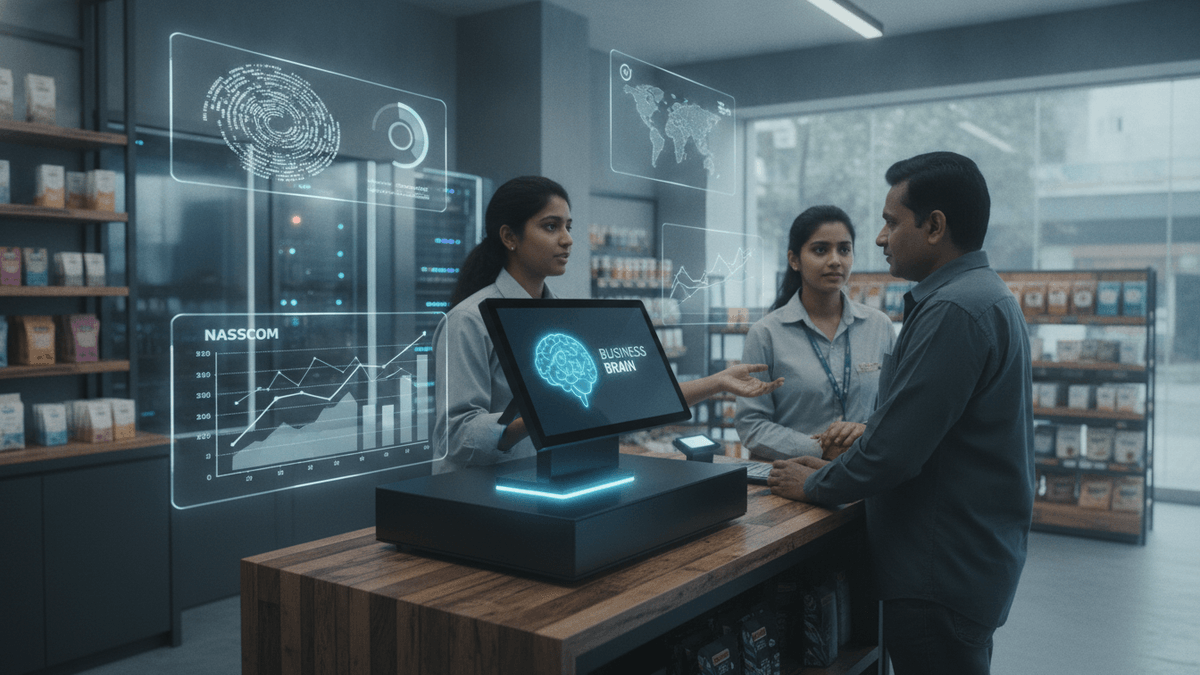
Retail workers interact with an AI-integrated POS system in a store.
The humble Point-of-Sale (POS) system, long relegated to its role as a mere transaction logger, is undergoing a profound transformation. By 2026, it’s projected that over half of all POS platforms will integrate built-in predictive analytics and AI-driven features as standard, fundamentally rearchitecting them into intelligent “business brains.” This isn’t just an upgrade; it’s a strategic pivot, as highlighted by Nasscom, that will empower retailers with real-time insights and proactive decision-making capabilities.
Traditionally, POS systems operated as isolated billing tools, logging sales data that was then batched and analyzed separately. Critical functions like demand forecasting, inventory management, and customer behavior analysis were often reactive, handled by disparate systems with considerable lag. This fragmented approach left businesses responding to trends rather than anticipating them, leading to inefficiencies and missed opportunities.
The shift to an AI-powered POS system marks a departure from this legacy. Instead of batch reporting, data streams in real-time, enabling immediate analysis. Centralized cloud computing is giving way to edge intelligence, pushing AI capabilities closer to the point of interaction for instantaneous decisions on everything from dynamic pricing to personalized offers. Furthermore, static dashboards are evolving into proactive AI agents capable of initiating actions, albeit with essential human oversight, streamlining operations and enhancing customer experience.
This rearchitecture isn’t without its engineering challenges. Ensuring high data quality, crucial for accurate AI predictions, becomes paramount. Managing tighter latency budgets is essential for real-time AI features to deliver on their promise. Integrating compliance from the design phase is non-negotiable, and businesses must also prepare for necessary hardware upgrades to support robust edge AI capabilities.
The Indian market, with its diverse retail landscape and unique connectivity considerations, is already driving distinct architectural patterns. Solutions like offline-first data synchronization and on-device inference are emerging to ensure resilience and performance even in challenging environments. This regional innovation underscores a critical insight: successful AI integration in POS isn’t about simply layering new features onto old systems. It demands building a robust underlying data architecture that supports real-time data movement and agentic decision-making, transforming the POS from a passive recorder into an active, intelligent partner in business growth.
About the Author