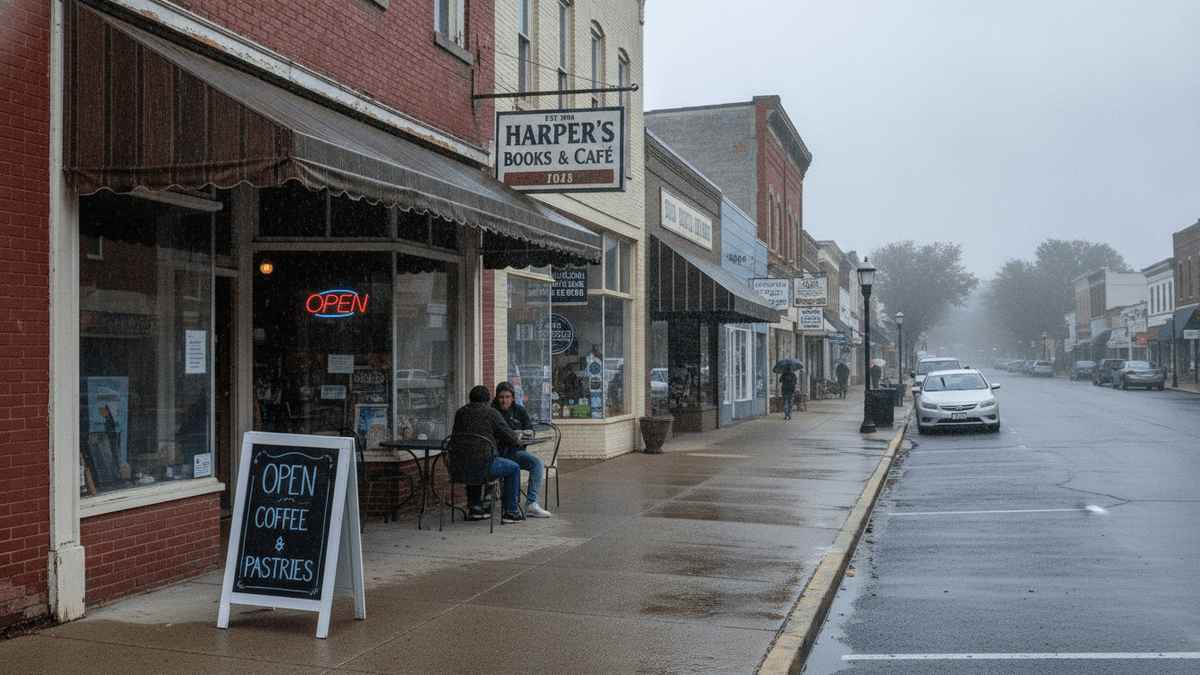
Main Street, Harper's Books & Cafe, small town, overcast afternoon
For startup founders, investors, and operators, understanding the pulse of the small business sector is crucial. The latest reports indicate that US small business confidence remained stable through Q2 2026, a signal that warrants careful consideration.
This steady sentiment suggests a period without significant swings in optimism or pessimism among a vital segment of the American economy. Unlike quarters marked by sharp upturns or downturns, the consistency points to a landscape where businesses are neither aggressively expanding nor bracing for contraction. Factors contributing to this could include stable consumer demand, predictable interest rates, or a balanced regulatory environment.
Strategically, this stability offers both opportunities and challenges. For founders, a steady environment can mean less market volatility, making long-term planning slightly more predictable. However, it also implies a potentially slower growth environment compared to periods of high confidence and rapid expansion. Investors might view this as a low-risk, moderate-return period, favoring stable, established ventures over highly speculative ones. Operators, in turn, might focus on optimizing existing operations and incremental improvements rather than large-scale pivots or aggressive hiring.
The absence of dramatic shifts suggests that businesses are adapting to current conditions rather than anticipating major changes. What comes next will depend on emerging economic indicators, particularly inflation trends, labor market dynamics, and consumer spending habits in the latter half of 2026. For now, the message from Main Street is one of quiet resilience, urging a measured approach from all stakeholders.
About the Author