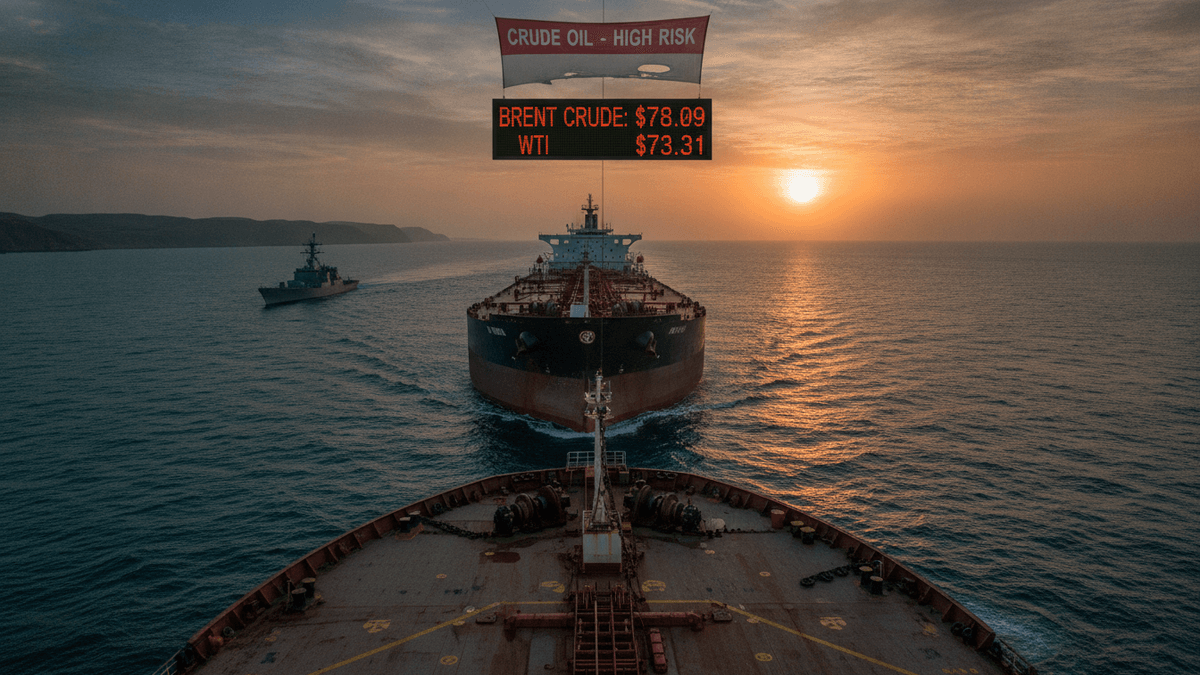
Oil tanker and naval vessel transiting a strategic strait at sunset
Geopolitical instability is once again rattling global energy markets, sending crude oil prices surging as escalating military exchanges between the United States and Iran cast a long shadow over the strategic Strait of Hormuz. For startup founders and investors, this isn’t merely a blip; it’s a fundamental shift in the cost of doing business.
The immediate fallout is stark: Brent crude has climbed nearly three percent to USD 78.09 per barrel, while West Texas Intermediate (WTI) saw a 2.8 percent rise to approximately USD 73.31 per barrel, according to insights from domestic brokerage firm Nirmal Bang. These missile strikes are not just headlines; they are directly amplifying risk premiums across crude markets, signaling higher operational costs for businesses and potentially impacting consumer spending.
Rising energy costs translate directly into inflationary pressures, forcing the Federal Reserve to consider a more aggressive monetary policy. This uncertainty is already weighing heavily on precious metals, with gold experiencing a weekly loss as investors brace for potential interest rate hikes aimed at taming inflation. While aluminum prices on the London Metal Exchange have dipped, copper has managed a consistent weekly advance, showcasing a mixed bag in the base metals sector amidst the broader market turmoil. The strategic implication is clear: energy market volatility directly impacts capital allocation and operational budgets, making hedging strategies and supply chain resilience more critical than ever for founders and operators.
Looking ahead, sustained tensions between the US and Iran could lock in higher energy prices for the foreseeable future, creating a challenging environment for businesses reliant on stable input costs. Investors will need to keenly watch the Federal Reserve’s next moves, as their response to inflation will dictate broader market sentiment and the attractiveness of various asset classes. This period demands a grounded, reflective approach to investment and operational planning, acknowledging that geopolitical events are now more than ever a direct driver of economic realities.
About the Author