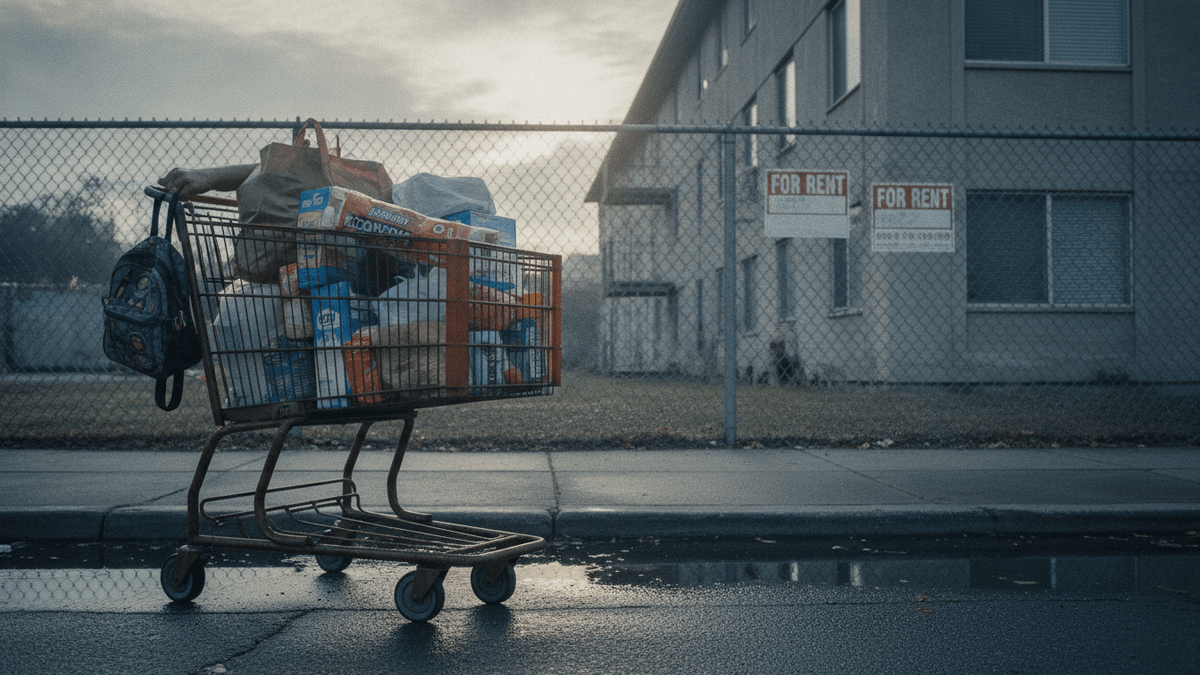
Shopping cart filled with groceries and household items on a wet sidewalk near apartment building.
Americans are increasingly expressing pessimism about their financial situations, with a recent survey from the Federal Reserve Bank of New York highlighting growing concerns over the rising costs of rent and food. The findings indicate a significant shift in consumer sentiment, with a notable percentage of households reporting a worsening financial outlook.
According to the New York Fed’s monthly Survey of Consumer Expectations, the proportion of U.S. households that described themselves as “much worse off” financially compared to a year ago climbed to 13.3% in May. This marks an increase of over 2 percentage points from April and represents the highest figure recorded since July 2022.
Furthermore, the survey revealed that 36% of Americans anticipate their financial situations will deteriorate further in the upcoming year. This expectation, contrasted with fewer than 23% who foresee improvement, has led to the lowest net optimism observed since October 2022.
While overall inflation expectations remained relatively stable, respondents specifically projected higher costs for essential goods and services. Consumers expect food prices to rise by 5.8% and rent costs to increase by 7.4% over the next year. These projections align with broader economic indicators, including the Federal Reserve’s recent Beige Book, which noted moderate to strong price increases across most of the Fed’s regional districts.
The report also touched upon concerns within the labor market. Confidence in finding a new job if currently employed has fallen to its lowest point since December 2025, with less than half of workers (43.7%) believing they could secure comparable employment if laid off. This deterioration in labor market expectations was noted by the New York Fed, which reported an increase in layoff expectations and a decline in job-finding expectations.
Despite these consumer concerns, recent jobs data from the Bureau of Labor Statistics showed that employers added 172,000 jobs in May, exceeding economists’ estimates, and the unemployment rate held steady at 4.3%.
The consumer sentiment report also indicated that over 12% of Americans (12.6%) believe they might miss a minimum debt payment within the next 90 days. This increase was predominantly observed among respondents with at least a high school education and households earning less than $100,000 annually.
About the Author