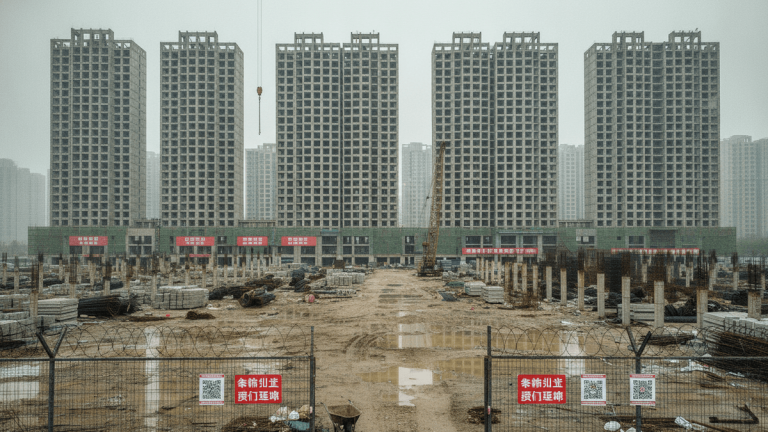
New home construction offers long-term savings for buyers.
For many Americans navigating the challenging housing market, a significant long-term financial advantage might be hiding in plain sight: newly built homes. While often carrying a higher upfront price tag, these modern residences are quietly saving homeowners thousands of dollars over time through reduced energy consumption and fewer costly repairs, according to a recent Realtor.com report.
The findings underscore the importance of looking beyond the initial purchase price to consider the total cost of homeownership. This perspective is particularly relevant as housing affordability remains a critical concern for voters heading into the midterm elections.
The Realtor.com study compared homes built in 2025 with those constructed in 2005, using a standard 1,750-square-foot model. Over the first 10 years of ownership, buyers of new-construction homes could save an average of $25,335 compared to owners of 20-year-old homes. These savings are primarily driven by more efficient HVAC systems, better insulation adhering to updated building codes, and longer-lasting, modern appliances and fixtures.
Savings can vary significantly by region. New England states, for instance, show the most substantial long-term savings, with Massachusetts leading the nation with nearly $39,000 in projected savings over a decade. This is attributed to colder climates necessitating robust energy efficiency and stricter building codes.
In contrast, Southern states like Arkansas, South Carolina, Kentucky, Florida, and Texas, while often having lower initial new-construction costs, see smaller long-term savings due to milder winters which reduce the impact of energy efficiency gains. However, the report also identified 16 metro areas where the long-term savings are substantial enough to offset the initial premium for new builds, including markets like San Diego, Salt Lake City, and Madison, Wisconsin.
Adding to the financial appeal, builders are increasingly offering incentives such as price reductions, cash credits, and mortgage rate buydowns. Furthermore, new-home buyers currently benefit from mortgage rates approximately one percentage point lower than those buying existing homes, potentially saving an additional $30,000 over 10 years. These factors highlight that operating costs and financing incentives are becoming increasingly crucial components of the home affordability equation for today’s buyers.
About the Author