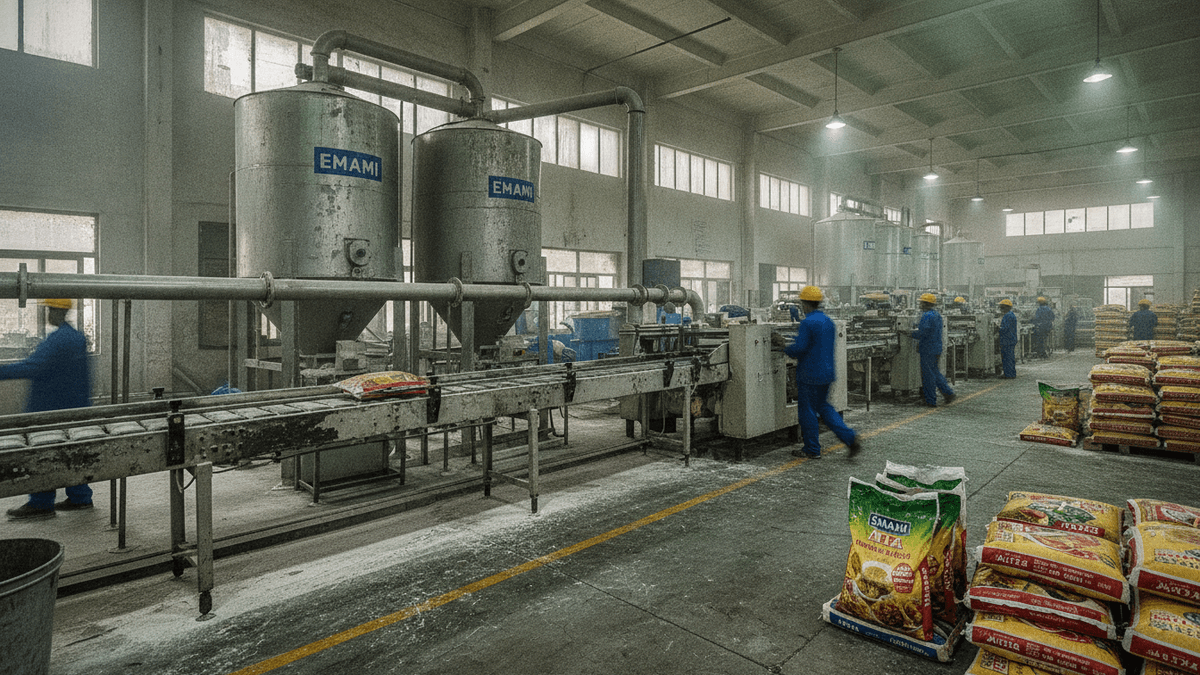
Emami Agrotech atta packaging line in an Indian factory
Emami Agrotech, a key player in India’s FMCG sector, is setting an ambitious target: a 10% revenue surge to ₹22,000 crore by fiscal year 2027. This projection, following a robust ₹20,137 crore turnover in FY26, signals aggressive expansion, but the company’s leadership remains acutely aware of lurking commodity risks and geopolitical headwinds.
The Emami Group subsidiary is not just relying on its established edible oil brands like Healthy & Tasty and Best Choice. Its growth strategy heavily leans into a significant diversification, introducing new food categories such as atta, maida, suji, soya nuggets, and spices. This move aims to capture a larger share of the burgeoning Indian food market, leveraging existing distribution networks and brand equity. CEO Sudhakar Rao Desai anticipates strong festive demand and stable commodity prices to fuel this trajectory, alongside essential inventory replenishment across trade channels.
Emami Agrotech’s pivot towards a broader food portfolio is a strategic play to de-risk its revenue streams from the inherent volatility of the edible oil market. By expanding into staple food items, they aim for more consistent demand and potentially higher margins. However, Desai’s caution regarding geopolitical tensions, evolving weather patterns (including El Nino’s impact on agricultural output), and general commodity price volatility highlights the precarious balance in their growth equation. These external factors can swiftly erode profitability, as seen with past inflationary pressures on packaging materials, now reportedly easing. The company’s prior investments in refining and crushing capacities suggest a solid operational foundation, allowing a current focus on brand building—critical for new product penetration in a competitive market.
The Indian FMCG landscape is intensely competitive, and Emami Agrotech’s expansion brings it into direct contention with established players in new categories. The challenge from low-cost edible oil imports, particularly from Nepal, underscores the constant pressure on pricing and market share, especially in northern and eastern India. For investors and operators, Emami’s strategy represents a calculated bet on India’s consumption story, balancing aggressive growth with a realistic assessment of macroeconomic and supply chain vulnerabilities. Success will hinge on their ability to integrate new product lines efficiently, build strong brand loyalty, and adeptly navigate the unpredictable global commodity markets.
About the Author