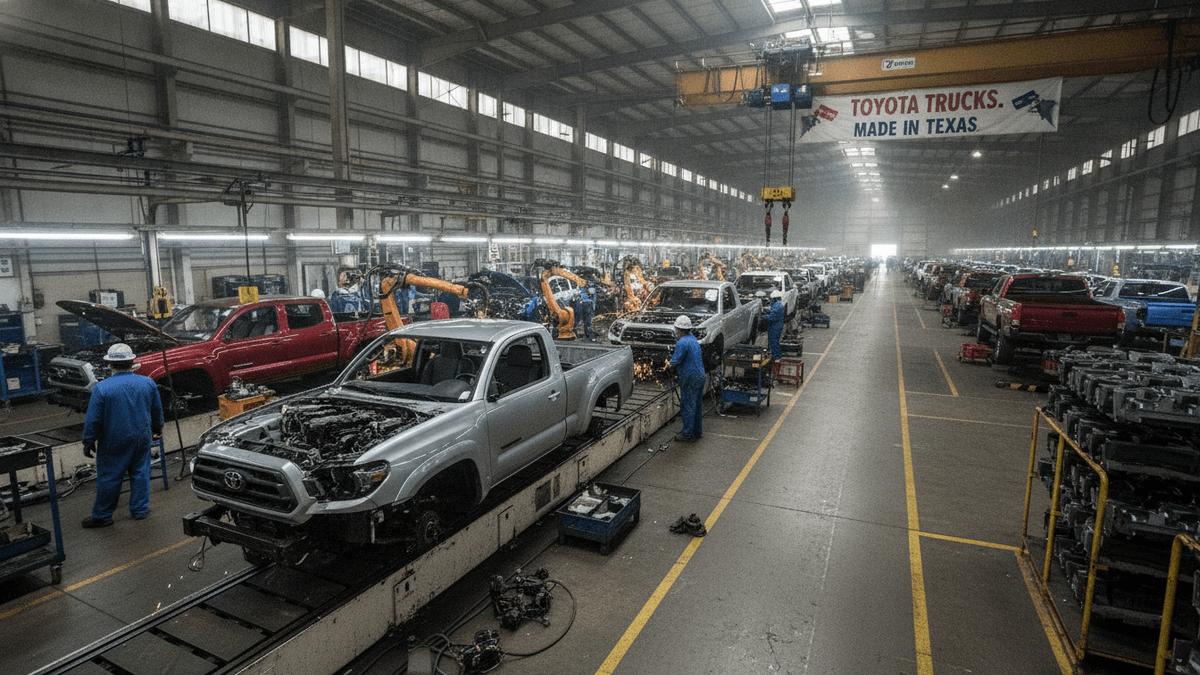
Toyota Tacoma assembly line at Texas plant
Japanese automaker Toyota is making a significant strategic pivot, announcing a $3.6 billion investment in its Texas plant. This move will see the production of its midsize Tacoma pickup truck shift from Mexico to the United States, a clear signal of how evolving trade policies are reshaping global manufacturing footprints.
The substantial investment is set to inject new life into the San Antonio factory, creating over 2,000 jobs and boosting its annual production capacity by an impressive 150,000 units. A new assembly line is slated to be operational by 2030, reinforcing Toyota’s commitment to its U.S. operations.
This decision doesn’t happen in a vacuum. It comes as Washington has notably refused to renew a critical North American trade pact with Mexico and Canada. Furthermore, it directly responds to the previous administration’s tariffs on automobiles and other goods, championed by President Donald Trump. Such measures have compelled global automakers to critically re-evaluate the viability and risks associated with their international production locations.
For Toyota, this shift is more than just a logistical change; it’s a strategic de-risking maneuver. By bringing production closer to its primary market and within the protective embrace of U.S. manufacturing policy, the company aims to insulate itself from potential future trade disputes and tariffs. This move highlights a broader trend among multinationals to prioritize supply chain resilience and political alignment over purely cost-driven production models, offering a critical lesson for any startup founder or investor navigating an increasingly fragmented global economy.
The implications extend beyond Toyota. This action could pressure other automakers with significant Mexican operations to consider similar adjustments. It underscores the profound impact of government policy on corporate strategy and investment decisions, particularly in high-capital industries. As trade agreements remain in flux, expect more companies to prioritize domestic or nearshore production to secure market access and mitigate geopolitical uncertainties.
About the Author