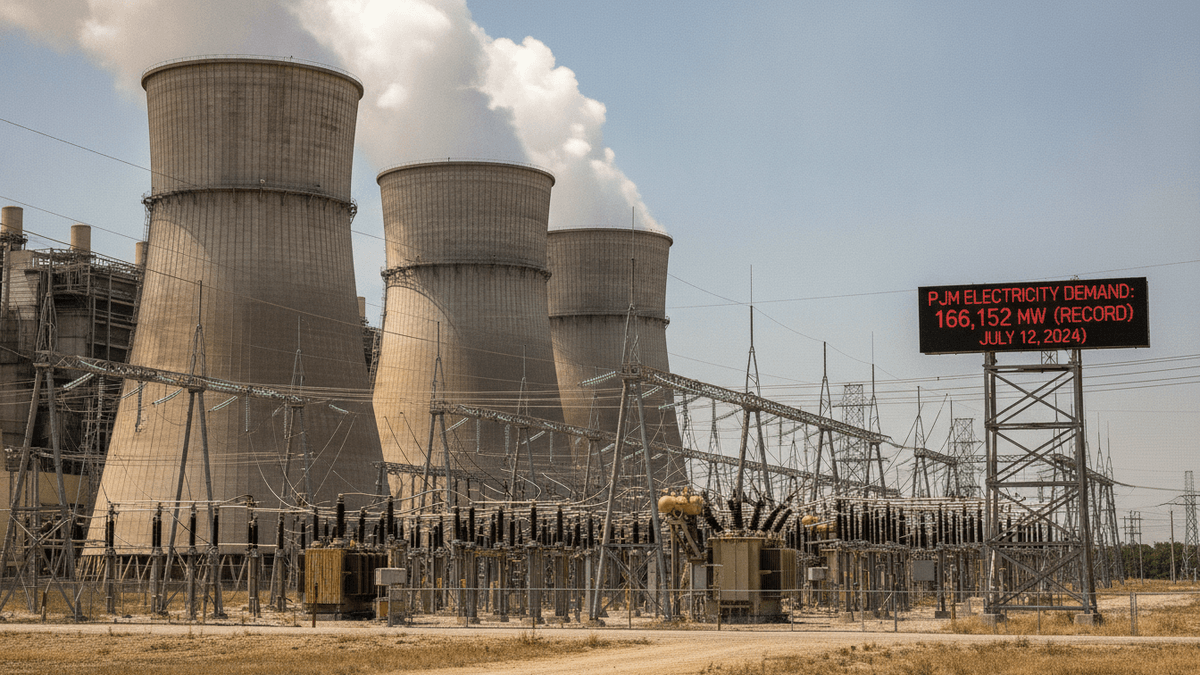
PJM power plant with digital sign displaying record electricity demand
America’s largest electric grid is bracing for unprecedented electricity demand, prompted by extreme heatwaves. PJM Interconnection, which serves approximately 67 million people across 13 states and Washington, D.C., has obtained emergency federal authority that could enable temporary reductions in power consumption by data centers and other large customers equipped with backup generators.
Officials anticipate electricity demand to reach around 166,147 megawatts on Thursday, potentially surpassing the summer record of 165,563 megawatts set in 2006. This situation highlights the increasing strain on U.S. utilities, which are experiencing accelerated electricity demand after years of stable growth. Factors contributing to this surge include widespread air conditioning use during intense heat, the expansion of artificial intelligence data centers, and broader electrification trends.
The Energy Department has granted PJM approval for an emergency order under Section 202(c) of the Federal Power Act. If invoked, this order would empower transmission operators to curtail electricity usage by large customers with backup generation before implementing more widespread emergency protocols. Additionally, PJM received temporary relief from certain environmental permit restrictions for power plants through July 3, providing generators with greater flexibility to meet the escalating demand.
In preparation, PJM has recalled generating units from maintenance, issued Maximum Generation and Load Management Alerts, and activated a Low Voltage Alert to ensure grid reliability. These alerts do not necessitate any action from residential customers. Wholesale electricity prices have already seen a significant increase in parts of PJM’s service territory, with spot power prices in northern Virginia, a hub for data centers, climbing sharply as temperatures approached 100 degrees.
The potential for record-breaking electricity demand on Thursday underscores growing concerns about the capacity of generation and transmission resources to keep pace with rapidly escalating power needs. Other grid operators, including New York’s and the Midcontinent Independent System Operator, are also preparing for heavy electricity use and monitoring conditions that could challenge demand records this week.
About the Author