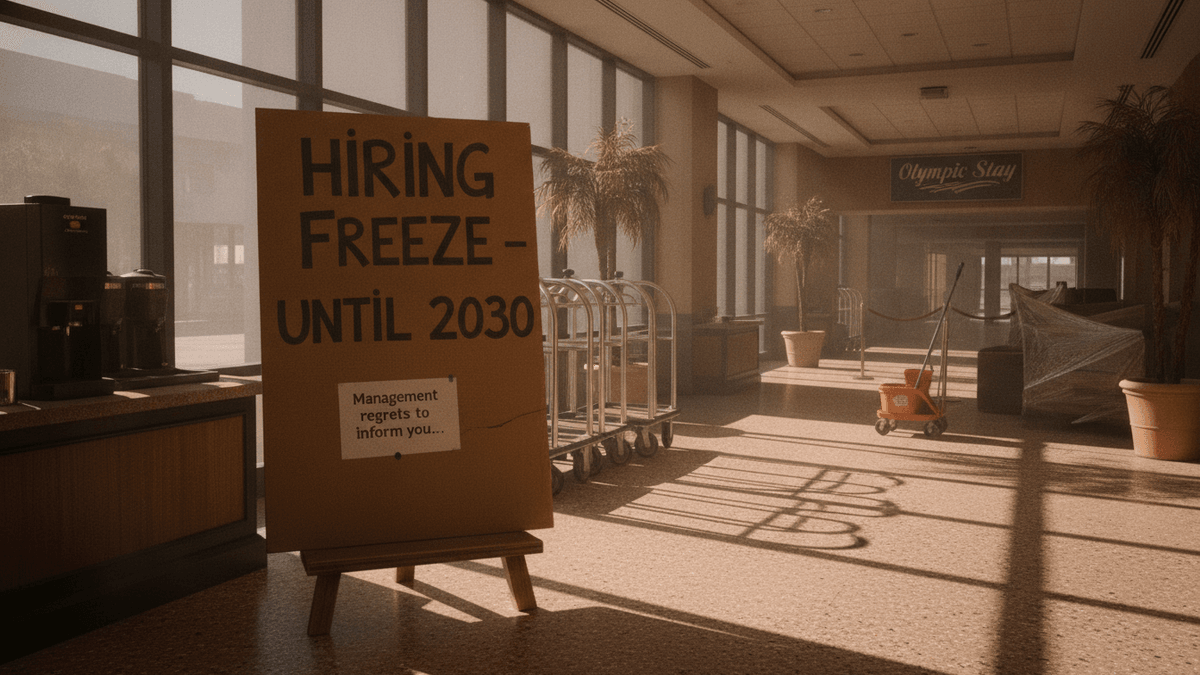
Hotel lobby with a "Hiring Freeze Until 2030" sign
Los Angeles officials have opted to delay the implementation of a proposed $30 per hour minimum wage for hotel and airport workers until 2030. This decision comes after significant warnings from the hospitality industry that the mandate, initially slated for 2028 to coincide with the Summer Olympics, could lead to widespread layoffs, reduced hiring, and increased operational costs.
The measure, commonly referred to as the “Olympic Wage,” faced strong opposition from hotel owners who argued that the substantial increase in labor costs would be unsustainable, especially as the city prepares to host major international events like the 2026 FIFA World Cup and the 2028 Olympics.
Rebekah Paxton, research director at the Employment Policies Institute, noted that city leaders reconsidered the timeline following presentations from the hotel community. “There were concerns from the hotel community,” Paxton stated. “There was some data that came out that the hotels were struggling ahead of the Olympics, even as we’re approaching the World Cup this summer.”
Currently, hotel workers in Los Angeles earn a minimum wage of approximately $22.50 per hour. The proposed wage hike would represent an increase of about one-third in a short period. Hotel operators indicated that the projected rise in labor expenses was already influencing hiring decisions.
Citing a report from the Los Angeles hotel industry, Paxton mentioned that some establishments had already scaled back hiring and staffing levels due to the inability to absorb the anticipated labor costs. The vote to push back the full implementation of the $30 wage requirement from 2028 to 2030 provides hotels “a little bit of breathing room as we ramp up toward the Olympics,” according to Paxton.
However, Paxton cautioned that the delay does not resolve the fundamental issues. “A $30 minimum wage is still a $30 minimum wage,” she said. “A pause is certainly a step in the right direction, but it’s not going to solve the ultimate problem, which is a lot of folks saying that they can’t sustain that level of a wage increase.”
While proponents of the wage increase argue that workers deserve higher pay, especially with the influx of visitors expected for major sporting events, Paxton highlighted potential negative economic impacts. “My team at EPI has done some work looking at the hotel industry since 2015,” she explained. “And even before this went into place, hiring was stagnating. There were fewer jobs available for folks who wanted to be in the hospitality industry.” She added that imposing such a significant minimum wage increase could exacerbate existing hiring challenges and negative economic consequences.
The debate over the “Olympic Wage” is expected to continue as Los Angeles balances the demands for increased worker pay against the economic realities faced by businesses and the city’s preparations for major global events.
About the Author