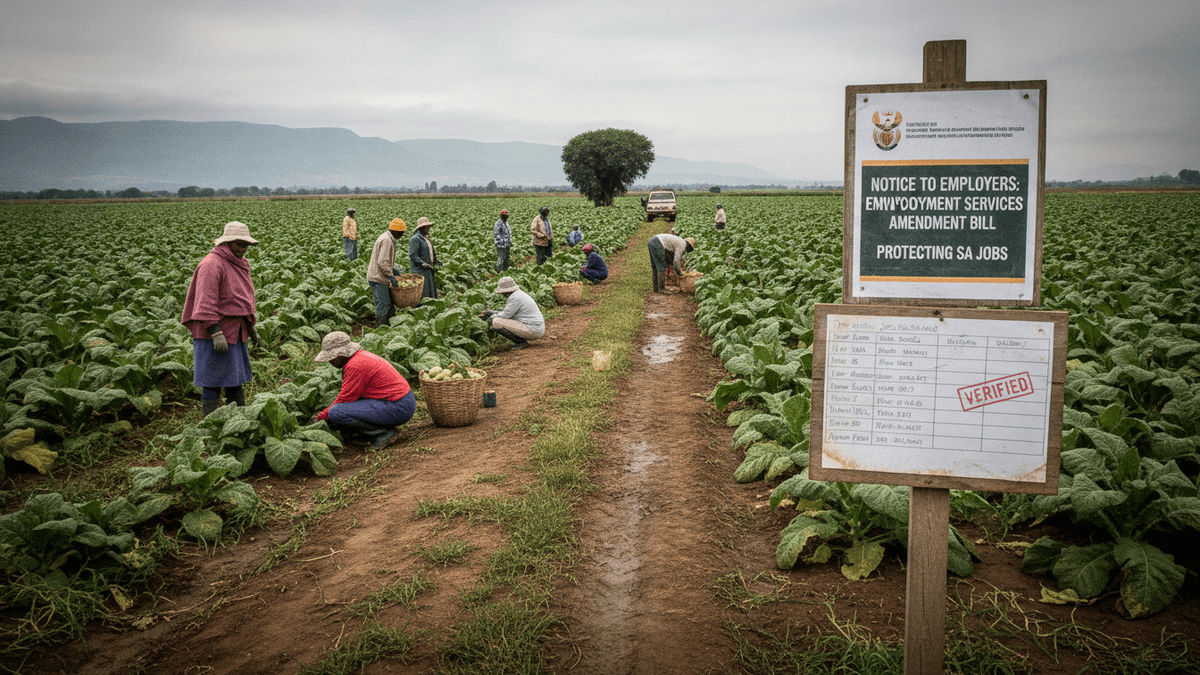
Agricultural workers in a field with a prominent government notice board
South African businesses relying on foreign talent are on the brink of a significant operational overhaul. A proposed amendment to the Employment Services Act is set to replace a simple immigration check with a demanding framework of continuous compliance, dramatically increasing the stakes for employers.
The Employment Services Amendment Bill, as detailed by Lee Masuku, Senior Associate in Employment Law Practice at Cliffe Dekker Hofmeyr (CDH), aims to weave foreign employment into a comprehensive compliance structure. This isn’t just about immigration anymore; it’s about integrating labor-market issues directly into employment practices.
The core shift is profound: employers must move from a one-time verification to an ongoing commitment, covering everything from recruitment and worker classification to visa checks and skills planning. Non-compliance won’t be cheap; penalties are tiered, starting at R100,000 for a first offense and escalating to R1 million, or even 10% of a company’s turnover, for repeat violations. Masuku highlights that while the Immigration Act already carries criminal liabilities, this bill introduces substantial civil penalties, making the financial risk immediate and severe. Sectors such as agriculture, hospitality, and platform-based services, which heavily depend on foreign workers, are expected to bear the brunt of these changes. There’s also the looming possibility of the minister introducing quotas, further limiting foreign national employment.
For businesses, the path forward is clear: proactive measures are essential. This includes conducting thorough skills audits, reviewing current workforce composition, and meticulously maintaining records of foreign employees’ right-to-work documentation. Given the challenges of fraudulent documents, employers must demonstrate good faith efforts in verification. The era of passive compliance is ending; active, continuous management of foreign employment is becoming the new standard in South Africa.
About the Author




