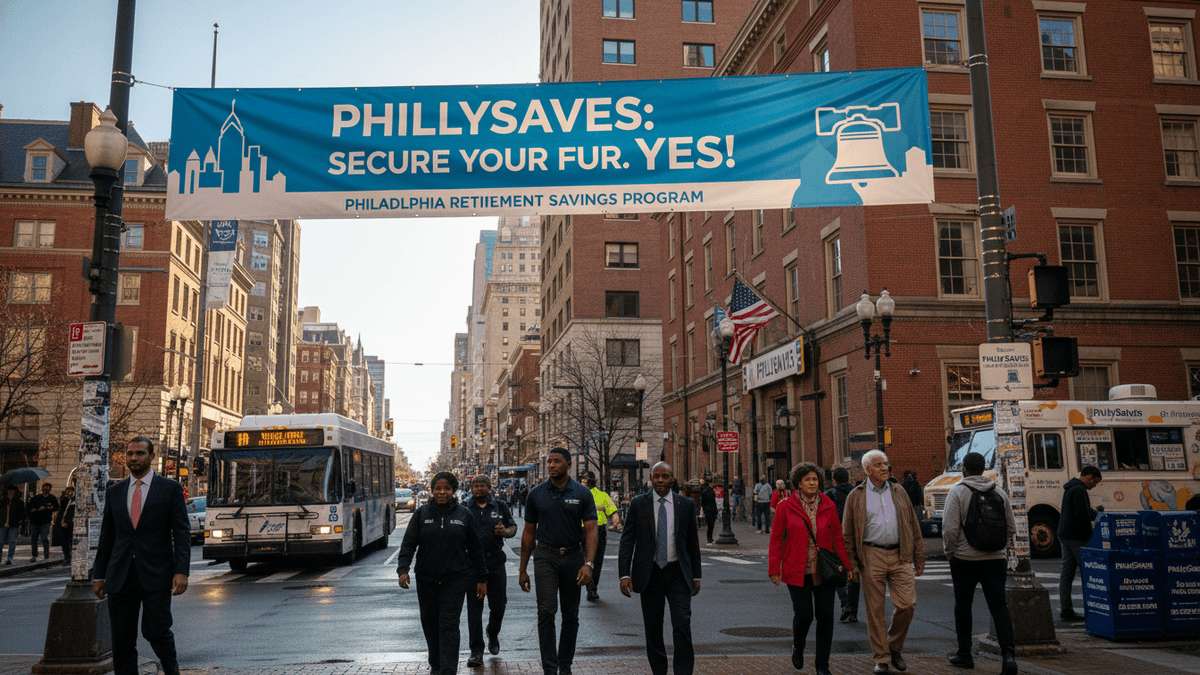
PhillySaves banner over a busy Philadelphia street with pedestrians and traffic.
Philadelphia has taken a significant step towards bolstering retirement security for its workforce with the approval of PhillySaves, the nation’s first city-run auto-Individual Retirement Account (IRA) program. The ballot measure, passed by voters, aims to provide a crucial retirement savings avenue for private sector employees whose employers do not offer traditional plans like 401(k)s.
PhillySaves is designed as a voluntary program, allowing workers to automatically enroll in IRAs established by the city. Participants have the flexibility to opt out of the auto-IRA or adjust their contribution levels at any time. A key feature of the program is its portability, meaning the accounts will follow employees to new jobs. While contributions can be withdrawn tax-free, any accumulated earnings or interest will be subject to taxation.
This initiative is expected to benefit an estimated 208,000 private sector workers in Philadelphia. Many of these individuals are employed in industries with high turnover or by small businesses that may find it challenging to establish and maintain their own retirement plans. Importantly, the program places no enrollment cost burden on businesses that register their employees.
The management of PhillySaves will be handled by a third-party firm, operating under the oversight of the newly established Philadelphia Retirement Savings Board. Pew Charitable Trusts estimates the program’s initial cost to the city at up to $1 million, with subsequent annual costs around $500,000. Patrick Morgan, project director for Pew’s Philadelphia research and policy initiative, emphasized the importance of a strong start for PhillySaves, highlighting the need for an effective board, capable leadership, and robust education for both employers and employees.
The measure garnered strong support, with 78% of voters casting a ‘yes’ vote. This public endorsement follows legislative action by the Philadelphia City Council last year, which was subsequently signed into law by the mayor in January, paving the way for the public vote required to create the governing board under the city’s charter.
“Philadelphia now has a real opportunity to show that smart policy design, strong execution and sustained support can expand Philadelphians’ retirement security in a practical and affordable way,” Morgan stated, underscoring the program’s potential to serve as a model for other cities.
About the Author




