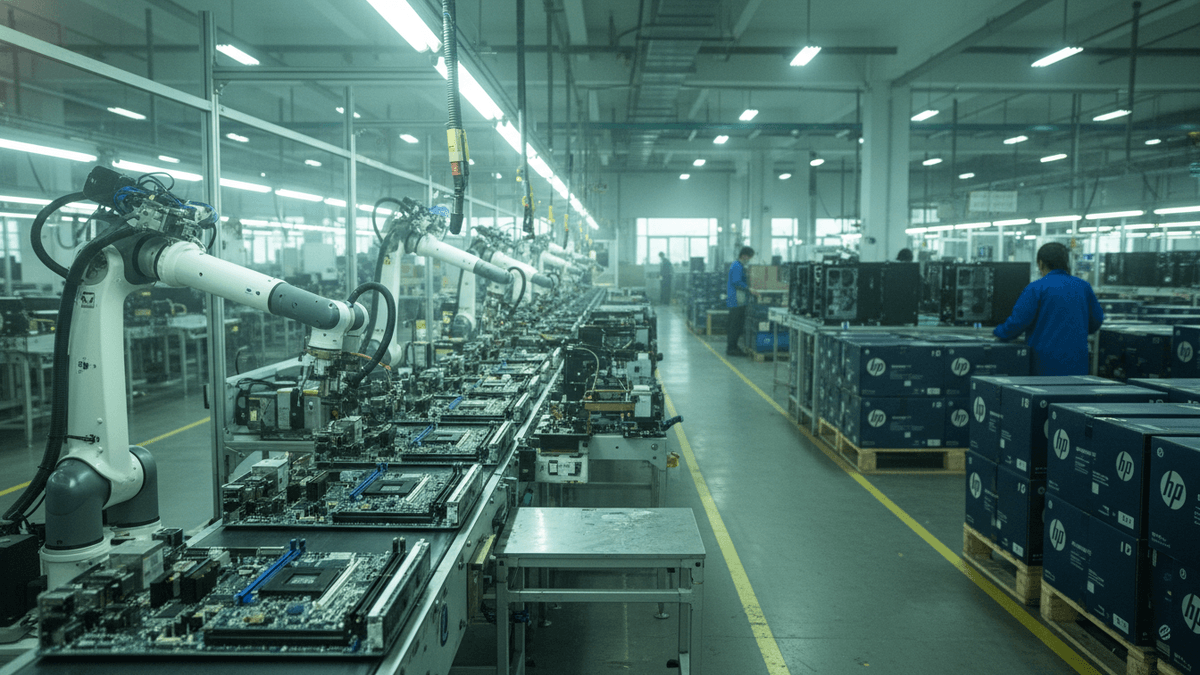
Robotic arms on an assembly line build motherboards in a brightly lit factory.
HP (HPQ) recently reported a strong second quarter, exceeding revenue and profit estimates. The surge was fueled by growing demand for AI-optimized PCs and the ongoing refresh cycle for Windows 11.
The numbers tell the story: HP’s revenue jumped 9% year-over-year to $14.41 billion, surpassing the $14.07 billion expected by analysts. Adjusted earnings per share hit $0.86, also exceeding estimates of $0.71. This performance highlights HP’s ability to capitalize on key market trends, even amid industry-wide challenges.
However, HP is navigating a complex landscape. A shortage of memory chips is pushing some enterprises toward higher-margin premium PCs, but it’s also creating cost pressures. CFO Karen Parkhill outlined the company’s strategy to mitigate these costs through product reconfiguration, sourcing cheaper components, prioritizing higher-margin units, and adjusting prices.
Despite these efforts, HP anticipates operating margins will bottom out in the fourth quarter before improving in fiscal 2027. This suggests that while HP is proactively managing the situation, the memory chip scarcity will continue to impact profitability in the near term.
AI PCs are becoming a significant driver for HP. These PCs accounted for 44% of total PC shipments in Q2, a substantial increase from over 35% in the previous quarter. Looking ahead, HP projects AI PC shipments to constitute 60-70% of total shipments in the next fiscal year and exceed 70% by fiscal year 2028. This rapid growth underscores the increasing importance of AI capabilities in the PC market.
While HP expects the overall PC unit market to decline in the latter half of the year, the company aims to boost personal systems revenue through strategic pricing, gains in premium categories, and higher-margin products. HP updated its fiscal 2026 adjusted EPS forecast to $2.90 to $3.10 and expects third-quarter adjusted EPS between $0.61 and $0.71.
About the Author