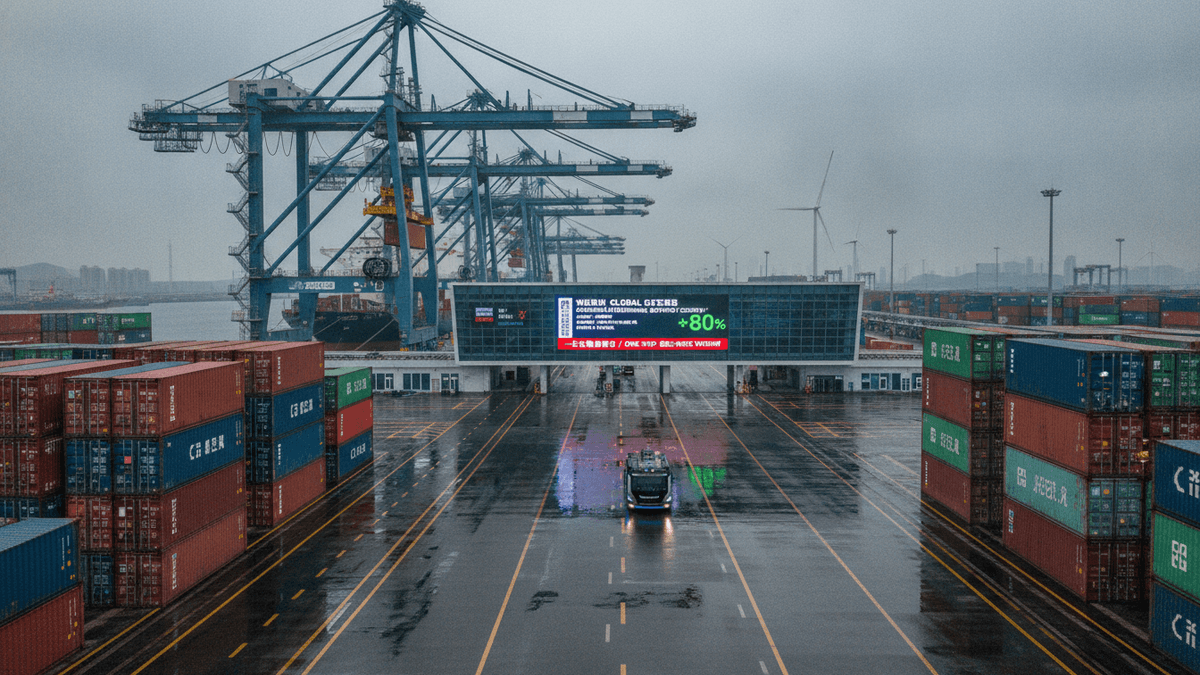
Weihai port terminal with automated shuttle, shipping containers, and gantry cranes under overcast sky.
Weihai, a prominent coastal city in China’s Shandong Province, is proactively reshaping its international business environment. For startup founders, investors, and operators eyeing opportunities in China, Weihai’s aggressive push to streamline operations and enhance investor appeal presents a compelling case study of regional development.
The city’s strategy centers on three pillars: delivering comprehensive, full-lifecycle services to foreign firms; integrating reforms in government services for foreign affairs; and accelerating the development of its smart port infrastructure. These initiatives are designed to simplify the investment journey from initial registration to daily operations.
Weihai has developed a robust service system, with its municipal commerce bureau leveraging Shandong Province’s service platform to address foreign enterprise concerns efficiently. In 2025, Weihai notably pioneered a one-stop service window, consolidating five crucial procedures like work and residence permits. Further, the city issued a trilingual (Chinese, English, and Korean) service package and offers consultation in English and Korean, reflecting its commitment to international talent, where it ranks among China’s top 10 cities for attractiveness.
As a critical gateway, Weihai’s port boasts the highest customs clearance efficiency among Shandong’s coastal ports. This is largely due to smart-port development, including an expanded international trade “single window” for logistics and financial services, and innovative regulatory measures like a non-intrusive inspection model. A smart telecommunications-based quarantine system has drastically cut vessel quarantine time by 80 percent, a significant operational advantage.
These concerted efforts signal Weihai’s strategic intent to not just attract but also retain foreign capital and expertise. By reducing bureaucratic hurdles and enhancing logistical efficiency, the city is directly addressing common pain points for international businesses operating in China. This proactive approach could serve as a blueprint for other regional governments aiming to compete for global investment.
For businesses, Weihai’s evolving infrastructure and supportive policies could translate into lower operational costs, faster market entry, and a more predictable regulatory environment. Its focus on integrated, multilingual services suggests a long-term commitment to fostering a truly international business ecosystem, potentially making it a preferred hub for foreign-funded enterprises looking to establish or expand their presence in the Chinese market.
About the Author