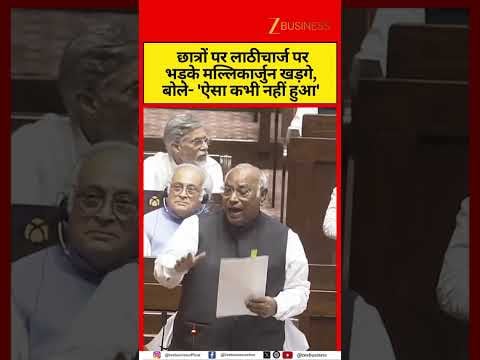
The recent lathi-charge on students, drawing sharp condemnation from Congress President Mallikarjun Kharge, signals a heightened political temperature in India, a factor closely watched by investors and businesses for its potential impact on social stability and policy predictability.
According to a report by Zee Business, Kharge vehemently criticized the government’s handling of student protests, asserting that such an incident—a police baton charge against students—is unprecedented in the nation’s history. His remarks underscore growing concerns about the state’s response to dissent and the broader implications for civil liberties.
For startup founders and investors, incidents like these are not just political headlines; they are indicators of governance stability and the rule of law. A perceived heavy-handed approach by the government, especially against student movements, can ripple through public sentiment, potentially affecting consumer confidence, labor relations, and even the ease of doing business in certain sectors. The ‘never happened’ claim, if widely accepted, could further erode trust and foster an environment of uncertainty.
This condemnation from a prominent opposition figure suggests that the issue is likely to remain a point of contention in the political discourse. Businesses operating in India, or considering investment, must factor in the evolving socio-political landscape, as sustained unrest or a perception of eroding democratic norms could introduce unforeseen operational risks and impact long-term growth projections. The government’s subsequent response to this criticism and any further student actions will be crucial in shaping the narrative.
About the Author