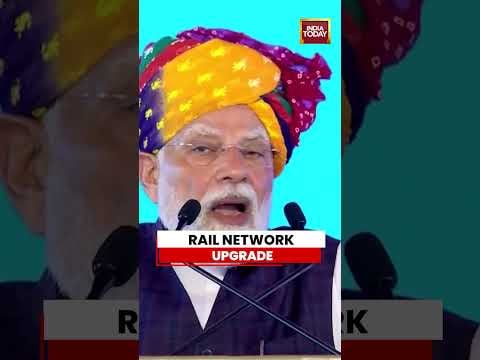
In a significant announcement, Prime Minister Narendra Modi revealed a dramatic acceleration in the electrification of India’s vast railway network, with an astonishing 99% now running on electric power. This rapid transformation, achieved in just the last 12 years, marks a monumental shift from the glacial pace of previous decades.
Speaking on the progress, PM Modi highlighted that from 1925, when electrification first began, until 2014—a span of nearly 90 years—only 30% of the Indian railway network was electrified. This meant that a vast 70% of the network relied on diesel, a rate that, according to Modi, would have taken another 200-300 years to achieve full electrification. The current government’s focus, however, has fundamentally reshaped this trajectory, pushing electrification efforts to near completion.
This near-complete electrification is more than just an infrastructure upgrade; it represents a strategic pivot for India’s economy and its environmental commitments. For startup founders, investors, and operators, this signifies a more efficient, cleaner, and potentially faster logistics backbone. Electrification reduces operational costs by cutting down on expensive diesel consumption, enhances energy efficiency, and lowers carbon emissions, aligning with global sustainability goals. It also paves the way for higher speeds and increased capacity, crucial for a rapidly industrializing nation.
The implications extend beyond mere transport. A modern, electrified rail network can spur growth in related industries, from manufacturing of electrical components to advanced signaling systems and smart logistics solutions. It also positions India as a leader in sustainable large-scale infrastructure development, attracting further investment and fostering innovation within the domestic tech and manufacturing sectors. The transition underscores a governmental commitment to modernizing core infrastructure, creating a more robust and predictable environment for businesses to thrive and expand.
About the Author