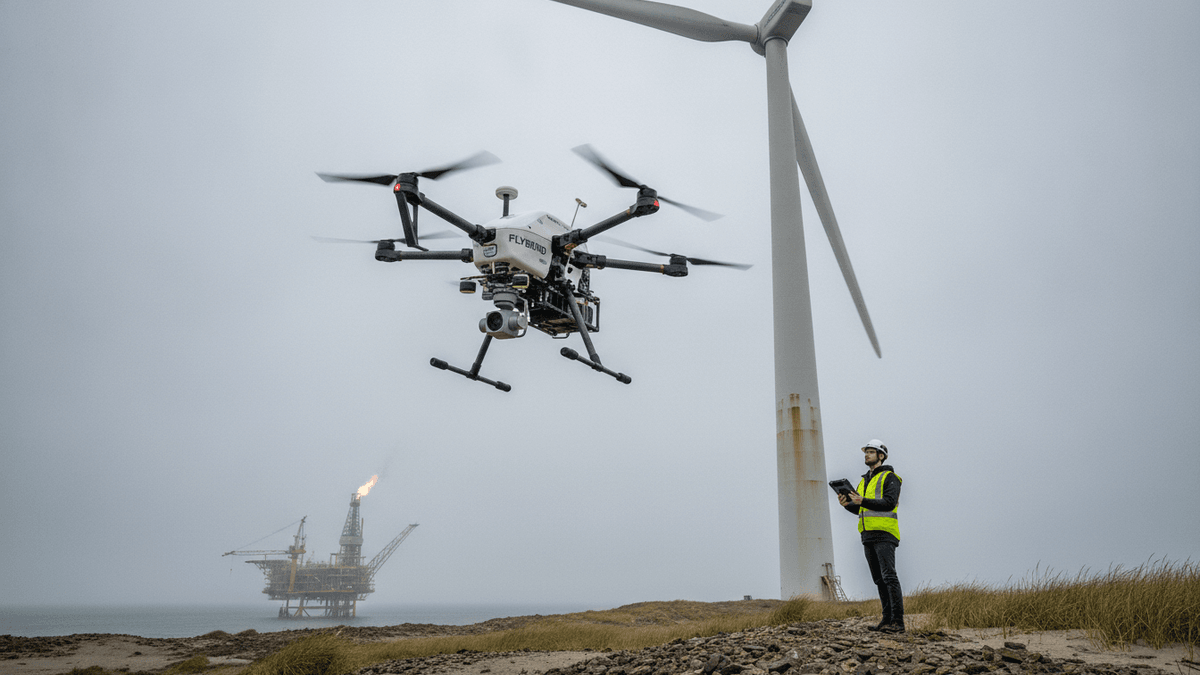
Drone hovering near a wind turbine, an offshore oil rig in the distance on an overcast day.
Flybird, a prominent player in the industrial services landscape, is significantly bolstering its strategic position within the energy sector through a substantial investment in advanced drone technology. Announced on July 4, 2026, this move signals a clear intent to enhance operational efficiency, safety protocols, and data acquisition capabilities across critical energy infrastructure.
The energy sector, with its vast and often hazardous operational environments—from sprawling oil and gas pipelines to towering wind turbines and expansive solar farms—presents unique challenges for inspection, maintenance, and monitoring. Traditionally, these tasks have been labor-intensive, time-consuming, and fraught with safety risks. Drone technology offers a transformative alternative, enabling rapid, precise, and safer data collection, often reaching areas inaccessible or dangerous for human personnel.
Flybird’s investment is expected to focus on deploying state-of-the-art unmanned aerial vehicles (UAVs) equipped with high-resolution cameras, thermal imaging sensors, and LiDAR technology. This sophisticated fleet will facilitate comprehensive inspections of assets like power transmission lines, offshore platforms, and refinery components. The strategic advantage lies in minimizing downtime, pre-empting potential failures through predictive maintenance, and ensuring regulatory compliance with greater accuracy and speed.
For startup founders, investors, and operators tracking the industrial tech space, Flybird’s move underscores a broader trend: the digitization and automation of traditionally manual industries. Companies that can effectively integrate technologies like AI-powered drone analytics and robotic process automation will gain a significant competitive edge. This investment is not merely about acquiring drones; it’s about leveraging data insights to optimize asset performance, reduce operational costs, and mitigate environmental impact.
The implications for the energy sector are far-reaching. As more companies adopt advanced aerial inspection and monitoring solutions, we can anticipate a continued push towards smarter infrastructure and more resilient energy grids. Flybird’s commitment to this technology positions it as a forward-thinking leader, likely inspiring competitors to accelerate their own digital transformation initiatives to maintain relevance in an increasingly tech-driven operational environment. This signals a future where drone technology is not just a niche tool, but an indispensable component of energy infrastructure management.
About the Author