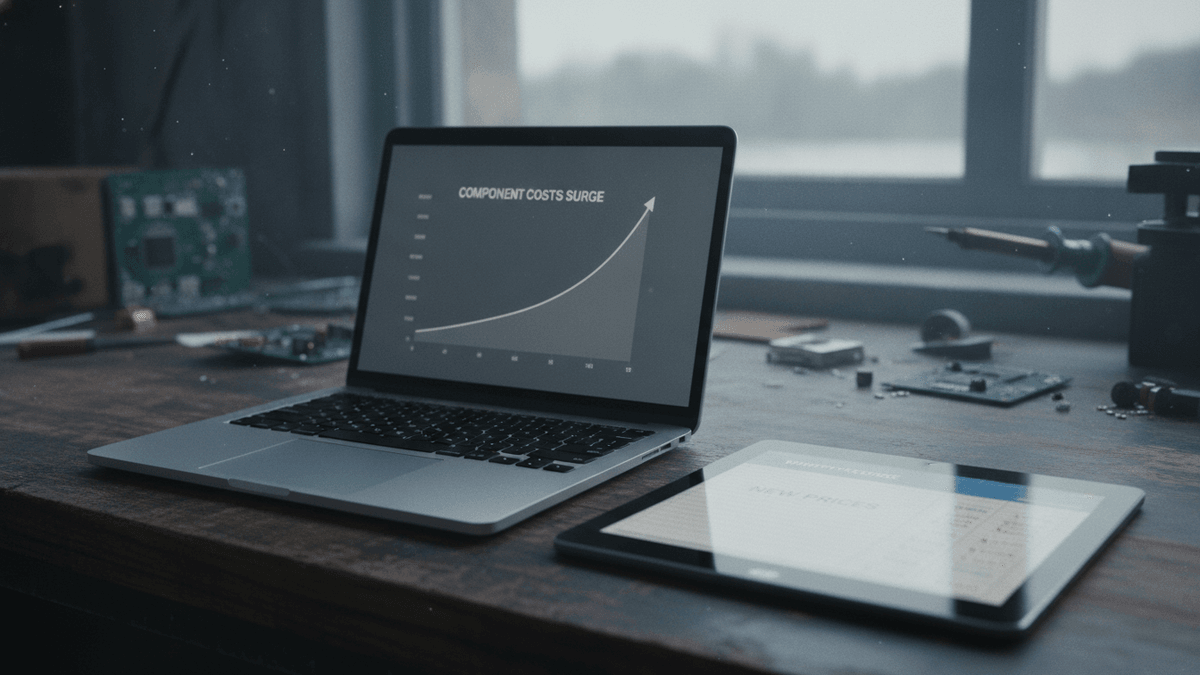
Laptop and tablet on a workbench showing increased component costs and new pricing.
Apple has announced price increases for its iPad and MacBook product lines, citing a significant surge in memory and storage chip costs exacerbated by the booming artificial intelligence industry. While the iPhone, Apple’s primary revenue driver, remains unaffected, the price hikes on other devices signal the company’s inability to continue absorbing the escalating component expenses.
“We have never seen a component price increase this much, this quickly,” an Apple statement read. “We have shielded our customers from these increases so far, but we have now reached a point where we need to begin raising prices on a number of products, including today’s increases for the iPad and Mac.” This move underscores that even a company of Apple’s scale and with its robust supply chain relationships is not immune to the inflationary pressures impacting the tech sector.
The surge in demand for AI-specific chips has led manufacturers like Micron to prioritize orders from AI chipmakers, including Nvidia. This shift, while profitable for chipmakers, has constrained the supply of memory chips available for consumer electronics, compelling device manufacturers to adjust their pricing strategies.
Specific price adjustments include the base model iPad Air, now starting at $749, up from $599. The MacBook Air with 512GB of storage has increased from $1,099 to $1,299. Similarly, the MacBook Pro with 1TB of storage now costs $1,999, a rise from $1,699. Apple has also increased prices for its HomePod smart speakers and Apple TV set-top box.
This pricing adjustment follows comments from Apple CEO Tim Cook, who earlier this month told The Wall Street Journal that “price increases are unavoidable.” He further elaborated on a late April conference call, stating that beyond the June quarter, “memory costs will drive an increasing impact on our business.”
About the Author