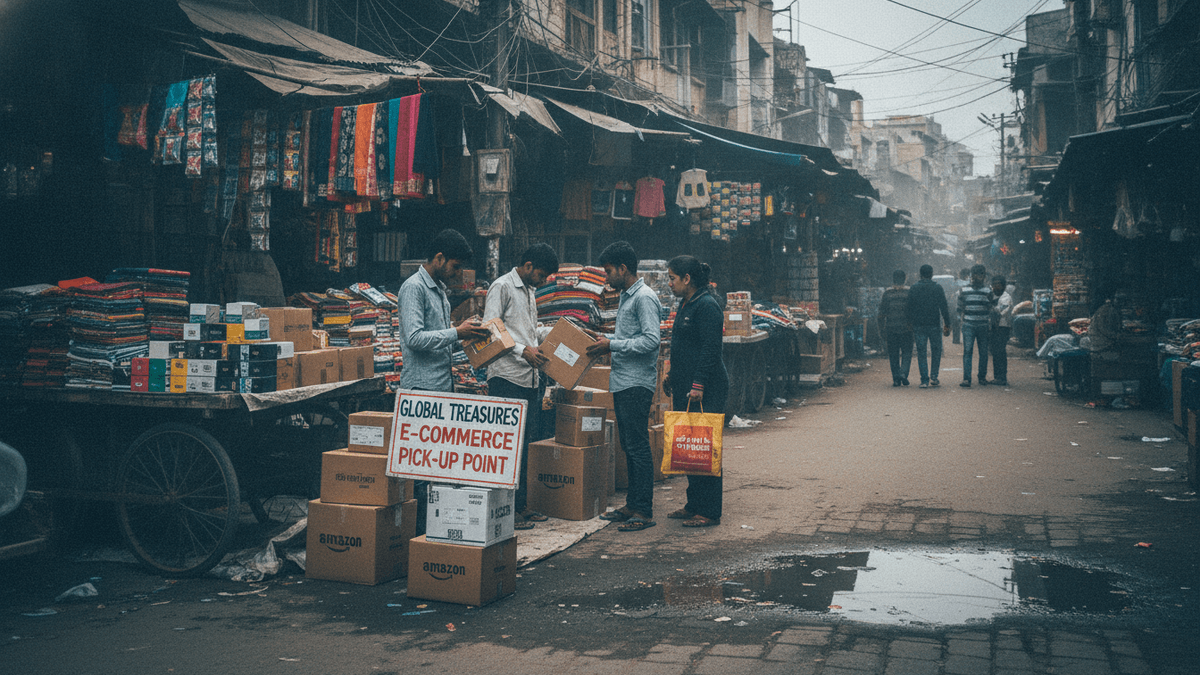
Workers sort packages at an e-commerce pickup point in a bustling Indian market.
India’s E-commerce Landscape: Strategies for Foreign Sellers
India, with its massive population, presents a compelling opportunity for e-commerce growth. However, foreign companies looking to tap into this market must navigate a complex regulatory environment designed to protect local businesses. Practical Ecommerce outlines four primary strategies for foreign sellers to enter India’s online retail space, each with its own set of advantages and challenges.
Key Entry Strategies
Foreign entities can pursue one of four main paths to establish an e-commerce presence in India:
-
Marketplace Ownership
Foreign companies can own e-commerce marketplaces that connect buyers and sellers. Under this model, the marketplace cannot hold inventory, sell its own products, or engage in aggressive discounting. Furthermore, sales from any single seller are capped at 25% of the platform’s total revenue. This model is utilized by major players like Amazon India and Flipkart, who focus on commission, logistics, and brand management.
-
Distributor Partnerships
Collaborating with Indian distributors, franchisees, or retail operators offers a faster route to market. These local partners manage marketplace sales, handle logistics, and distribute products to physical stores, streamlining the market entry process for foreign brands.
-
Direct-to-Consumer (D2C) Model
This strategy allows foreign brands to sell directly to Indian consumers, but only if they manufacture products within India or operate their own single-brand physical retail stores. While providing greater control over brand image, customer experience, and pricing, the D2C model is fraught with challenges. High setup costs, complex legal and regulatory requirements (including corporate registration, GST, and local banking), and the time and expense needed to build trust and distribution networks make this a difficult path. Consequently, few foreign brands choose this option.
-
Cross-Border Selling
Foreign merchants can sell products directly from overseas to Indian consumers, with popular categories including apparel, electronics, and beauty products. However, this approach is often less appealing due to significant import duties, Goods and Services Tax (GST), complex customs procedures, and slower delivery times. These factors add considerable costs and logistical hurdles.
Navigating the Indian Market
The article highlights that e-commerce marketplaces are crucial for brand discovery and scaling operations in India, despite the intense competition. The D2C model, while offering control, demands substantial investment and faces significant regulatory complexities, making it a less frequently adopted strategy for foreign brands entering the Indian market.
About the Author