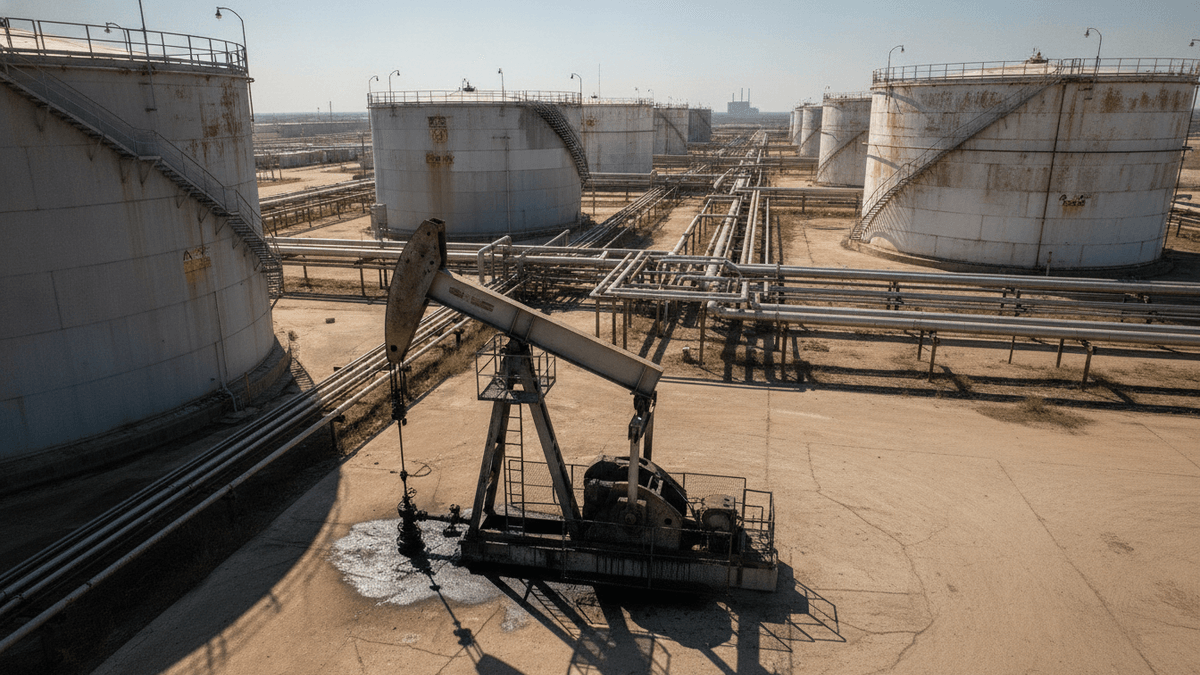
Aerial view of active pumpjack amidst large crude oil storage tanks under clear sky.
The U.S. Strategic Petroleum Reserve (SPR) is rapidly declining, reaching a three-year low of 349.2 million barrels. This significant drop, with nearly 9 million barrels being tapped weekly, brings reserves close to levels not seen since August 1983, during the Reagan administration.
Energy market experts are sounding the alarm, warning that this depletion could lead to a “significant impact at the pump” for American consumers. Mike Sommers, President and CEO of the American Petroleum Institute, stated on CNN, “As those inventories go down and production isn’t increased, you’re going to start seeing a significant impact at the pump.” He cautioned that while the full effect may take time, domestic production has so far mitigated price surges seen elsewhere.
Patrick De Haan, head of analysis at GasBuddy, described the multi-decade low as “monumental.” He expressed concern that the longer the trend continues, the fewer options the administration will have to manage potential price increases, raising the risk of a sharp cost escalation.
The SPR has seen substantial drawdowns under the Biden administration, with 243 million barrels released to address pandemic-related supply chain issues and the conflict in Ukraine. More recently, the Trump administration authorized the release of 172 million barrels due to the ongoing conflict in Iran and the effective closure of the Strait of Hormuz.
These developments coincide with rising energy prices. The Bureau of Labor Statistics reported that energy prices rose 3.9% in May, contributing over 60% of the overall consumer price index (CPI) increase for the month. Gasoline prices saw a 7% monthly increase in May and are up 40.5% compared to the previous year.
Sommers emphasized the operational need for reserves, noting, “You have to have about 20% of that left for it to be operational, for our system to operate, so we’re getting to levels where we’re starting to be concerned.” He suggested that reopening the Strait of Hormuz as quickly as possible is the primary short-term solution.
Under Secretary of Energy Kyle Haustveit indicated that while barrels are being borrowed for immediate supply needs, the recipients are returning more barrels, with an average premium of over 25% observed. This strategy aims to balance short-term supply challenges with long-term reserve replenishment.
About the Author