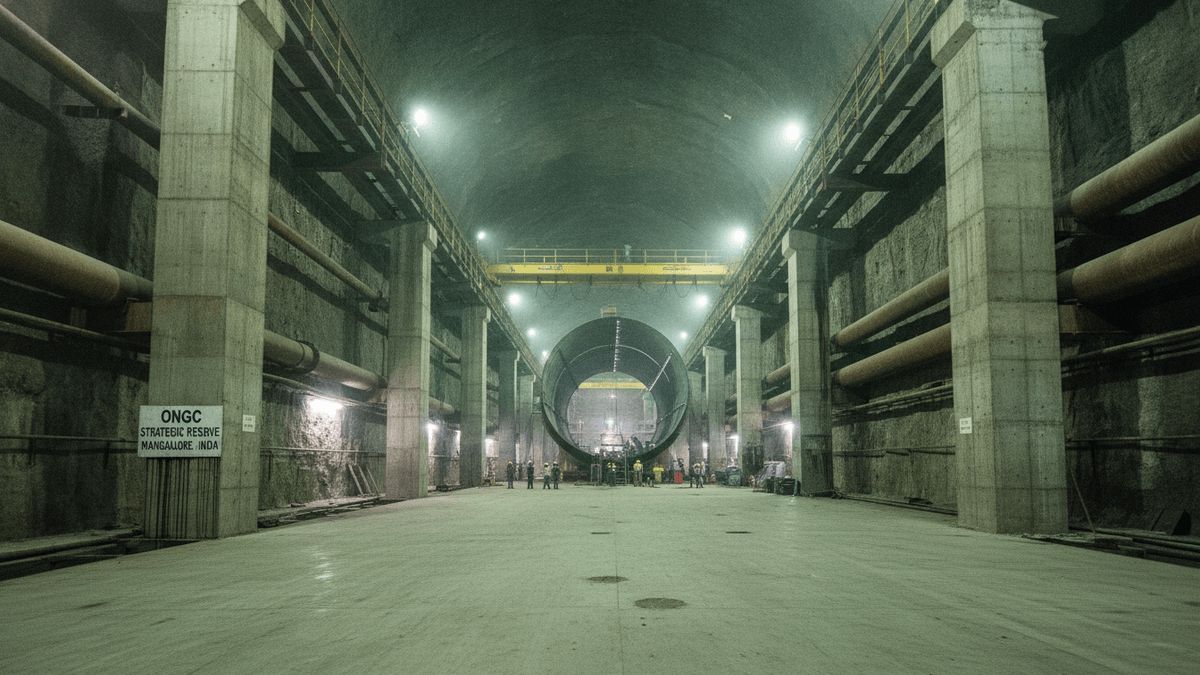
Interior of India's strategic petroleum reserve under construction, Mangalore.
India, the world’s third-largest oil importer, is making a decisive move to fortify its energy security, a critical strategic imperative in today’s volatile global landscape. The nation has officially approved a significant plan to expand its strategic petroleum reserves, signaling a proactive stance against potential supply disruptions.
This expansion includes the in-principle approval by the state-run Oil and Natural Gas Corporation (ONGC) for a new 1.75 million metric tonne (MMT) strategic petroleum reserve located in the southern Mangalore region. This initiative is a direct response to past vulnerabilities, such as the significant disruptions experienced during restrictions on the Strait of Hormuz amid the conflict between the United States and Iran. Such events underscore India’s urgent need for robust contingency plans.
Further bolstering its long-term energy independence, India’s Minister of Petroleum and Natural Gas, Hardeep Singh Puri, has championed a substantial $10 billion program. This ambitious investment is earmarked to aggressively pursue new avenues of domestic oil and gas production. However, the path to self-sufficiency remains challenging; in 2025-2026, domestic crude production met only a meager 10% of the country’s crude needs, highlighting the persistent reliance on international markets.
To mitigate immediate energy crunches and enhance resilience, India has strategically diversified its crude oil suppliers. The nation has expanded its sourcing network from 27 to an impressive 41 countries. This includes an increase in purchases from key players like Russia, Iran, Venezuela, and various African nations. This diversification strategy, while pragmatic for energy security, has not been without its critics. Both the United States and Europe have voiced concerns over India’s continued acquisition of Russian oil, arguing that these purchases indirectly finance Moscow’s ongoing war against Kyiv.
India’s multi-pronged approach—expanding reserves, investing in domestic production, and diversifying international suppliers—reflects a sophisticated balancing act. It aims to secure its energy future while navigating complex geopolitical pressures and maintaining its economic growth trajectory. The success of these initiatives will be crucial not only for India’s domestic stability but also for its evolving role in the global energy market.
About the Author