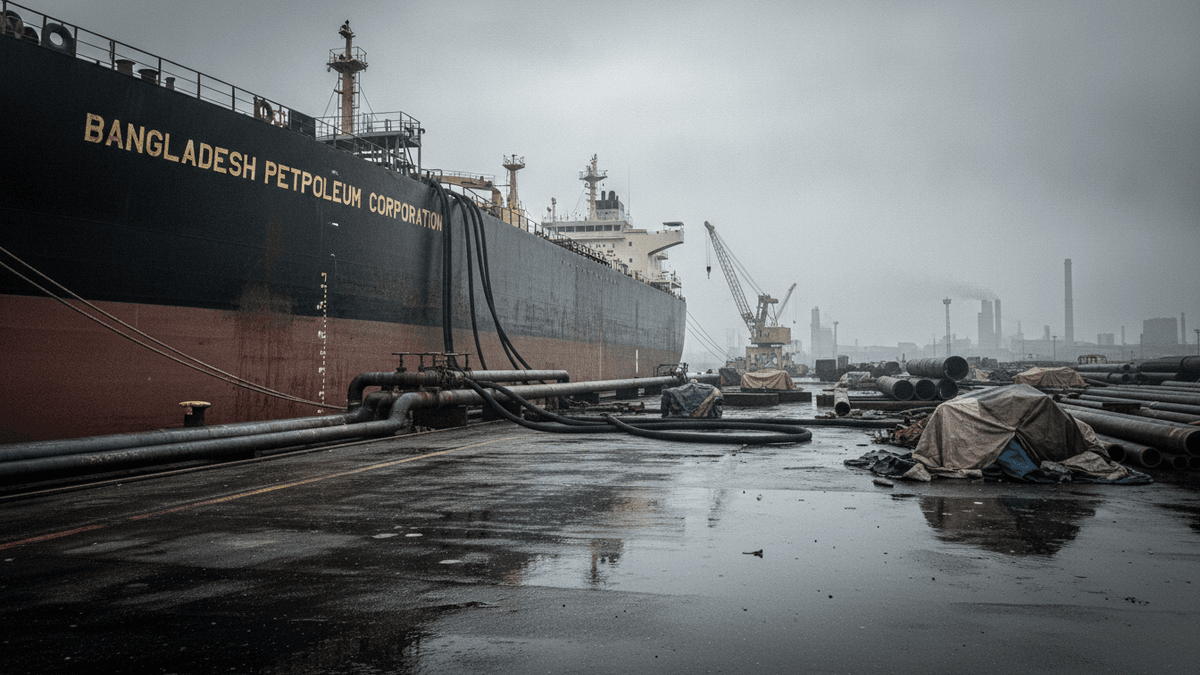
Tanker at a Bangladesh Petroleum Corporation terminal, Karnaphuli River
Bangladesh’s energy system stands at a critical juncture, marked by structural fragility and an over-reliance on a limited fuel mix. This vulnerability makes the nation acutely susceptible to global energy price volatility and supply shocks, demanding a strategic pivot beyond mere crisis management.
For years, delayed reforms and insufficient diversification have left Bangladesh’s energy infrastructure exposed. While the government has navigated recent crises, preventing the full burden from falling on citizens, this reactive approach is not sustainable. The existing procurement process, designed for administrative caution, is too slow to effectively respond to the rapid shifts in global energy markets.
To transition from this reactive stance to a robust energy capability, Bangladesh must implement three fundamental shifts. First, it needs to modernize energy procurement by addressing its “spot market problem.” The current slow, centralized system misses opportunities for securing favorable prices. The solution involves establishing a small, high-level team—potentially from Petrobangla or Bangladesh Petroleum Corporation—in a global trading hub like Singapore. This team would be empowered with real-time decision-making authority to execute swift spot purchases, avoiding premiums incurred by delays. Such a move would necessitate targeted deregulation, especially during crisis periods, to prioritize speed and agility.
Second, Bangladesh must reduce its exposure to concentrated fuel sources through aggressive diversification. While renewable energy is crucial for the long term, immediate solutions are needed. Biodiesel blending presents a viable transitional strategy, echoing Indonesia’s successful implementation. By initially importing biodiesel and introducing modest blends (e.g., B10 or B15), Bangladesh could significantly cut its dependence on imported diesel and crude oil, easing import costs and safeguarding foreign reserves. Over time, domestic biodiesel production from non-edible crops could foster rural job creation and new value chains. Diversification also extends to forging steady partnerships with nearby, stable suppliers such as Brunei or Indonesia, thereby enhancing overall supply chain resilience.
Third, building robust buffers and enhancing preparedness is paramount, drawing valuable lessons from nations like Thailand. Thailand, for instance, maintains petroleum reserves covering 90-95 days of consumption, possesses pre-approved mechanisms for rapid LNG procurement, and operates an Oil Stabilisation Fund to cushion domestic fuel prices without immediate fiscal strain. In stark contrast, Bangladesh largely relies on ad hoc fiscal adjustments. Implementing a strategic petroleum reserve, establishing a pre-funded stabilization mechanism, and delegating procurement authority are operational tools that would grant the government the necessary agility to act proactively. Furthermore, diversifying crude oil imports beyond the Middle East to regions like West Africa, coupled with investments in refining infrastructure capable of handling diverse crude types, would spread geopolitical risk and potentially offer cost advantages.
These strategic shifts do not hinge on technological breakthroughs or solely external financing. Instead, they demand a fundamental change in mindset—moving from merely managing crises to proactively designing resilient energy systems. Energy security, the article emphasizes, is now defined by strategy, speed, and resilience. Bangladesh still has a critical window to make these choices before the next energy crisis inevitably forces its hand.
About the Author