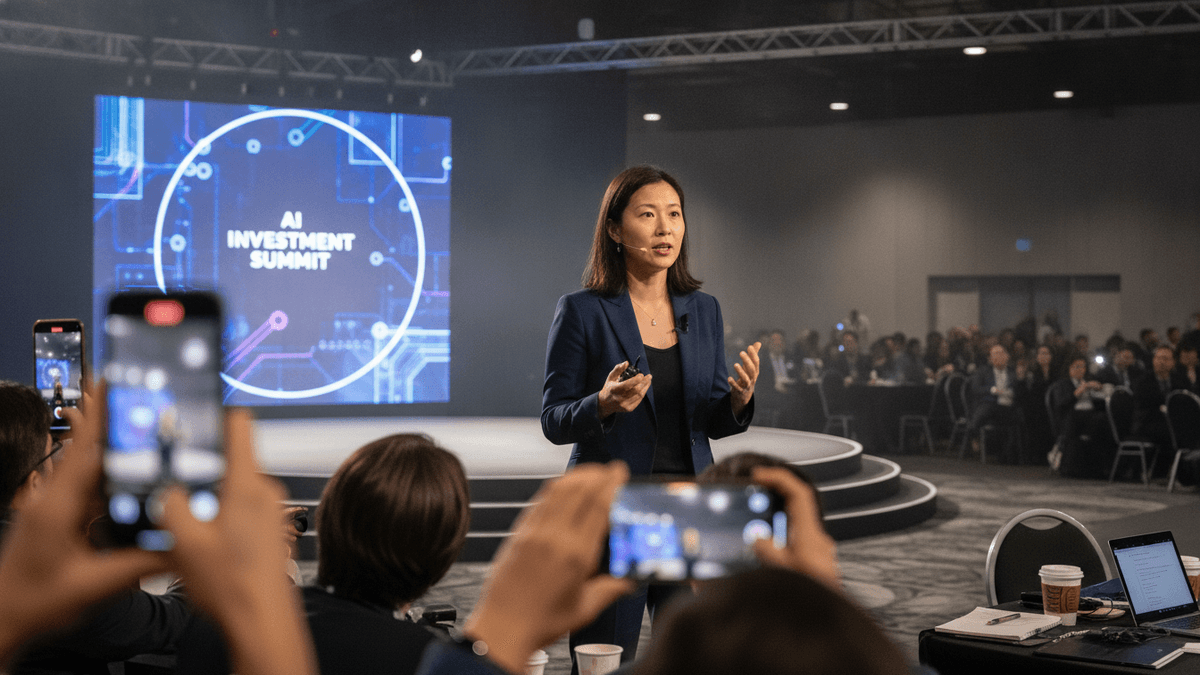
Tiffany Luck speaks at an "AI Investment Summit" event
The initial frenzy around “tokenmaxxing” – pushing AI usage to its limits – is giving way to a much-needed reality check in Silicon Valley. As companies like Uber reportedly exhausted their annual AI budgets in mere months, and others scaled back on AI tools like Claude, the industry is facing a reckoning on the return on investment (ROI) for its AI initiatives.
This tension between ambitious AI adoption and tangible business outcomes is a central theme in a recent discussion featuring Tiffany Luck of NEA. Luck, a prominent figure in venture capital, is shedding light on the evolving landscape of AI, from its potential for IPOs to the development of sophisticated personal agents.
The rapid acceleration of AI adoption, fueled by the promise of transformative capabilities, has led to significant spending. However, the initial enthusiasm has been tempered by the realization that such investments need to demonstrate clear value. Companies are now scrutinizing AI expenditures, seeking to understand the true cost and benefit of these technologies.
Luck’s insights point towards a future where AI integration will be more strategic and ROI-focused. The concept of “personal agents,” AI systems designed to act on behalf of individuals, is gaining traction. These agents could revolutionize productivity by managing tasks, information, and communication, but their development and deployment also raise questions about cost, efficiency, and user adoption.
The conversation around AI IPOs is also heating up, with investors and founders alike looking for the next big success story. However, the path to public markets for AI companies may become more challenging as scrutiny on profitability and sustainable growth intensifies. The “reckoning” Luck refers to suggests that companies will need to prove a solid business model and a clear path to profitability, rather than relying solely on technological innovation.
As the dust settles from the initial AI hype, the focus is shifting towards practical applications and measurable results. The coming months and years will be crucial in determining how AI truly reshapes industries and delivers on its promise of innovation and efficiency, with a keen eye on the bottom line.
About the Author