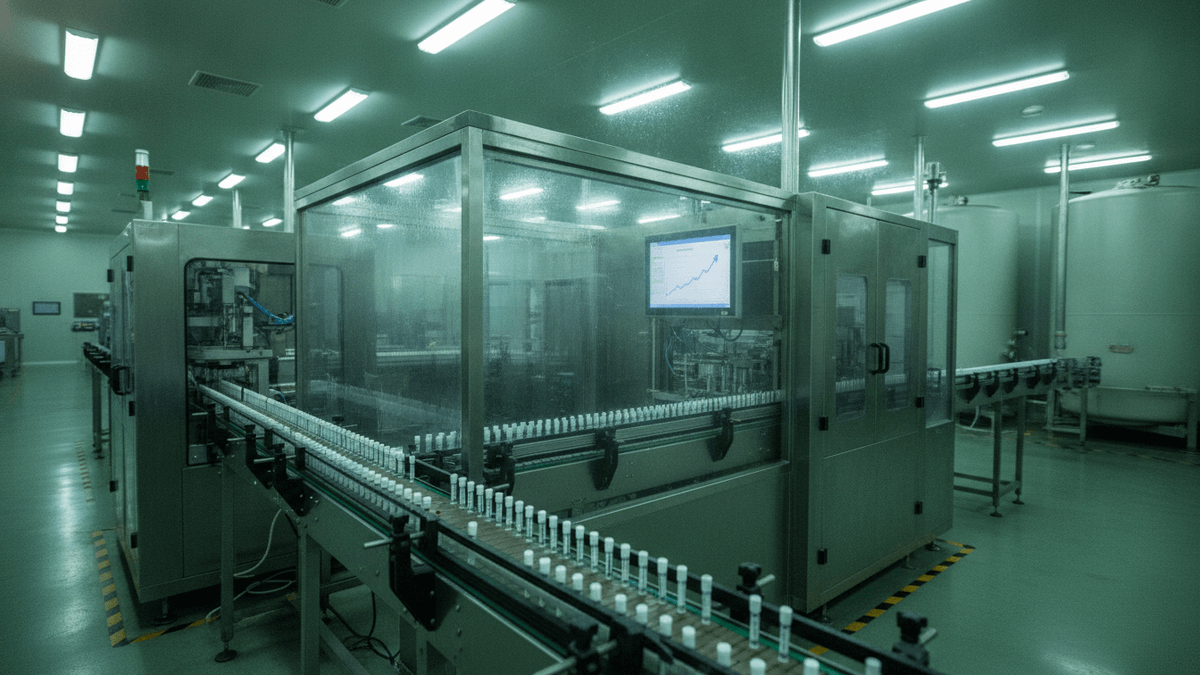
Automated pharmaceutical filling line for injectables under fluorescent light.
Indian pharmaceutical companies like Cipla Ltd. and Dr Reddy’s Laboratories Ltd. are strategically pivoting towards a burgeoning domestic market, driven by the increasing demand for GLP-1 based weight-loss drugs, especially semaglutide. This shift comes as these firms face considerable headwinds in the US market, particularly after the loss of exclusivity for the crucial cancer drug Revlimid, which is expected to dent their US revenues.
The expiration of semaglutide’s patent in India this past March has significantly opened up the market, fueling an initial surge in domestic sales. While this initial spike has moderated, the long-term outlook remains strong, offering a vital counterbalance to international market pressures.
Investors are keenly observing Dr Reddy’s production capabilities, especially after a temporary halt due to impurity concerns. The successful scale-up of injectable semaglutide production is critical, as analysts project it could contribute a substantial 13-14% to the company’s earnings over the next three years. This underscores the strategic importance of the GLP-1 segment for the company’s financial health and growth trajectory.
This domestic GLP-1 opportunity isn’t just a temporary fix; it represents a significant structural shift for Indian pharmaceutical giants. By leveraging their manufacturing prowess and a rapidly growing local market, they are not only mitigating risks from mature Western markets but also establishing new pillars of growth. The ability to innovate and scale production for high-demand drugs like semaglutide will be a key differentiator in their future success.
About the Author