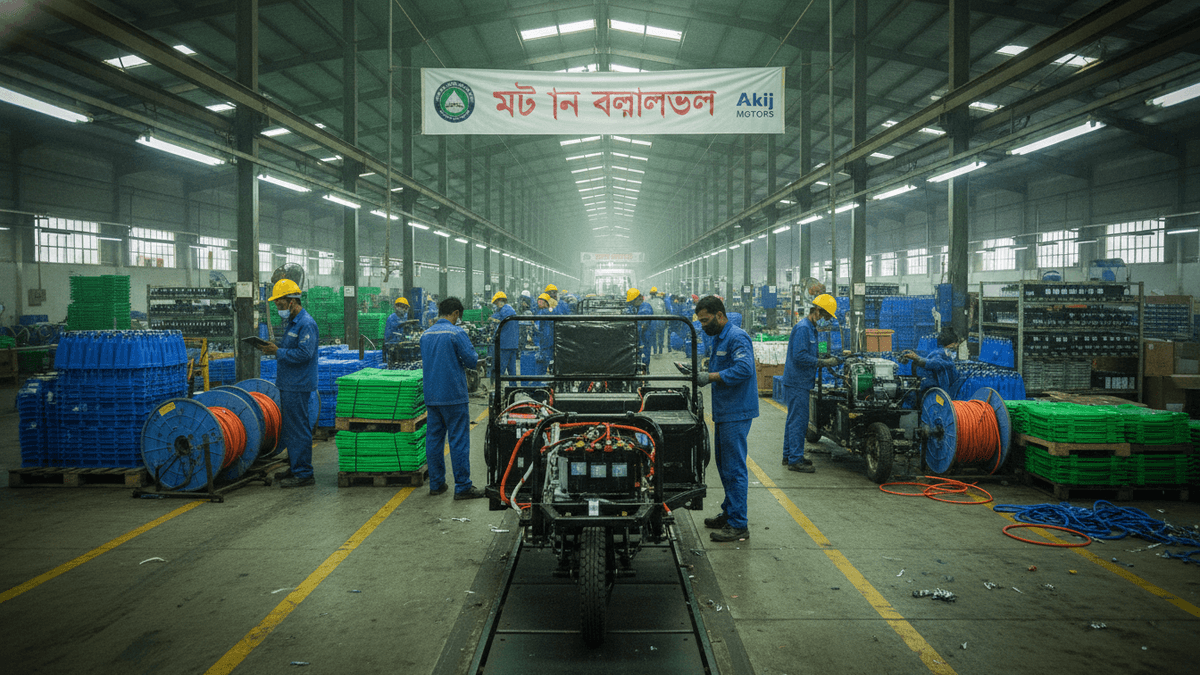
Workers assemble electric rickshaws at an Akij Motors factory in Bangladesh.
Bangladesh’s electric vehicle (EV) industry is igniting a new growth phase, propelled by approximately Tk4,000 crore in private investments and strategic incentives from the upcoming FY2026-27 budget. This significant push signals a pivotal moment for the nation’s sustainable transportation ambitions.
The government’s budget measures are designed to accelerate EV adoption and local manufacturing. Key incentives include reduced import duties on EVs, tax benefits for domestic production, and duty exemptions for essential charging equipment. Complementing this, the Sustainable and Renewable Energy Development Authority (Sreda) is tasked with crafting a regulatory framework to support the ambitious target of establishing 1,200 commercial EV charging stations across the country by 2030.
Major local players are already making their move. Companies like Bangladesh Auto Industries, Nasir Group, Akij Motors, Rancon Motors, Runner Automobiles (in partnership with BYD), PRAN-RFL, and Walton Group have publicly committed substantial investments. Their strategies encompass building a comprehensive EV ecosystem, from vehicle manufacturing to home and commercial charging infrastructure, indicating a broad-based confidence in the sector’s potential.
However, the road ahead is not without its challenges. Industry leaders emphasize that the success of this transition hinges on ensuring reliable electricity supply, expediting grid connections, and establishing commercially viable charging stations. The high upfront investment for charging infrastructure, coupled with the currently limited number of EVs on the road, makes profitability a concern for operators. This dynamic creates a chicken-and-egg dilemma that requires careful navigation.
For startup founders and investors eyeing this space, the strategic implications are clear: while government policy provides a crucial tailwind, execution and infrastructure development remain paramount. Some industry figures suggest that government-led investment in charging infrastructure during the market’s nascent stage could be vital to de-risk private ventures and accelerate adoption. The ultimate success of Bangladesh’s EV revolution will depend on a concerted effort between policy support, robust infrastructure, consistent power reliability, and the development of common technical standards to foster a truly sustainable and scalable market.
About the Author