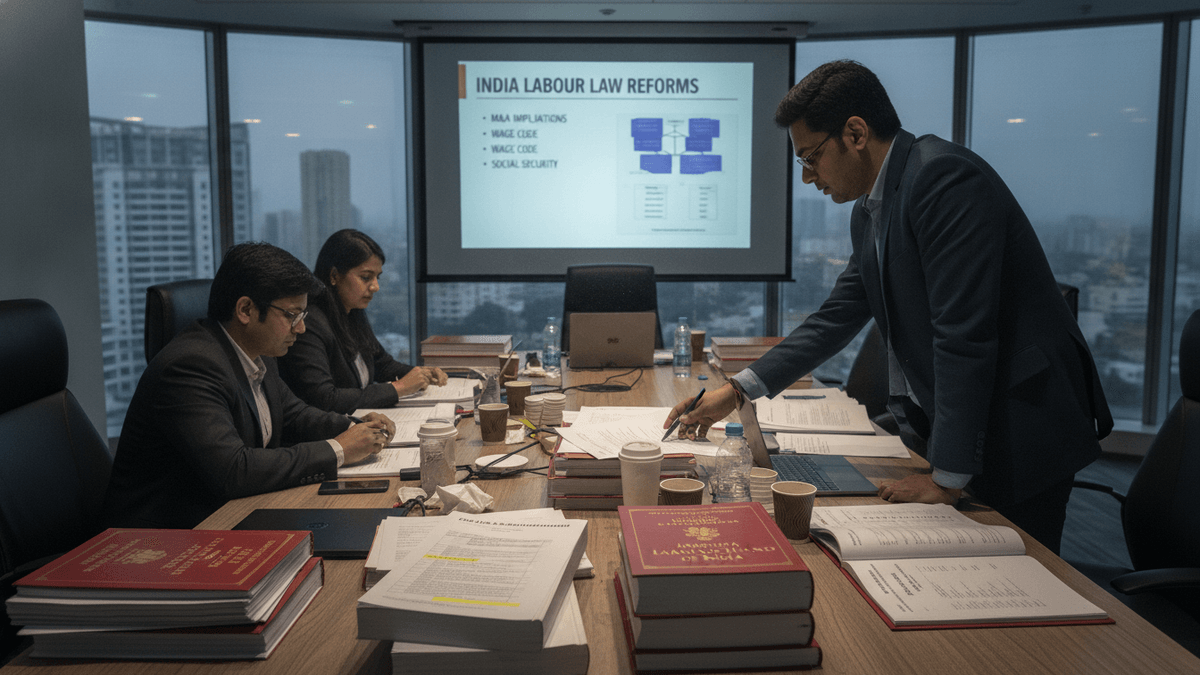
Lawyers review India Labour Law Reforms in a corporate meeting room.
India’s evolving labor landscape, particularly its new Labour Codes, presents a critical strategic puzzle for anyone navigating mergers and acquisitions (M&A) in the country. For startup founders, investors, and operators, understanding these shifts isn’t just about compliance; it’s about deal valuation and post-acquisition success.
The Indian government has been in the process of consolidating and modernizing its complex web of labor laws into four comprehensive codes: the Code on Wages, the Industrial Relations Code, the Code on Social Security, and the Occupational Safety, Health and Working Conditions Code. While their full implementation has seen delays, their eventual rollout will fundamentally reshape labor relations and compliance across industries.
Law firm Cyril Amarchand Mangaldas has highlighted that these codes introduce significant considerations for M&A deals. For investors and acquirers, understanding the nuances of employee transfers, gratuity liabilities, provident fund obligations, and potential industrial disputes under the new regime is paramount. Due diligence processes will need to be meticulously updated to assess compliance risks and financial implications tied to human capital. The codes aim for greater flexibility but also introduce new compliance burdens and potential for disputes if not handled proactively.
Founders looking to exit, or investors planning to acquire, must proactively assess their target company’s readiness for these changes. This includes reviewing existing employment contracts, understanding the implications for workforce restructuring, and factoring in potential severance costs or social security contributions. Strategic foresight in this area can significantly impact deal valuation and post-acquisition integration success. The message is clear: labor law due diligence in India is no longer a peripheral concern but a core component of M&A strategy.
About the Author




