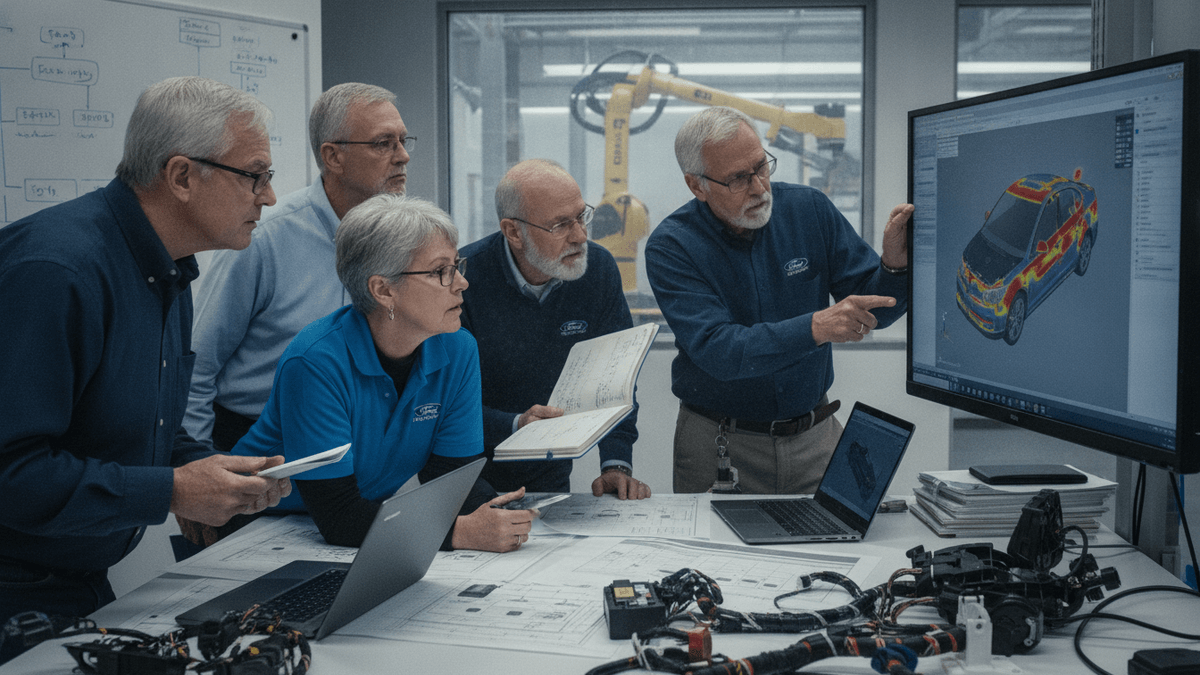
Ford engineers review AI-generated vehicle design flaw analysis
Ford has brought back approximately 300 veteran engineers to address shortcomings in its artificial intelligence (AI) tools used for production quality. This strategic move has been credited with helping Ford achieve the top spot in the JD Power 2026 U.S. Initial Quality Study (IQS), a first for the automaker since 2010.
Charles Poon, Ford’s vice president of vehicle hardware engineering, acknowledged that while AI is a powerful tool, its effectiveness depends heavily on the quality of the data it’s trained on. He noted that in previous years, the company did not sufficiently value the deep experience of its long-serving engineers, who possess knowledge from multiple product cycles.
“Mistakenly, we thought that by just introducing artificial intelligence and ingesting the design requirements that we had, that would produce a high quality product,” Poon stated, highlighting a miscalculation in relying solely on AI without adequate human expertise. He further explained that the AI tools lacked the nuanced training and practical expertise that veteran technicians offer, and many of these skilled employees had departed before their knowledge could be leveraged to enhance the AI systems.
“We recognized that for us to enhance some of our automation and machine learning and artificial intelligence tools, we needed to ensure that they were trained by the most experienced individuals,” Poon added. To this end, Ford has hired around 300 veteran engineers for its vehicle engineering division in recent years.
These engineers, now freed from daily production demands, function as internal auditors. They conduct mandatory weekly design reviews to identify and eliminate potential failure points early in the design phase, before blueprints even reach the factory floor. Ford Chief Operating Officer Kumar Galhotra emphasized that these experienced professionals are central to the company’s quality improvement initiatives by proactively resolving process issues.
The positive impact of this shift is also reflected in Ford’s financial performance. CEO Jim Farley indicated that reduced spending on warranty claims and recalls, stemming from improved production quality, is contributing to cost reductions and boosting the company’s bottom line.
The JD Power 2026 IQS results showcase Ford’s success, with the Ford F-150, Ford Mustang, and Ford Super Duty leading their respective segments for the second consecutive year. Additionally, the Ford Escape, Ford Explorer, Ford Expedition, and Ford Maverick ranked within the top three in their categories, meaning seven of Ford’s top 10 models achieved top-three rankings.
About the Author