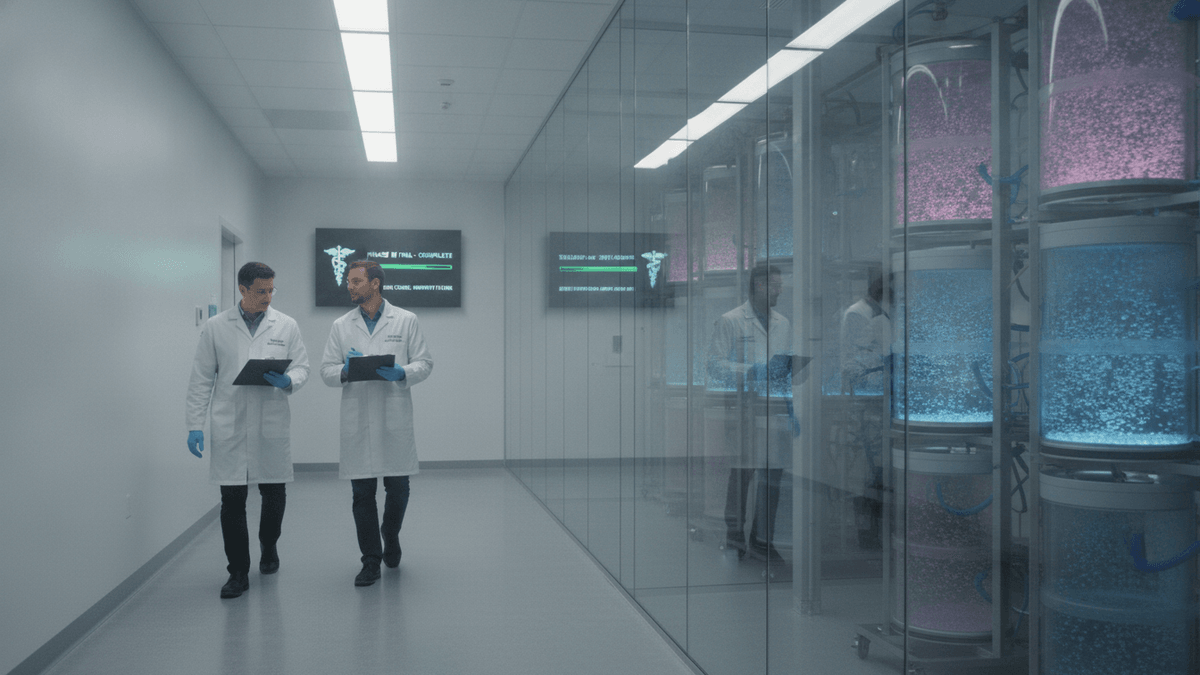
Scientists walk past a glass-walled lab with glowing bioreactors.
A significant economic opportunity, estimated at over $10 trillion, could be unlocked by streamlining the Food and Drug Administration’s (FDA) drug approval process. A new report highlights that reducing the review timeline by even one year could not only accelerate patient access to crucial medicines but also spur greater investment in medical innovation.
The report, titled “The Multi-Trillion Dollar Opportunity in Reforming the FDA” and published by the free-market policy group Unleash Prosperity, posits that the lengthy effectiveness trials, rather than safety testing, contribute most to the FDA’s approval duration. According to economist Tomas Philipson, who was involved in the report, the typical decade-long journey for a drug from inception to market approval is largely consumed by these effectiveness assessments.
“Most of that time is not spent on safety. Most of it time is spent on effectiveness trials,” Philipson stated in an interview with Fox News Digital. He emphasized that while the FDA’s role in ensuring drug safety is widely recognized, its mandate to guarantee effectiveness is a unique governmental function.
Philipson further argued that a more expedited approval process could lead to lower prescription drug costs by fostering increased competition among pharmaceutical manufacturers. “Reforming FDA would have a big impact on drug affordability for patients because it would allow for far more competition between drugs that come out faster,” he explained.
The report’s authors project that shaving one to six years off the approval timelines for drugs, biologics, and medical devices could generate trillions in economic value. This would stem from earlier patient access to treatments and enhanced incentives for continued innovation.
Adding a layer of urgency, the report cautions that China’s more rapid and cost-effective clinical trial system could potentially divert investment and drug development activities away from the United States. Philipson urged policymakers to consider reforms akin to the swift development seen during the COVID-19 pandemic with Operation Warp Speed, applying similar urgency to other patient populations with critical unmet needs.
Proposed reforms include the integration of artificial intelligence into the review process, the adoption of more efficient clinical trial designs, and expanded access to “right to try” programs, which allow terminally ill patients to access experimental treatments.
About the Author